Elysia aowthai Mehrotra, Caballer, C. M. Scott, Sp. Arnold, Monchanin & Chavanich, 2020
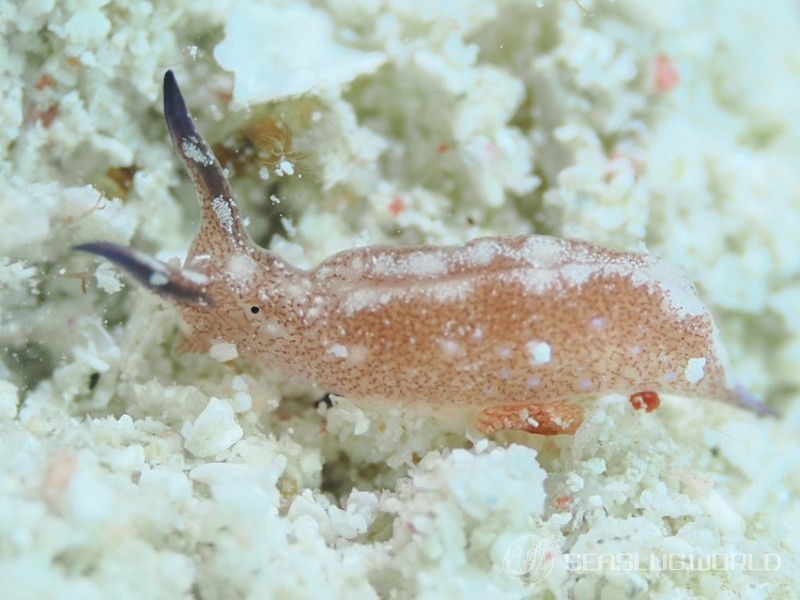
- Location
- Dorodoro Park II, Miyakojima, Okinawa, Japan
- Date
- 2024/09/23
- Length
- 8mm
- Depth
- 20.0m
- Water temperature
- 28.0℃
Description
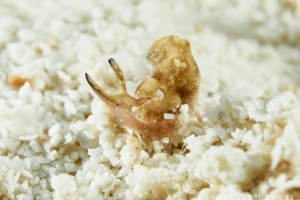
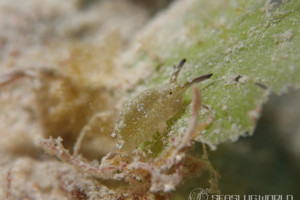
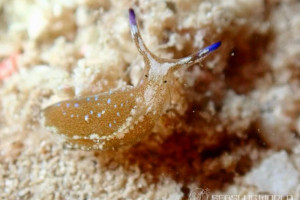
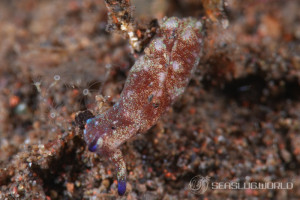
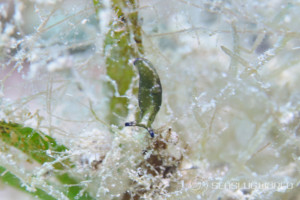
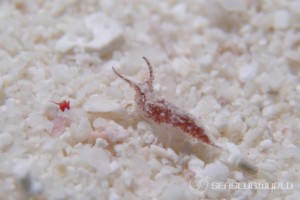
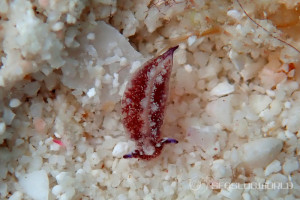
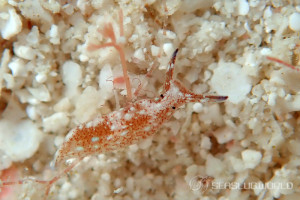
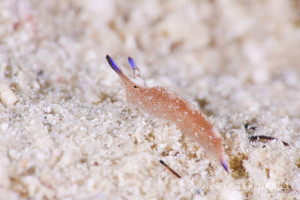
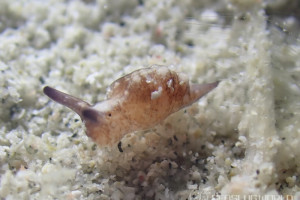
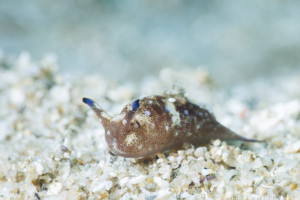
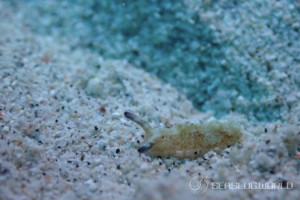
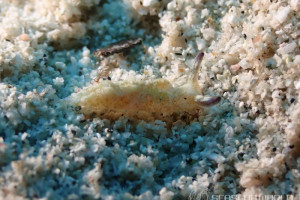
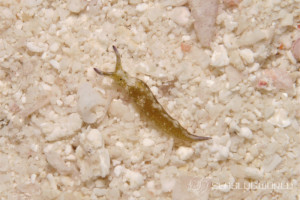
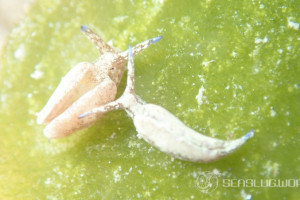
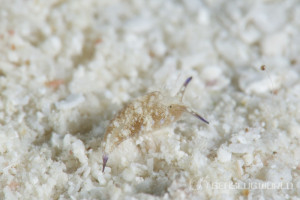
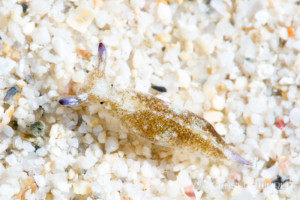
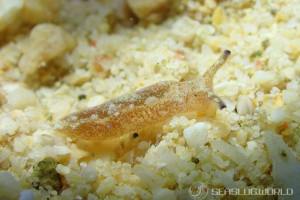
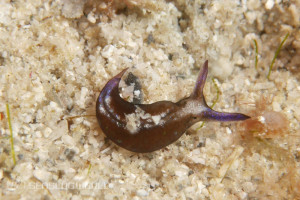
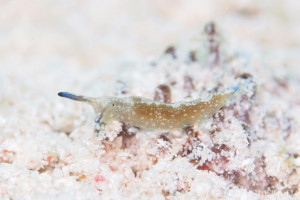
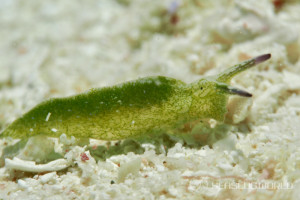
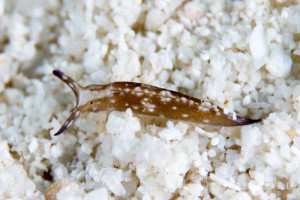
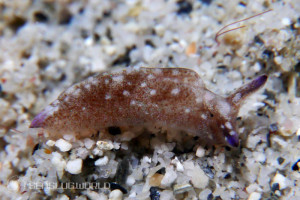
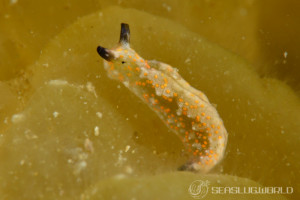
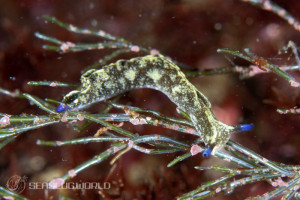
A small sacoglossan reaching about 16 mm in length, with a translucent white body and conspicuous blue-to-purple rhinophore tips. Opaque white specks are scattered over the body and concentrate along the edge of the parapodia, the renopericardial prominence, the dorsal surface of the head, and the rhinophores. The rhinophores are long and pointed, grooved along the entire length, with deep blue to purple tips fading toward the base; unlike many congeners, the tips lack tubules of the digestive gland, so the colour is tissue pigment rather than ingested algae. Eyes are black and comma-shaped, lying behind the rhinophores. The digestive gland varies from reddish brown to light green, forming a characteristic reticulated pattern of thin tributaries on the dorsum. The tail is pointed and extends beyond the parapodia.Distribution
Type locality: Leuk Bay, Koh Tao, Gulf of Thailand (12 m depth, soft sediment). The original description (Mehrotra et al. 2020) also referred specimens previously reported as Elysia cf. japonica from Guam (Bass 2006) and as Elysia amakusana from Lizard Island, Australia (Wägele et al. 2010) to this species, based on molecular analyses.Etymology
"Aow Thai" is the local Thai-language name for the Gulf of Thailand, the type locality; the specific epithet honours the local populations who speak it.Remarks
Member of the Elysia japonica species complex. Because E. japonica itself was described from preserved material of unknown origin in Japan, the external anatomy of the nominal species has long been ambiguous, and confusion with similar species such as Elysia amakusana, Elysia abei and E. furvacauda has persisted. Molecular analyses by Takano et al. (2013) found Elysia abei to be a junior synonym of Elysia amakusana, and that none of these forms is conspecific with E. japonica sensu stricto. Elysia aowthai delineates the Thai / Guam / Australian lineage of that complex, supported by both external morphology and molecular evidence. Around Koh Tao the species is found year-round on soft sediment between roughly 10 and 24 m depth, never on coral reefs or in their immediate vicinity. Specimens have not been observed feeding on any particular alga, but a filamentous red alga frequently in the background may contribute to the reddish digestive-gland colour of many individuals.References
- アズキウミウシ, 小野篤司. (2004). 沖縄のウミウシ. ラトルズ.
- Elysia aowthai sp. nov., Mehrotra R., Caballer Gutierrez M., Scott C.M., Arnold S., Monchanin C. & Chavanich S. (2020). On the Plakobranchidae (Gastropoda, Sacoglossa) from soft sediment habitats of Koh Tao, Gulf of Thailand, with descriptions of two new species. ZooKeys. 969: 85-121. https://doi.org/10.3897/zookeys.969.52941
A Kindle field guide by the site author
Kimoto N. (2026). Sea Slugs of Japan & the Indo-Pacific, 2nd Edition.
Kindle Edition
View on Amazon PR (Amazon Associates)Seasonality
Shooting Locations
Loading shooting locations...
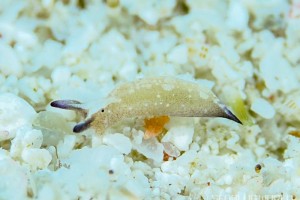
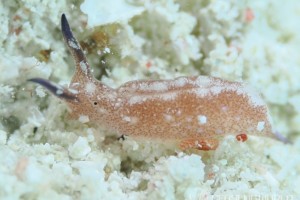
Photos of Elysia aowthai
Tag:



















Same Genus Nudibranchs
Academic Database
Sea slug observation data is available in international marine biodiversity databases.