Goniobranchus aureopurpureus (Collingwood, 1881)
Description
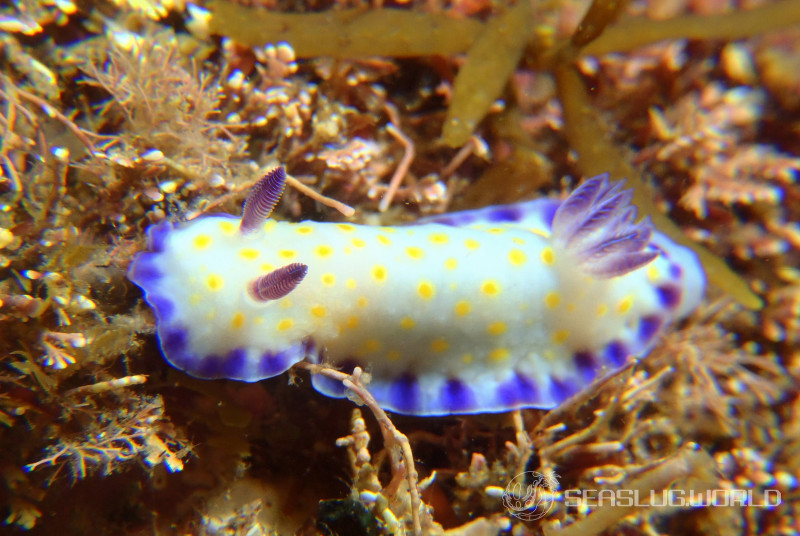
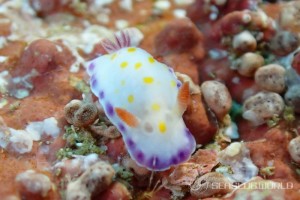
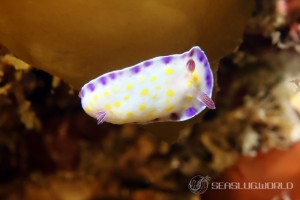
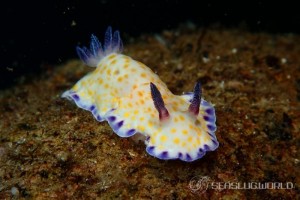
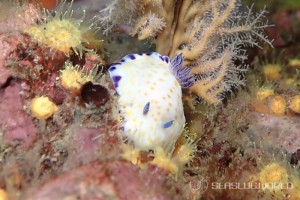
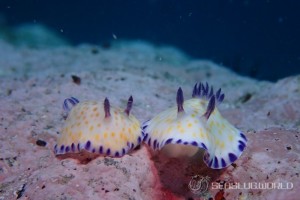
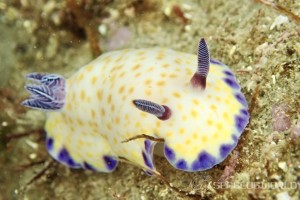
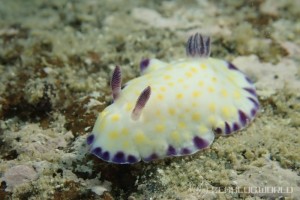
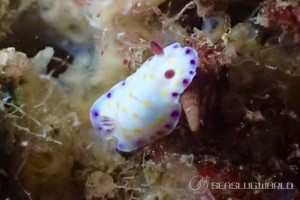
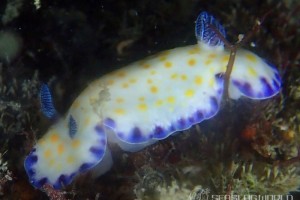
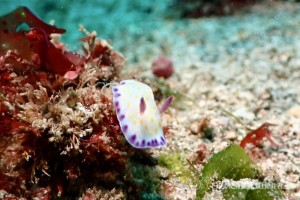
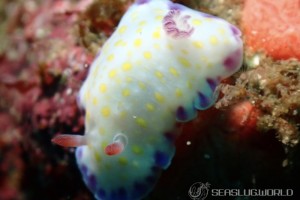
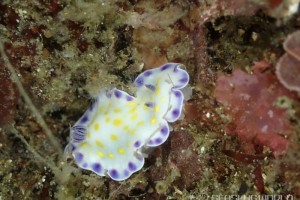
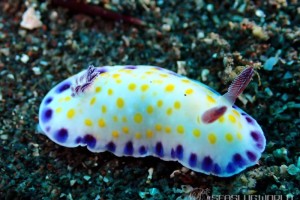
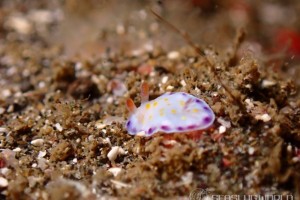
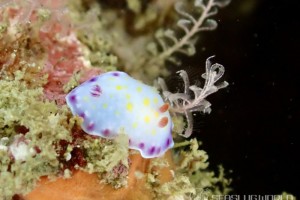
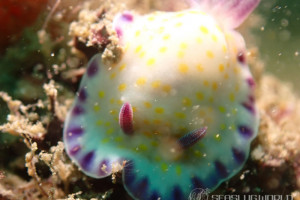
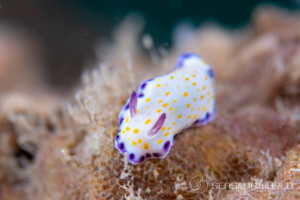
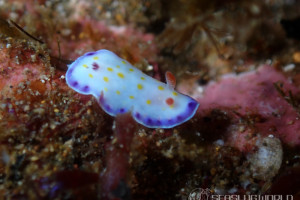
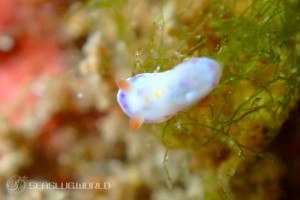
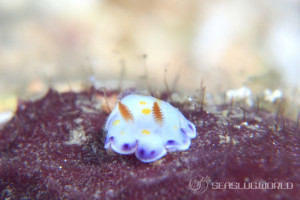
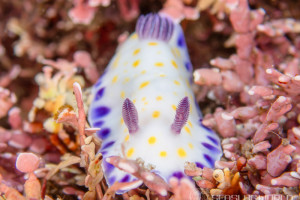
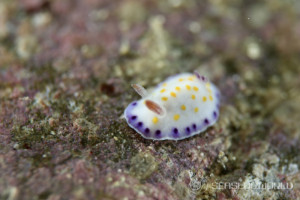
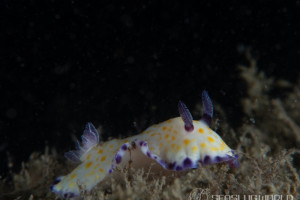
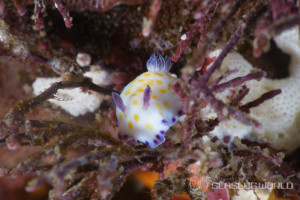
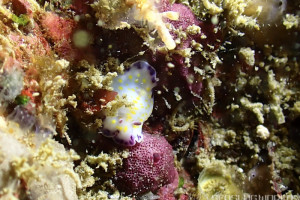
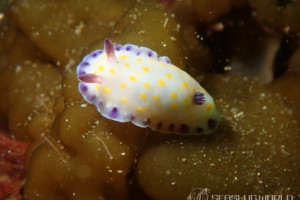
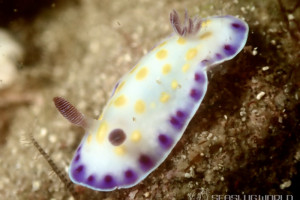
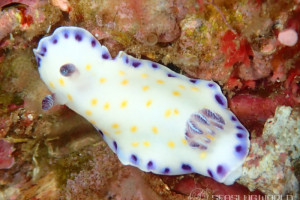
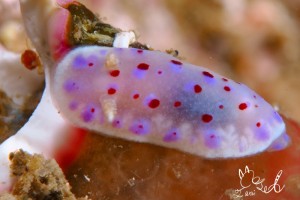
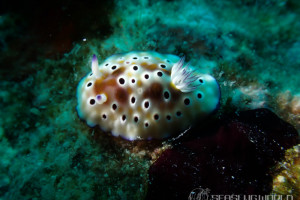
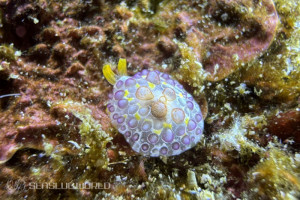
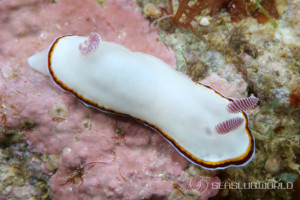
The mantle is white, edged with a diffuse pale violet band that carries an inner row of deep purple spots. Scattered across the central area are irregular yellow spots, and in some individuals each purple spot is accompanied by a small yellow patch or crescent on its inner edge. Rhinophore clubs are pigmented purple to reddish brown with white margins; the gills show the same purple to red-brown coloration with white-edged axes and pinnae. Recorded length up to about 40 mm.Distribution
Described from the coast of China (Collingwood, 1881, as Doris aureopurpurea, type locality "Slut Island"). The species is now confirmed from the East China Sea, the Nansei Islands, Korea, both Pacific and Sea-of-Japan coasts of Honshu, and as far north as Hokkaido. A 2024 study showed by COI that Australian specimens previously referred to this species differ by 8.6% from Japanese material and proposed Goniobranchus cf. variatus for the Australian taxon, restricting G. aureopurpureus in the strict sense to East Asian waters.Etymology
From Latin aureo- (golden) + purpureus (purple), referring to the combination of yellow and purple markings on the mantle.Remarks
Originally described as Doris aureopurpurea by Collingwood 1881, the species was long treated under Chromodoris and was transferred to Goniobranchus in a molecular revision following their molecular phylogeny of the Chromodorididae. the 1957 study recorded it from Asamushi (northern Honshu) under the name Glossodoris aureopurpurea, noting it as a warm-water species reaching the northern part of Japan. The Japanese vernacular name "Komon-umiushi" (literally "fine-pattern sea slug") was coined by Fujita 1893 from Misaki specimens.References
- 小紋うみうし(新称), 藤田經信. (1893). 相州三浦三崎近傍ノ隱鰓うみうし科 (Cryptobranchiate Nudibranchiata)(第五十三號ノ續キ). 動物學雜誌. 5(55): 163-167.
- コモンウミウシ, Baba K. (1949). Opisthobranchia of Sagami Bay collected by His Majesty the Emperor of Japan (相模湾産後鰓類図譜). Iwanami Shoten, Tokyo. 4+2+194+7 pp., pls. 1-50.
- Glossodoris aureopurpurea (Collingwood) Komon-umiushi, Baba, K. 1957. A revised list of the species of Opisthobranchia from the northern part of Japan, with some additional descriptions. J. Fac. Sci., Hokkaido Univ.,ser. 6, Zool. 13(1-4):8-14.
- コモンウミウシ, 鈴木敬宇. (2000). ウミウシガイドブック〈2〉. TBSブリタニカ.
- 高岡生物研究会. (2002). 日本海のウミウシ. 第2版.
- コモンウミウシ, 殿塚孝昌. (2003). ウミウシガイドブック〈3〉. TBSブリタニカ.
- コモンウミウシ, 小野篤司. (2004). 沖縄のウミウシ. ラトルズ.
- コモンウミウシ, 中野理枝. (2004). 本州のウミウシ. ラトルズ.
- コモンウミウシ, 小野篤司 & 加藤昌一. (2009). ウミウシ. 誠文堂新光社.
- Goniobranchus aureopurpureus, Johnson R.F. & Gosliner T.M. (2012). Traditional taxonomic groupings mask evolutionary history: a molecular phylogeny and new classification of the chromodorid nudibranchs. PLoS ONE 7(4): e33479.
- Goniobranchus aureopurpureus, Terrence Gosliner, Ángel Valdés and David Behrens. (2015). Nudibranch and Sea Slug Identification Indo-Pacific. New World Pubns Inc.
Featured in this book
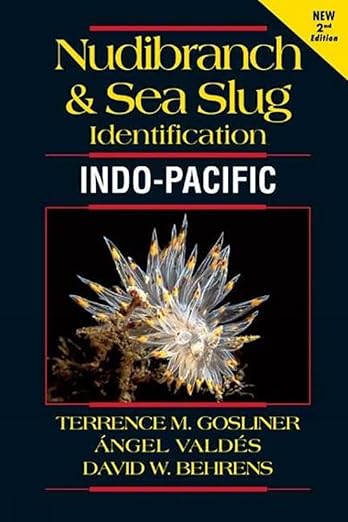
Terrence Gosliner, Ángel Valdés and David Behrens. (2018). Nudibranch and Sea Slug Identification Indo-Pacific 2nd Edition. New World Pubns Inc.
New World Publications
This species, Goniobranchus aureopurpureus, is included in the book.
View on Amazon PR (Amazon Associates)Seasonality
Shooting Locations
Loading shooting locations...
Photos of Goniobranchus aureopurpureus
Tag:





















Same Genus Nudibranchs
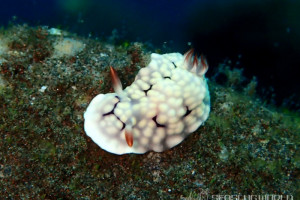
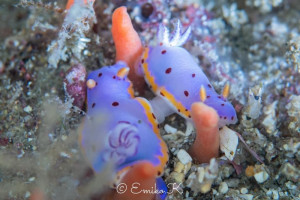

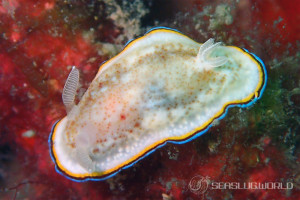
Similar Colors Nudibranchs
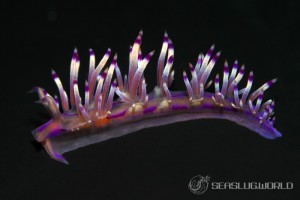
Academic Database
Sea slug observation data is available in international marine biodiversity databases.