Plakobranchus papua Meyers-Muñoz & van der Velde, 2016
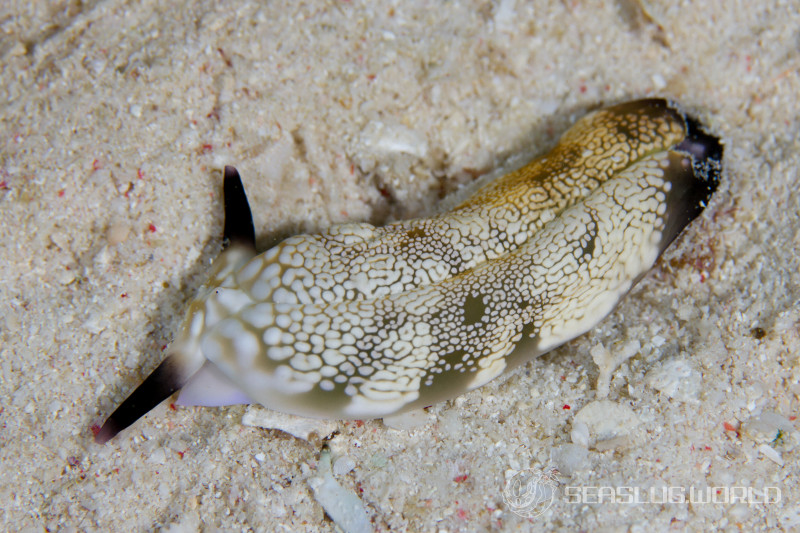
- Location
- Cape Mansuar, Raja Ampat, Indonesia
- Date
- 2016/01/11
- Length
- ??mm
- Depth
- 10.0m
- Water temperature
- 28.2℃
Description
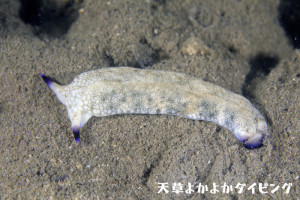
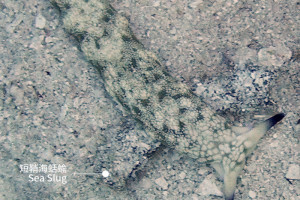
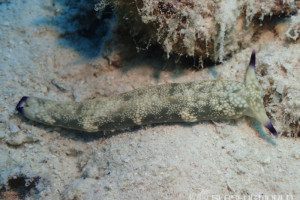
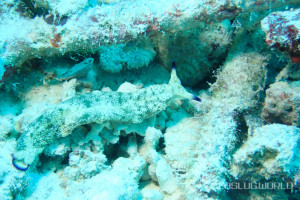
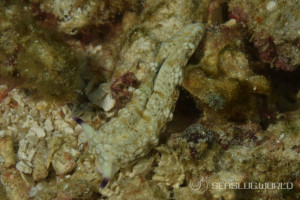
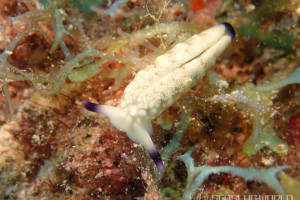
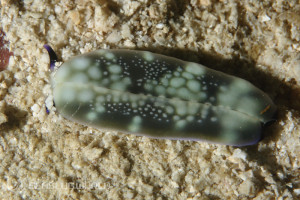
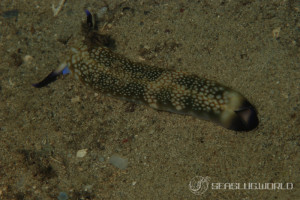
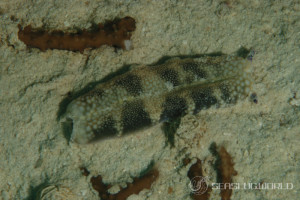
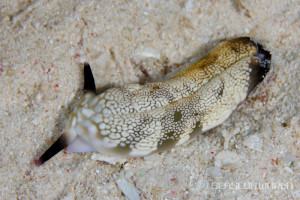
Holotype 35 mm in length; recorded specimens range from 15 to 41 mm. Body elongated and dorsoventrally flattened, with wide parapodial flaps folded along the dorsal midline when at rest. Ground colour an intense ochre (yellowish-brown). The dorsum is scattered with white spots, each thinly outlined in yellow; spots are largest on the anterior 1/4 of the body and become smaller posteriorly. Rhinophores are black with purplish tips, long, smooth and rolled. Short yellow rod-like spots run along the entire parapodial margin. The pericardial region is hyaline white, the foot sole white, and the tail black. When the parapodia are opened, the inner surface bears parallel longitudinal lamellae through which the digestive-gland branches show bright green to olive (from sequestered chloroplasts).Distribution
Type locality: Mangrove Creek, south Gam Island, West Papua, Indonesia (0°30'403"S, 130°38'986"E), collected 25 November 2007. Records are concentrated around West Papua (Raja Ampat region), with additional reports from the Philippines and Papua New Guinea. The species inhabits seagrass beds and coral-reef sand at 1-10 m depth.Etymology
The specific epithet papua refers to the Indonesian provinces of Papua and West Papua, where the type material was collected.Remarks
One of several lineages historically subsumed under Plakobranchus ocellatus van Hasselt, 1824. Meyers-Muñoz et al. 2016 separated this West Papuan population as a new species on the basis of mitochondrial COI sequences combined with external morphology. The genus Plakobranchus is widespread across the Indo-West Pacific; it was long regarded as monotypic until Krug et al. 2013 recovered ten distinct molecular lineages within the traditional P. ocellatus, several of which have since been formally described. Plakobranchus papua is closest to "Plakobranchus sp. 1" of Krug et al. 2013 from Sulawesi and Bohol, differing by approximately 1.2% in COI.References
A Kindle field guide by the site author
Kimoto N. (2026). Sea Slugs of Japan & the Indo-Pacific, 2nd Edition.
Kindle Edition
View on Amazon PR (Amazon Associates)Seasonality
Shooting Locations
Loading shooting locations...
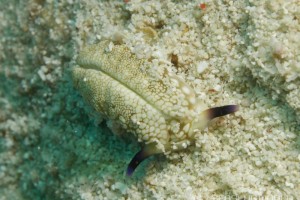
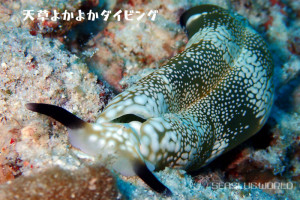
Photos of Plakobranchus papua








Same Genus Nudibranchs

Similar Colors Nudibranchs
Academic Database
Sea slug observation data is available in international marine biodiversity databases.