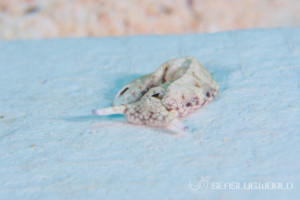
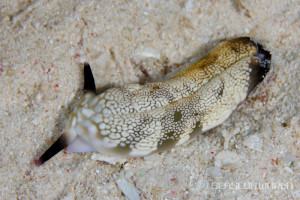
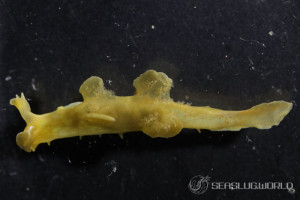
Plakobranchus ocellatus van Hasselt, 1824
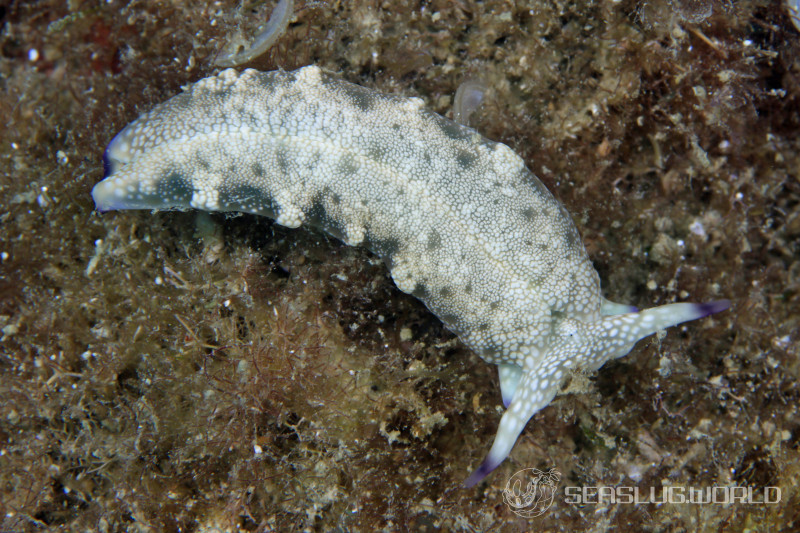
- Location
- Naha Seaside Park, Okinawa Island (Chatan and Southern area), Okinawa, Japan
- Date
- 2013/05/03
- Length
- 25mm
- Depth
- 5.0m
- Water temperature
- 22.0℃
Description
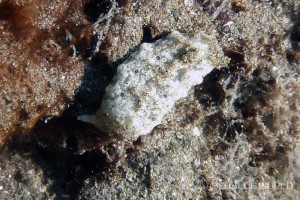
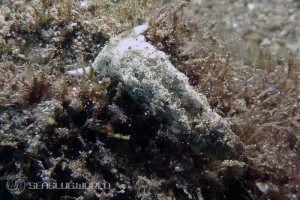
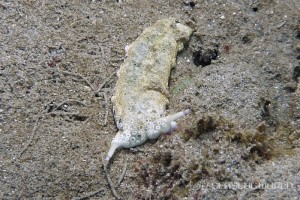
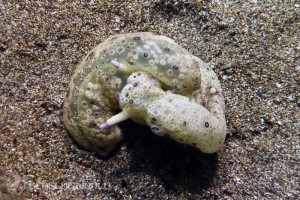
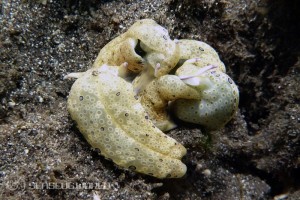
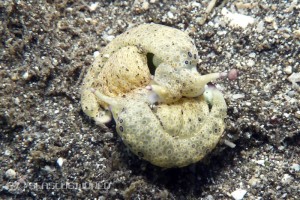
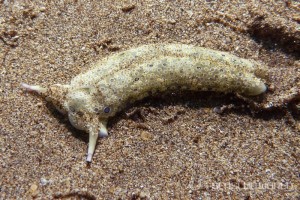
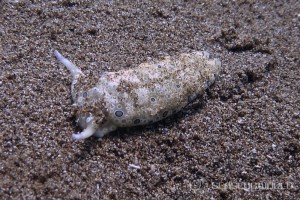
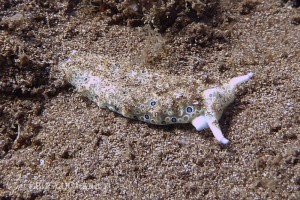
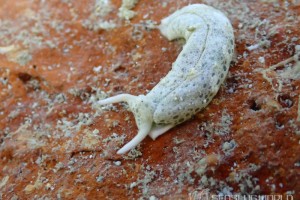
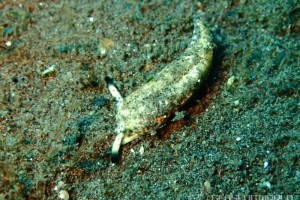
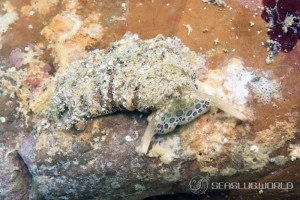
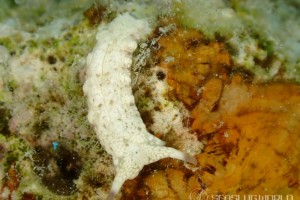
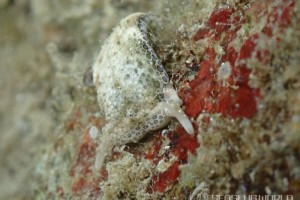
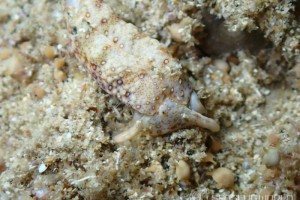
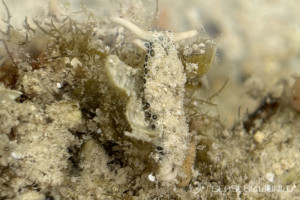
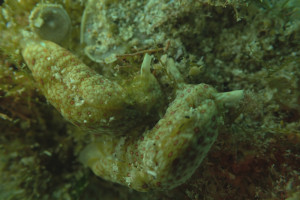
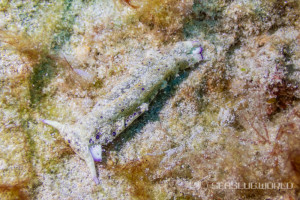
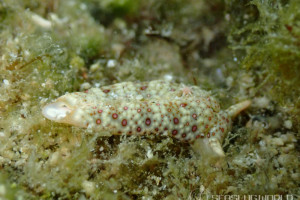
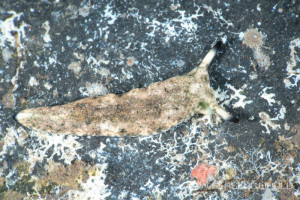
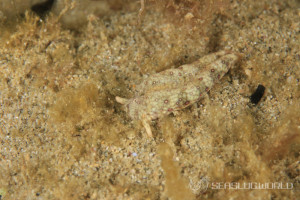
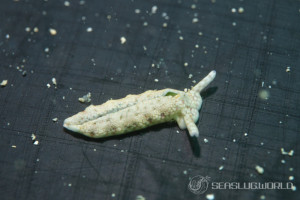
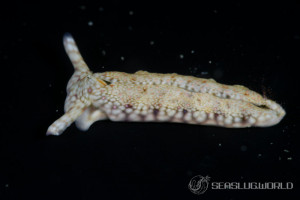
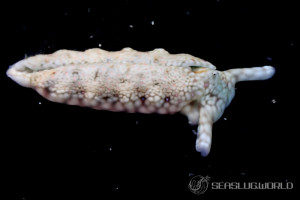
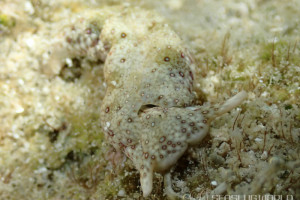
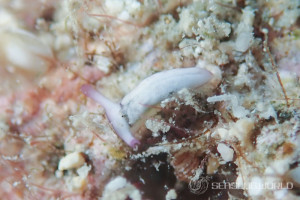
A large shelled sacoglossan (the shell internally reduced and not visible externally), reaching about 60 mm in body length. The body is flattened, with broad parapodial flaps that fold over the dorsal midline. The rhinophores extend prominently to the sides.Colouration is highly variable. The usual ground is creamy white, pale brown or pale green, on which dense paler spots are scattered. In some morphs additional eye-like green or blue spots are present, reflecting the distribution of sequestered chloroplasts (kleptoplasts) within the digestive gland.
The species lives on sandy bottoms in shallow water (often less than 5 m), burying into the sand when disturbed.
Distribution
Widely distributed across the Indo-Pacific. Records come from Madagascar, Tanzania, the Red Sea, Malaysia, Australia, Indonesia, the Philippines, Japan, Palau, Guam, the Midway Islands and Hawaii.Etymology
The specific epithet ocellatus derives from the Latin ocellus ("little eye"), meaning "marked with eye-spots", in reference to the blue ocelli seen in some morphs.Remarks
Originally described by van Hasselt 1824 from material collected near Java, Indonesia. Krug et al. 2013, through molecular phylogenetic analysis, demonstrated that the entity traditionally called Plakobranchus ocellatus comprises ten distinct lineages, several of which have since been formally described as separate species (for example Plakobranchus papua by Meyers-Muñoz et al. 2016). The confirmed range of P. ocellatus sensu stricto will likely be redefined as taxonomic revision proceeds. It is a flagship species for chloroplast symbiosis, feeding on green algae such as Halimeda and Caulerpa and retaining their chloroplasts long-term in its digestive-gland branches.References
- Plakobranchus ocellatus van Hasselt, 1824, Meyers-Muñoz M.A., van der Velde G., van der Meij S.E.T., Stoffels B.E.M.W., van Alen T., Tuti Y. & Hoeksema B.W. (2016). The phylogenetic position of a new species of Plakobranchus from West Papua, Indonesia (Mollusca, Opisthobranchia, Sacoglossa). ZooKeys. 594: 73-98.
A Kindle field guide by the site author
Kimoto N. (2026). Sea Slugs of Japan & the Indo-Pacific, 2nd Edition.
Kindle Edition
View on Amazon PR (Amazon Associates)Seasonality
Shooting Locations
Loading shooting locations...
Photos of Plakobranchus ocellatus
Tag:












Same Genus Nudibranchs
Similar Colors Nudibranchs

Academic Database
Sea slug observation data is available in international marine biodiversity databases.