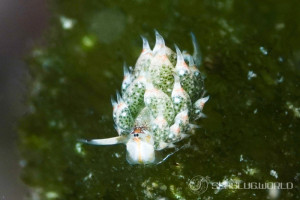
Costasiella vegae M. Ichikawa, 1993
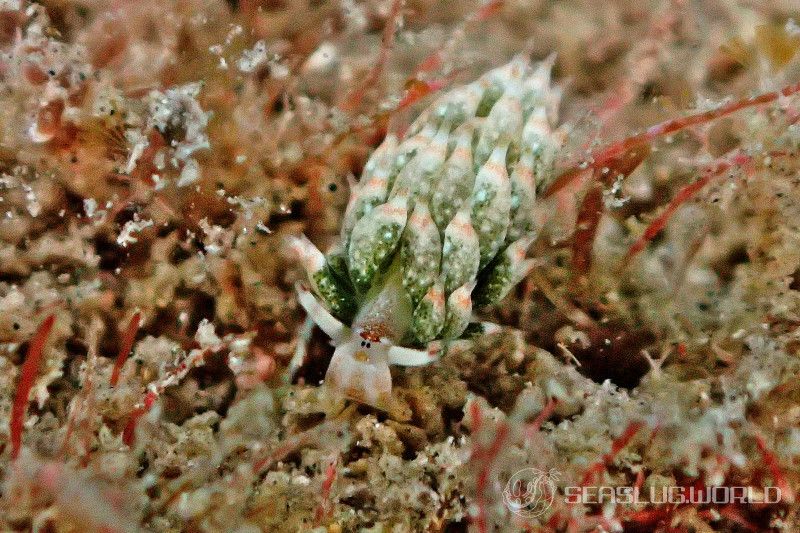
- Location
- Kaminato, Hachijo Island, Tokyo, Japan
- Date
- 2019/06/15
- Length
- 6mm
- Depth
- 5.8m
- Water temperature
- 24.4℃
Description
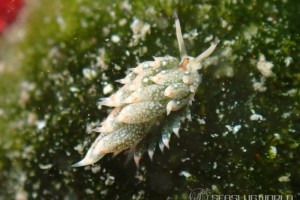
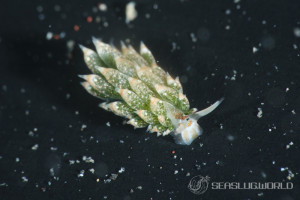
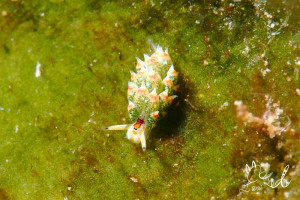
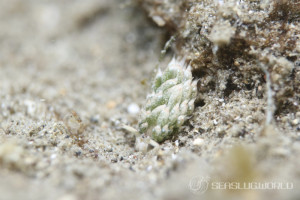
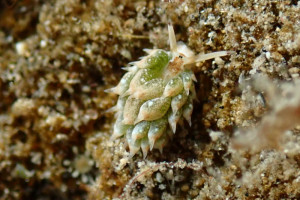
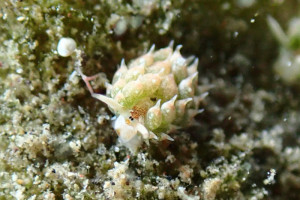
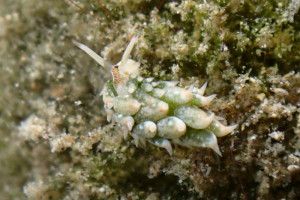
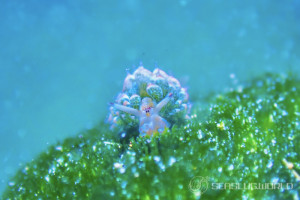
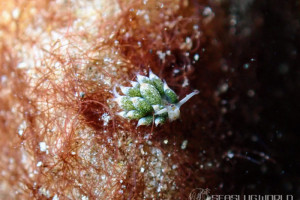
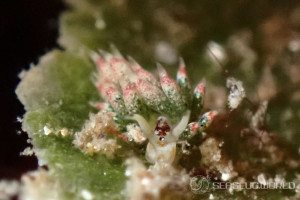
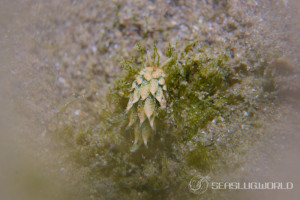
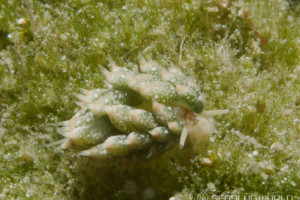
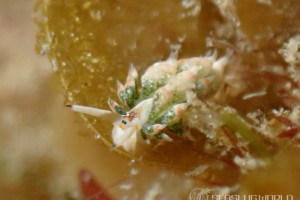
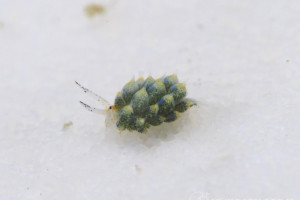
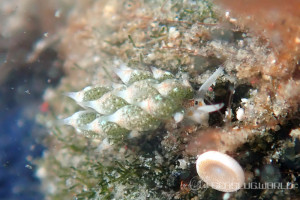
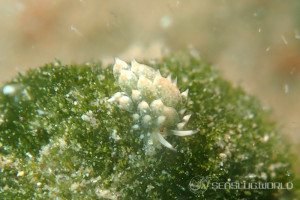
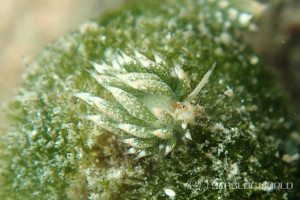
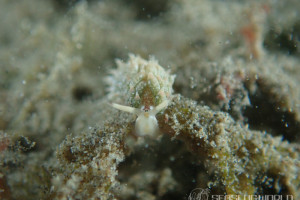
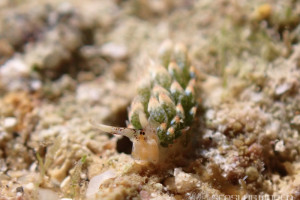
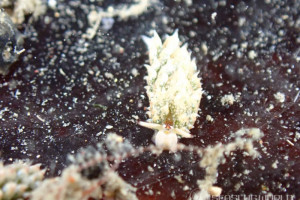
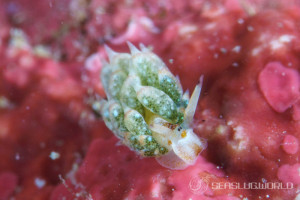
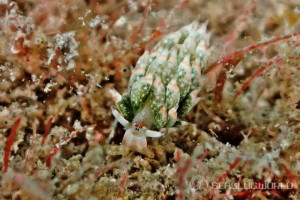
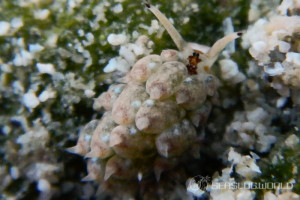
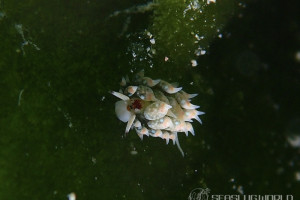
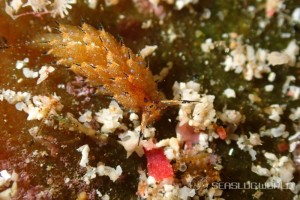
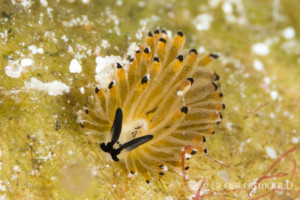
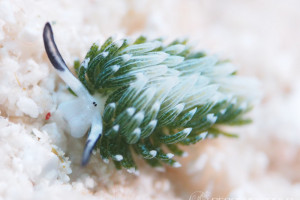
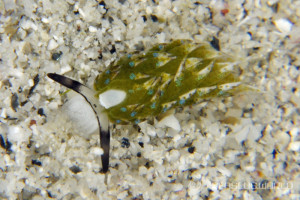
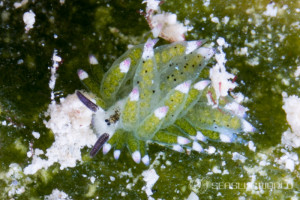
Holotype 5 mm, paratypes 5-10 mm. Brown contiguous eyes sit between the bases of the rhinophores. The anterior corners of the foot are not extended. Rhinophores white with black tips. The white head bears a conspicuous red mark behind the eyes, shaped like a posteriorly pointing arrowhead. Cerata in 8 rows, all the same colour: green spotted with white dots; the distal portion of each ceras has many small red spots, increasing in density distally and eventually forming a red line, with white pointed tips. On the dorso-distal part of each ceras is an eye-like pattern — a white spot encircled by a dark green ring. In one paratype only a red line is present on the head.Distribution
Type locality: between Uganzaki and Yarabuzaki on Ishigaki Island, 0.5-1 m deep on Avrainvillea erecta. Known from the Ryukyu Islands.Etymology
The specific epithet is based on the name of Vega, the brilliant first-magnitude star in the constellation Lyra.Remarks
Resembles Costasiella oculifera in colour but is separated by the eye-like pattern on the cerata, which is lacking in that species. Both share a conspicuous mark behind the eyes, but the shape and colour differ. Unlike its close congeners, the anterior corners of the foot do not protrude.References
Featured in this book
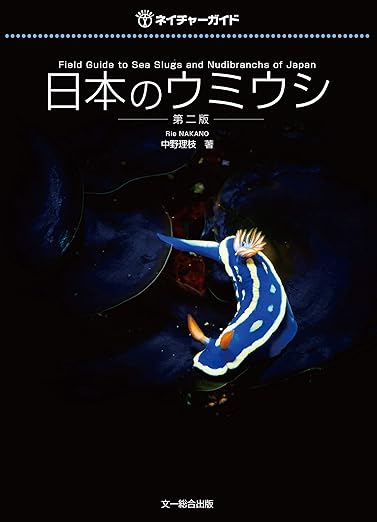
中野理枝. (2019). 日本のウミウシ. 第二版. 文一総合出版.
文一総合出版
This species, Costasiella vegae, is included in the book.
View on Amazon PR (Amazon Associates)Seasonality
Shooting Locations
Loading shooting locations...
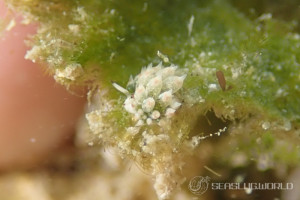
Photos of Costasiella vegae

















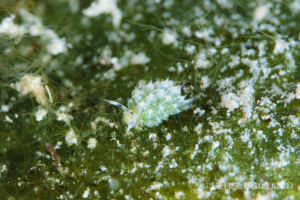
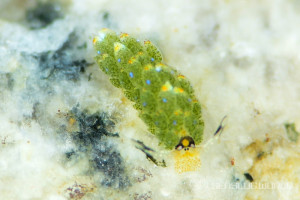
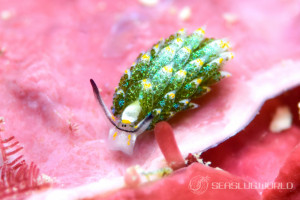
Same Genus Nudibranchs
Academic Database
Sea slug observation data is available in international marine biodiversity databases.