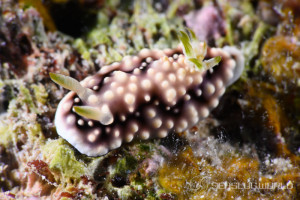
Costasiella usagi M. Ichikawa, 1993
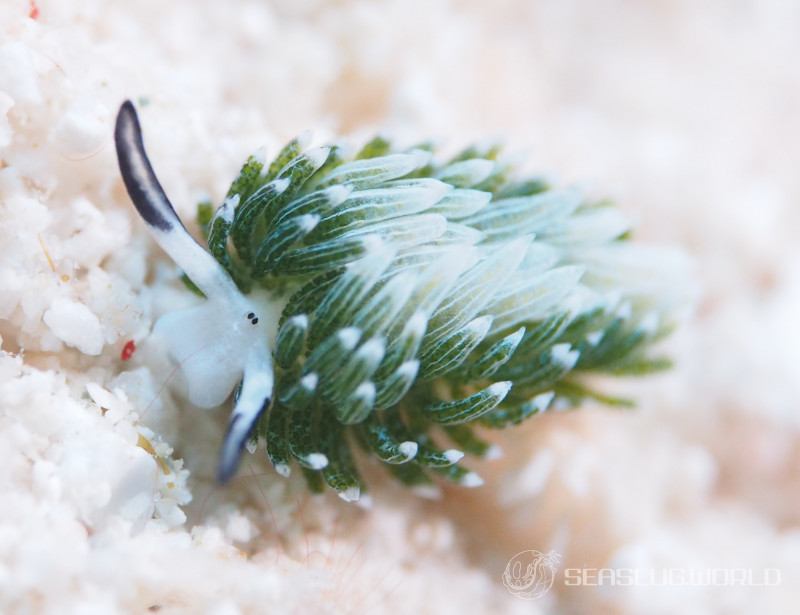
- Location
- Sakyudensetsu, Miyakojima, Okinawa, Japan
- Date
- 2017/11/26
- Length
- 3mm
- Depth
- 7.0m
- Water temperature
- 24.6℃
Description
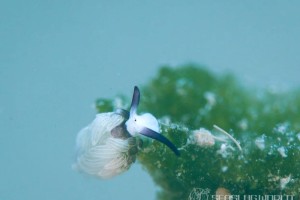
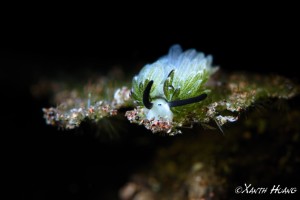
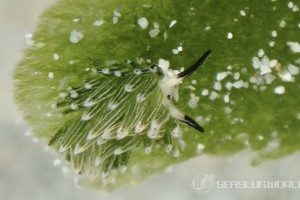
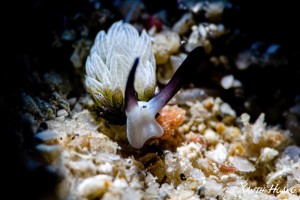
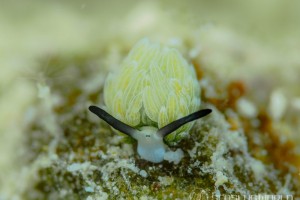
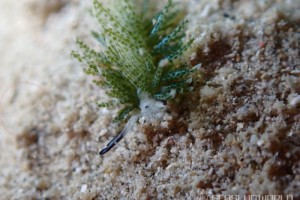
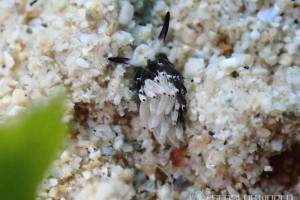
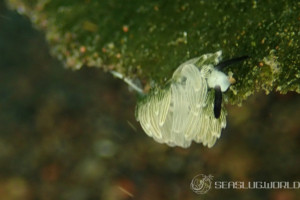
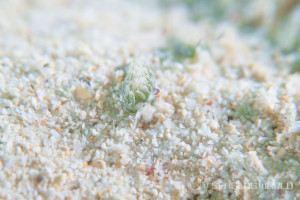
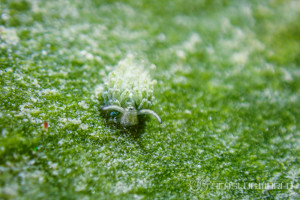
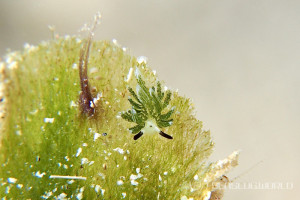
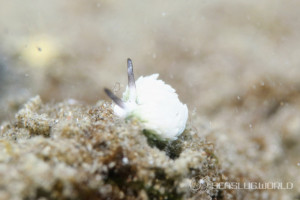
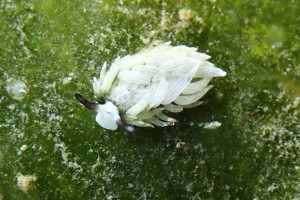
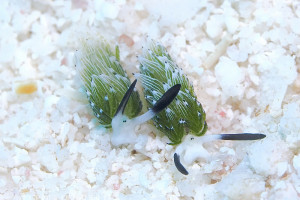
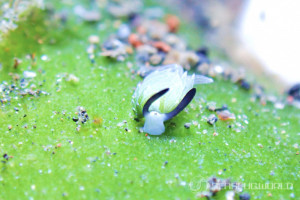
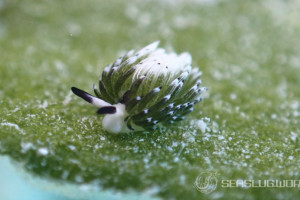
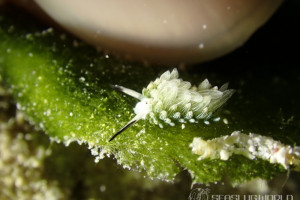
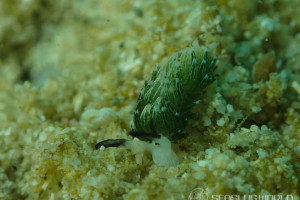
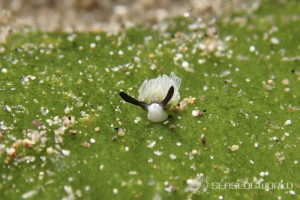
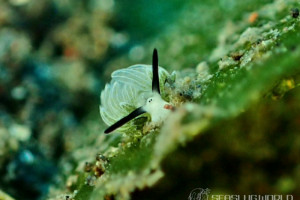
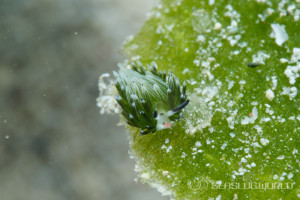
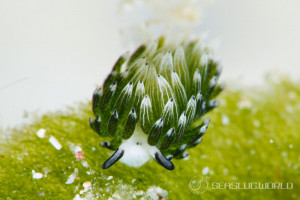
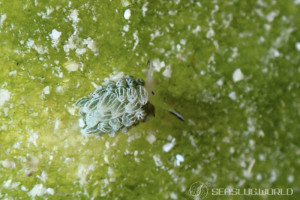
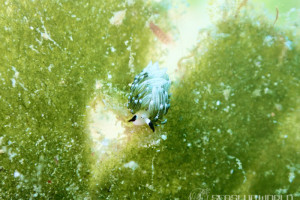
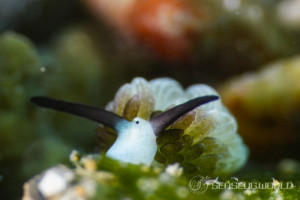
Holotype 10 mm. The large eyes lie close together between the bases of the simple rhinophores. The anterior corners of the foot are tentaculiform and the tail is long and pointed. The head and tail are unpigmented; the rhinophores are black. The median cerata are grey (in smaller paratypes they can be green), while the outer cerata are black. All cerata have a white sub-apex with a black tip and bear longitudinal striations running from the base toward the apex. The cerata are arranged in about 10 rows. The ventral side of the foot is white.Distribution
Type locality: Ishigaki Island, between Uganzaki and Yarabuzaki, 0.5-1 m deep, on Avrainvillea erecta. Now widely recorded across the tropical and subtropical western Pacific, with records from Japan, the Philippines, Malaysia, Papua New Guinea, Guam, and northern Australia.Etymology
Living animals have a jerky locomotion, throwing the rhinophores forwards and backwards and pulling themselves along — a movement reminiscent of a hopping rabbit. The specific epithet usagi is taken directly from the Japanese word for "rabbit" (兎) and used as an indeclinable noun in apposition.Remarks
A sacoglossan ("sap-sucking") sea slug that feeds on the green alga Avrainvillea (notably A. erecta), sequestering functional chloroplasts and retaining them for photosynthesis (kleptoplasty). It is separated from other Costasiella by the contrasting colours of the median and outer cerata.References
- Costasiella usagi n. sp., Ichikawa M. (1993). Saccoglossa (Opisthobranchia) from the Ryukyu Islands. Publications of the Seto Marine Biological Laboratory. 36(3): 119-139. https://doi.org/10.5134/176229
- ウサギモウミウシ(新称), 小野篤司. (2004). 沖縄のウミウシ. ラトルズ.
- Costasiella usagi Ichikawa, 1993, Jensen K.R., Krug P.J., Dupont A. & Nishina M. (2014). A review of taxonomy and phylogenetic relationships in the genus Costasiella (Heterobranchia: Sacoglossa), with a description of a new species. Journal of Molluscan Studies. 80(5): 511-525.
A Kindle field guide by the site author
Kimoto N. (2026). Sea Slugs of Japan & the Indo-Pacific, 2nd Edition.
Kindle Edition
View on Amazon PR (Amazon Associates)Seasonality
Shooting Locations
Loading shooting locations...
Photos of Costasiella usagi
Tag:



















Same Genus Nudibranchs
Similar Colors Nudibranchs
Academic Database
Sea slug observation data is available in international marine biodiversity databases.