Costasiella paweli M. Ichikawa, 1993
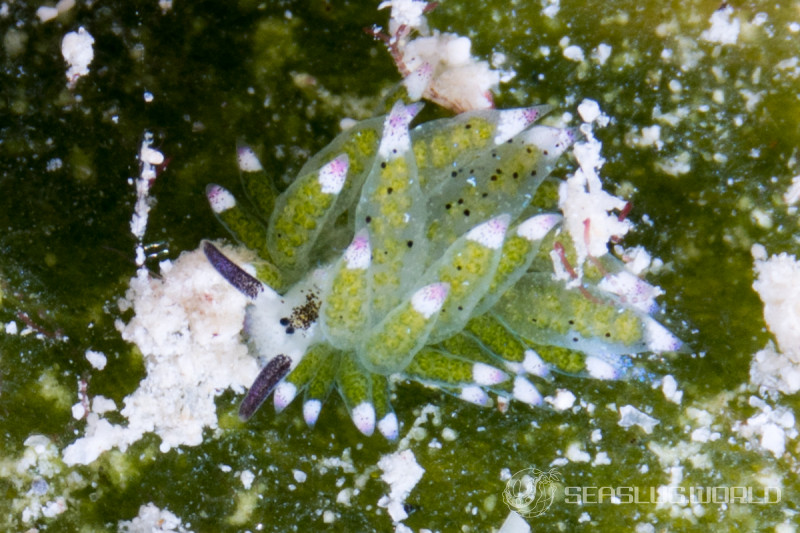
- Location
- Dorodoro Park II, Miyakojima, Okinawa, Japan
- Date
- 2018/07/04
- Length
- 6mm
- Depth
- 20.0m
- Water temperature
- 26.0℃
Description
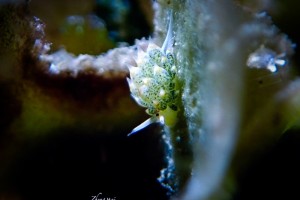
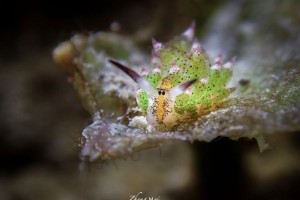
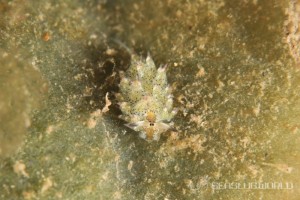
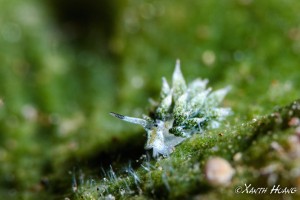
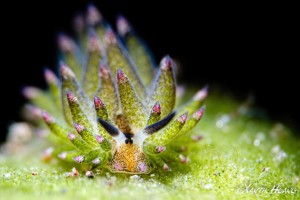
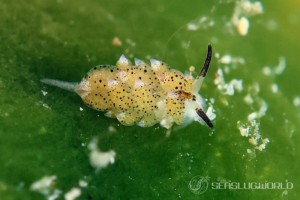
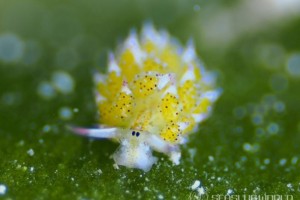
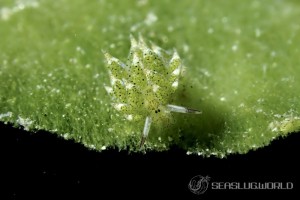
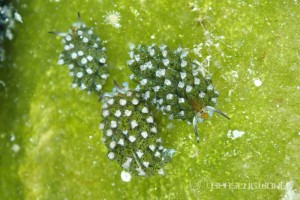
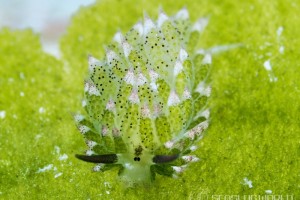
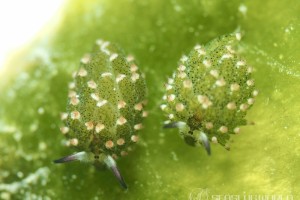
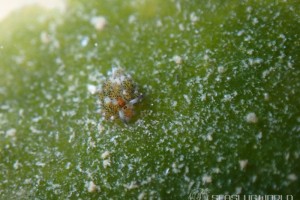
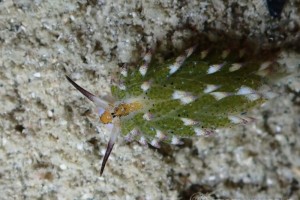
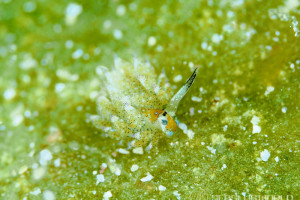
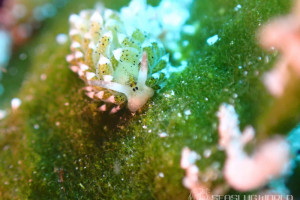
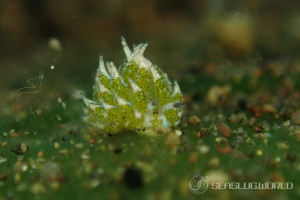
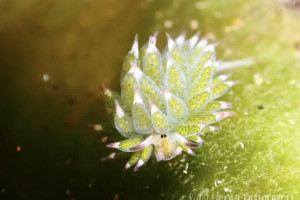
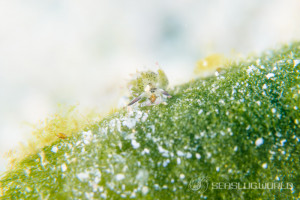
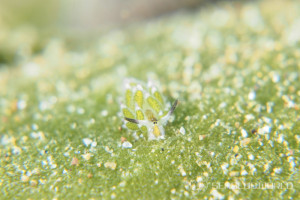
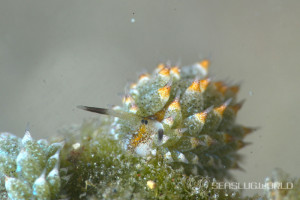
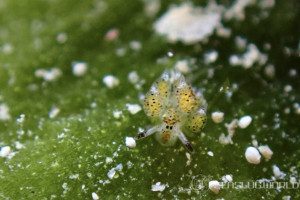
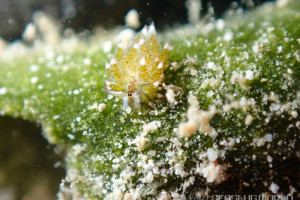
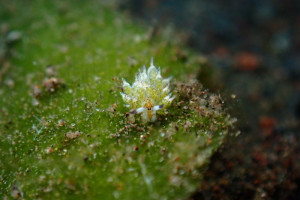
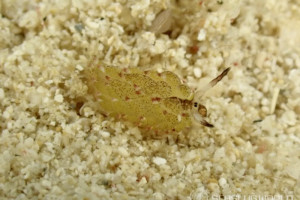
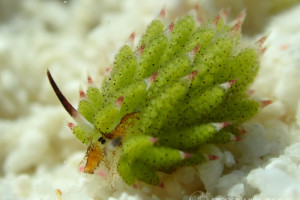
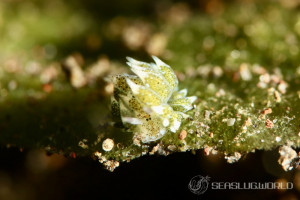
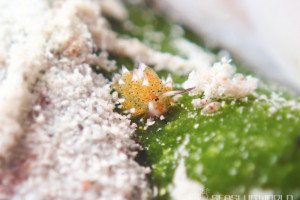
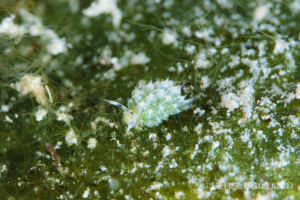
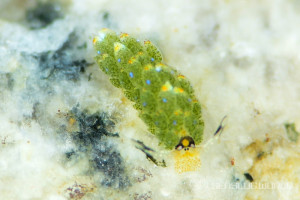
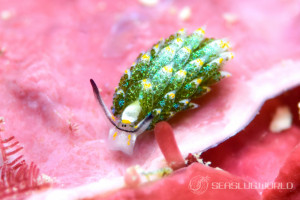
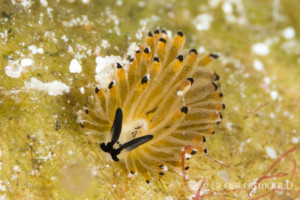
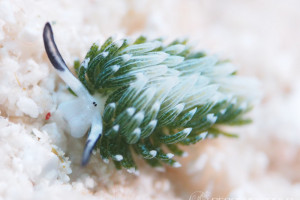
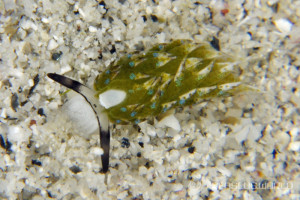
Holotype 5 mm, paratypes 3-7 mm. Large contiguous eyes lie between long, simple rhinophores. The anterior corners of the foot are produced into long tentacles. Many inflated cerata are arranged in about 10 dense rows, and the pointed tail protrudes behind the cerata. The head and tail are white; the rhinophores are black or dark blue. A distinctive dark mark sits behind the eyes — the anterior part somewhat star-shaped, the posterior part elongated. The anterior margin of the foot and the area dorsal to the mouth are also darkly pigmented. The cerata are green with white tips and are speckled with small black chromatophores.Distribution
Type locality: Oura Beach, Miyako Island, 0.5-1 m deep, on the green alga Avrainvillea erecta. The original material consisted of six specimens collected in June 1991, with the holotype deposited at NHMW (NHMW 85996).Etymology
The specific epithet paweli honours Pawel Slawatycki, the colleague who found the first specimen.Remarks
At the time of description, the only Japanese Costasiella on record was Costasiella formicaria, from which C. paweli is distinguished by size, colour pattern and the number of ceratal rows.References
- Costasiella paweli n. sp., Ichikawa M. (1993). Saccoglossa (Opisthobranchia) from the Ryukyu Islands. Publications of the Seto Marine Biological Laboratory. 36(3): 119-139. https://doi.org/10.5134/176229
- クサイロモウミウシ(新称), 小野篤司. (2004). 沖縄のウミウシ. ラトルズ.
- Jensen K.R. (2007) Biogeography of the Sacoglossa (Mollusca, Opisthobranchia). Bonner Zoologische Beiträge 55:255–281.
A Kindle field guide by the site author
Kimoto N. (2026). Sea Slugs of Japan & the Indo-Pacific, 2nd Edition.
Kindle Edition
View on Amazon PR (Amazon Associates)Seasonality
Shooting Locations
Loading shooting locations...
Photos of Costasiella paweli
Tag:

















Same Genus Nudibranchs
Academic Database
Sea slug observation data is available in international marine biodiversity databases.