Costasiella formicaria (Baba, 1959)
Description
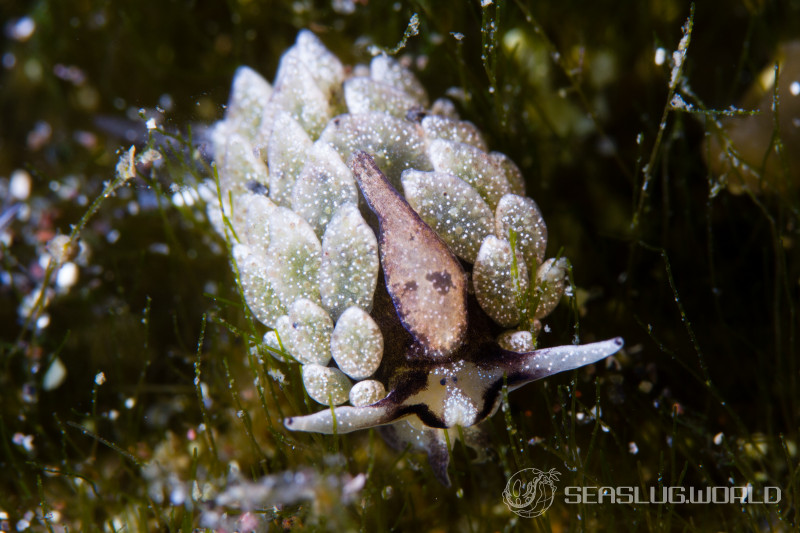
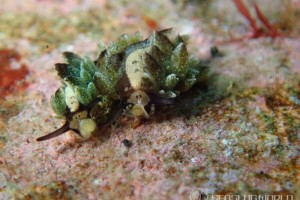
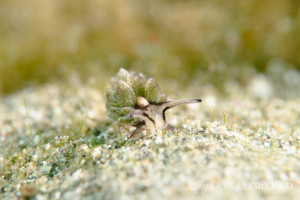
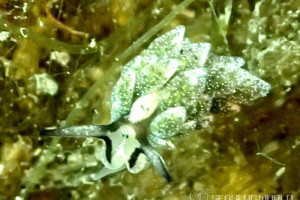
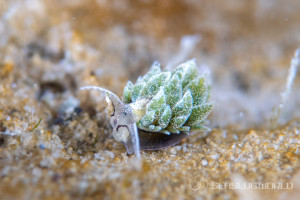
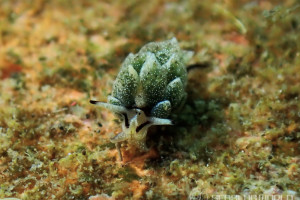
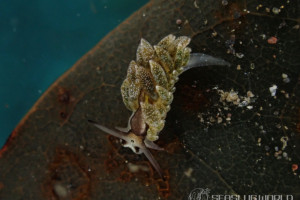
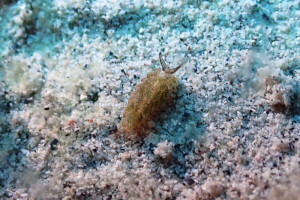
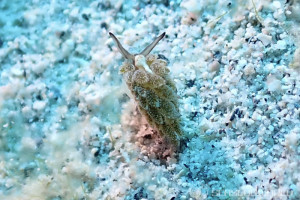
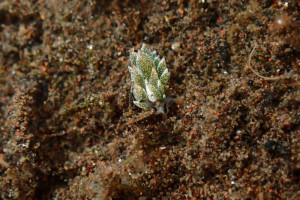
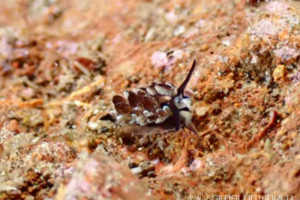
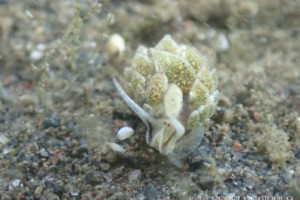
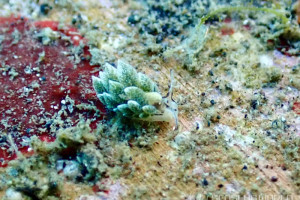
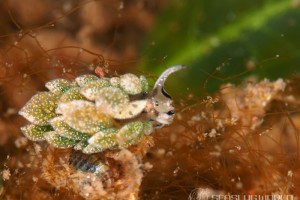
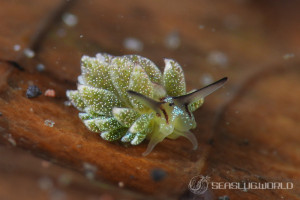
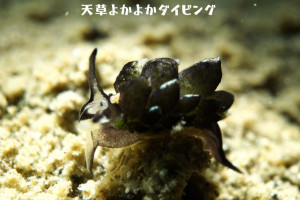
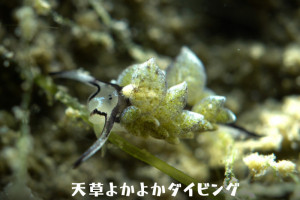
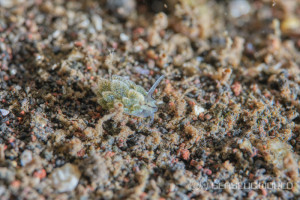
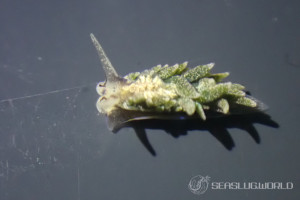
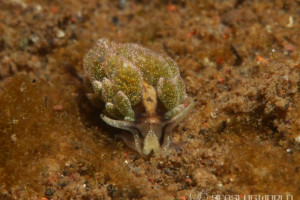
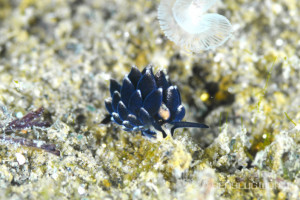
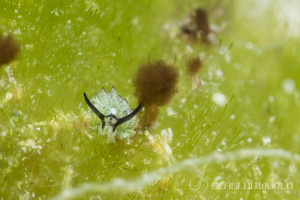
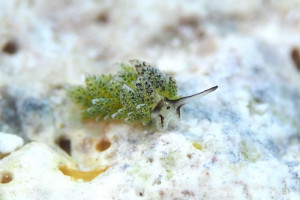
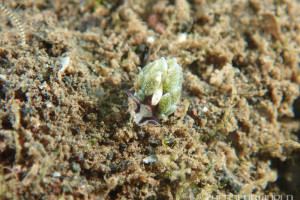
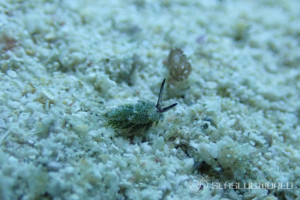
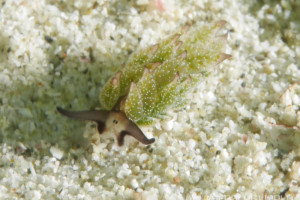
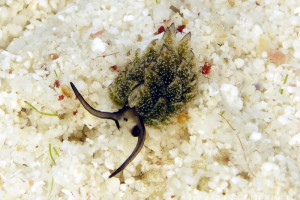
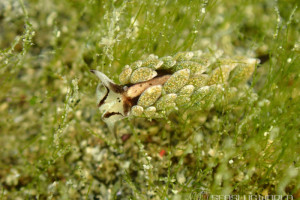
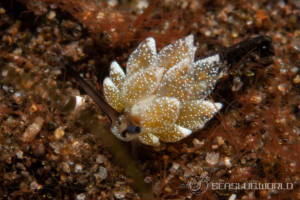
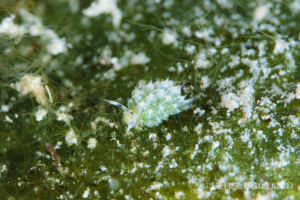
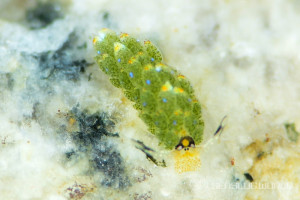
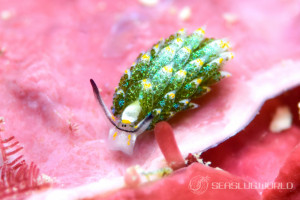
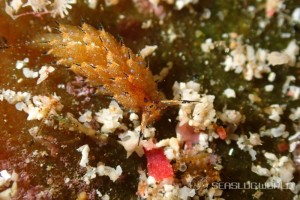
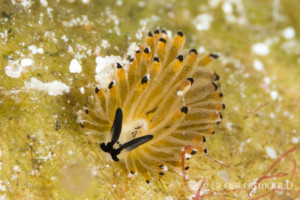
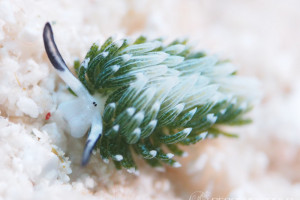
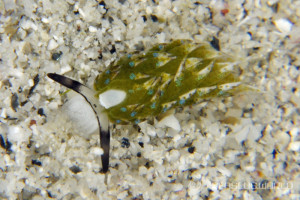
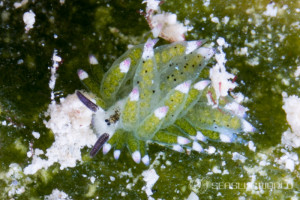
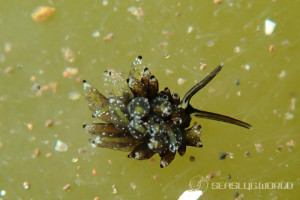
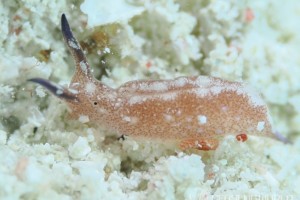
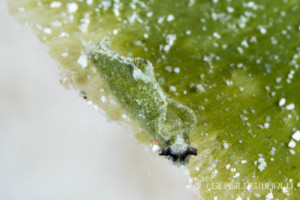
A medium-sized sacoglossan 7-10 mm long, with a striking black-ant appearance. Rhinophores simple (with a trace of an outer longitudinal groove near the base). The foot corners are unusually produced into long, pointed, tentacle-like processes. Fusiform cerata are arranged in 5-7 oblique rows on each side of the back, with 3-4 cerata per row. The pericardial prominence is strikingly elongate-oval, running from behind the rhinophore bases to about the middle of the back. General body colour black; nearly all specimens bear a white patch on the top of the head between the rhinophores. The cerata are always white-tipped, and the sole is colourless.Distribution
Type locality: Tomioka, Amakusa (Kumamoto Pref., Japan). The species has also been recorded from Niigata Pref. on the Japan-Sea coast, and is now known as a member of the filamentous-green-algal sacoglossan guild of Honshū and Okinawa.Etymology
The specific epithet formicarius (from Latin formica, ant) reflects the body shape and colour of the animal — "just like a black ant in appearance" — as noted in the opening of the original description.Remarks
Originally placed in Stiliger (subgenus Stiliger) as S. (S.) formicarius in the masculine form, the species was later transferred to Costasiella.References
- Stiliger (Stiliger) formicarius BABA, n. sp. Oh-arimo-umiushi (n. n.)., Baba K. (1959). THE FAMILY STILIGERIDAE FROM JAPAN (OPISTHOBRANCHIA-SACOGLOSSA). Publications of the Seto Marine Biological Laboratory. 7(3): 327-334. https://doi.org/10.5134/174635
- オオアリモウミウシ, 高岡高等学校生物研究会(編). (1964). 富山湾産後鰓類図譜.
- サカキウミウシ(新称), 鈴木敬宇. (2000). ウミウシガイドブック〈2〉. TBSブリタニカ.
- 高岡生物研究会. (2002). 日本海のウミウシ. 第2版.
A Kindle field guide by the site author
Kimoto N. (2026). Sea Slugs of Japan & the Indo-Pacific, 2nd Edition.
Kindle Edition
View on Amazon PR (Amazon Associates)Seasonality
Shooting Locations
Loading shooting locations...
Photos of Costasiella formicaria
Tag:





















Same Genus Nudibranchs
Similar Colors Nudibranchs


Academic Database
Sea slug observation data is available in international marine biodiversity databases.