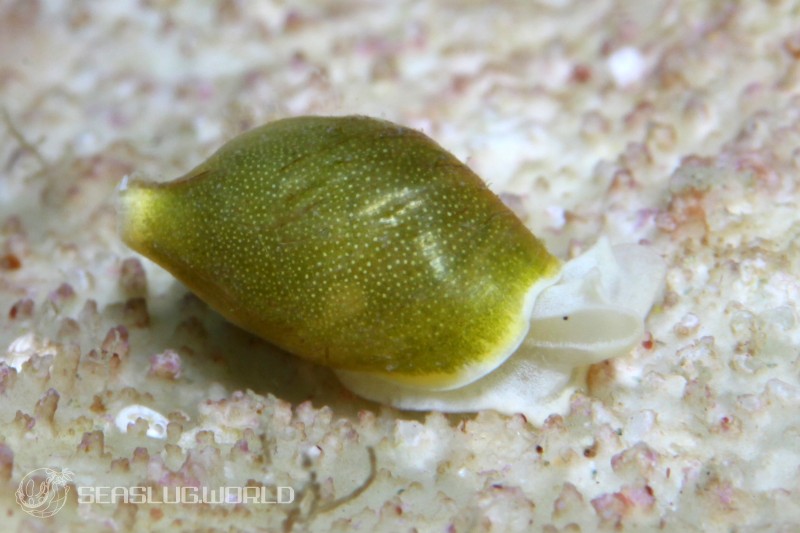
Volvatella viridis Hamatani, 1976
- Location
- Makiminato, Okinawa Island (Chatan and Southern area), Okinawa, Japan
- Date
- 2025/05/20
- Length
- 6mm
- Depth
- 4.0m
- Water temperature
- 25.0℃
Description
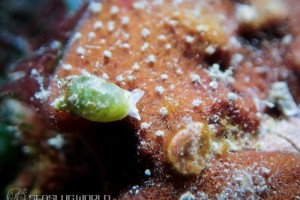
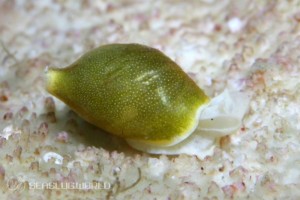
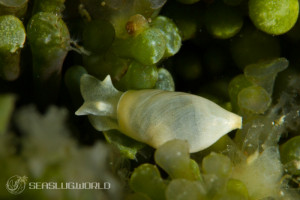
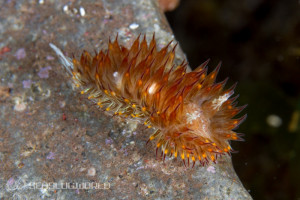
A small shelled sacoglossan, 5-12 mm in shell length, immediately recognizable in life by the grass-green appearance of the entire shell, a colour produced by green pigments embedded in the mantle tissue underneath. The soft body extending out of the shell is milky white in living animals but discolours to a horny yellow in alcohol. The shell is roundish ovoid, very thin, flexible and extremely gracile, calcareous but covered by a membraneous pale-straw epidermis. The aperture is large, occupying half or slightly more of the shell length, so that the body whorl is comparatively small but sharply dilated towards the ventral side. The posterior spout, characteristic of the genus, is unusually short in this species (about one-tenth of the shell length) and is set conspicuously off the median line, on the right when the shell is viewed dorsally. The rhinophores are gently raised conical lobes, with a pure black eye visible through the thick tissue in a deep lateral groove of the head. The anterior corners of the head function as oral tentacles and bear Hancock's organ on their inner surface. The foot is small but broad, broader anteriorly. Numerous opaque white dots are scattered on the soft body, especially densely along the anterior margin of the foot, on the oral tentacles, and on the rhinophores. No penial stylet is present.Distribution
Known from the shallow subtidal of central Honshu (Cape Shiono-misaki, Kii Peninsula), the Amami Islands (Amami-Ōshima and Yoron Island), and the Ryukyu Archipelago (Kabira, Ishigaki Island). The type locality is Yoron Island, the southernmost of the Amami Islands, where the holotype was collected at low water from the thallus of Caulerpa racemosa var. clavifera f. macrophysa growing on the land side of a protecting reef.Etymology
The specific epithet viridis is the Latin adjective for "green", referring to the conspicuous grass-green colour of the living animal's shell.Notes
Described by Iwao Hamatani from eight specimens collected during caulerpan-microfauna surveys at Cape Shiono-misaki (August 1974), Amami-Ōshima (March 1974) and Yoron Island (March 1975). An additional specimen, taken on 2 May 1975 at Kabira, Ishigaki Island, by K. Kitao on Caulerpa racemosa var. laete-virens, was added in a postscript to the same paper. The hosts are Caulerpa racemosa var. clavifera f. macrophysa and var. laete-virens, consistent with the obligate Caulerpa-feeding habit of the genus. In shell shape V. viridis approaches Volvatella cumingii (A. Adams, 1855) from Santa Elena and western Colombia, but is distinguished from all other Volvatella species by the very short, right-displaced spout combined with the green colour of the living shell.References
- Volvatella viridis sp. nov. (Midori-budoginugai nov.), Hamatani I. (1976). PRELIMINARY ACCOUNT OF A NEW SPECIES OF VOLVATELLA PEASE, 1860, V. VIRIDIS SP. NOV., FOUND IN THE CAULERPAN MICROFAUNA IN JAPAN (OPISTHOBRANCHIA : SACOGLOSSA). Publications of the Seto Marine Biological Laboratory. 22(6): 371-376. https://doi.org/10.5134/175912
- Volvatella viridis (compared), Clark K.B. (1982). A new Volvatella (Mollusca: Ascoglossa) from Bermuda, with comments on the genus. Bulletin of Marine Science. 32(1): 112-120.
- ワカクサブドウギヌ(新称), 今川郁. (2026). 沖縄のウミウシ: DNA解析による最新の分類図鑑1089種. 誠文堂新光社.
Related articles

The steps between a DNA match and a new name (Ascobulla, Mourgona, Volvatella)
A Kindle field guide by the site author
Kimoto N. (2026). Sea Slugs of Japan & the Indo-Pacific, 2nd Edition.
Kindle Edition
View on Amazon PR (Amazon Associates)Seasonality
Shooting Locations
Loading shooting locations...
Photos of Volvatella viridis


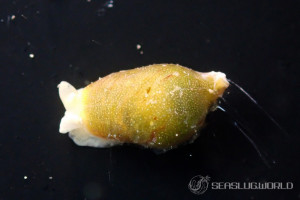

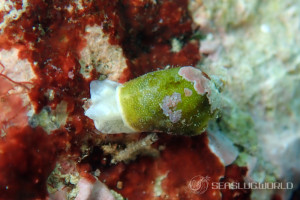
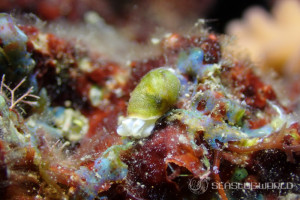
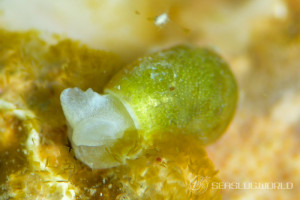
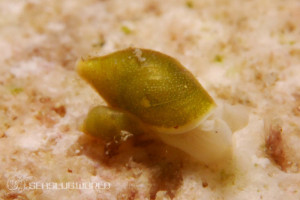

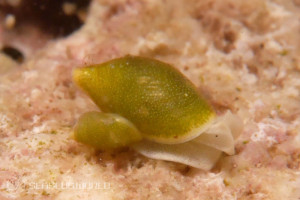
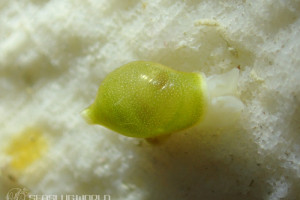
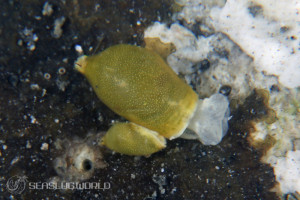
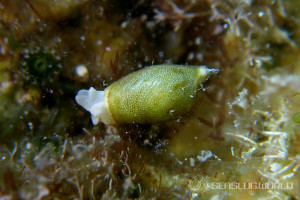

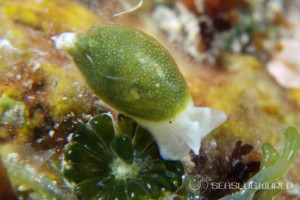
Specimen & DNA
| Observation | Database | COI | 16S | H3 |
|---|---|---|---|---|
| #53998 | BOLD Systems | SSWBP679-26 |
Same Genus Nudibranchs
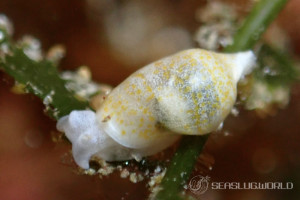
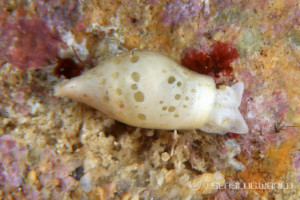
Similar Colors Nudibranchs

Academic Database
Sea slug observation data is available in international marine biodiversity databases.