Janolus toyamensis Baba & Abe, 1970
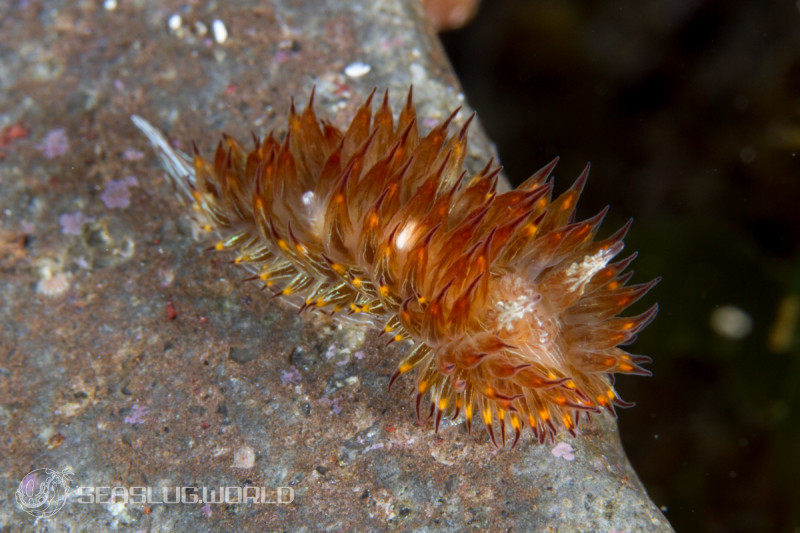
- Location
- Otchogahama, Hachijo Island, Tokyo, Japan
- Date
- 2018/05/16
- Length
- 10mm
- Depth
- 13.0m
- Water temperature
- 23.0℃
Description
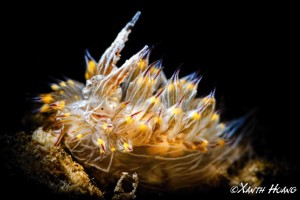
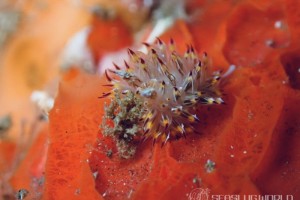
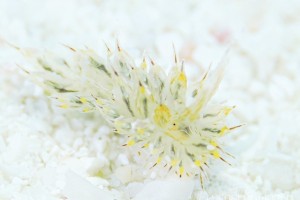
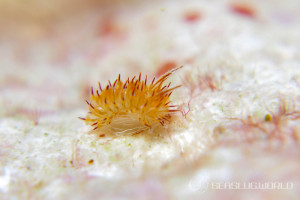
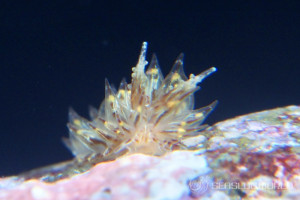
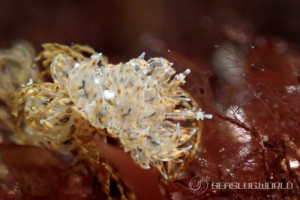
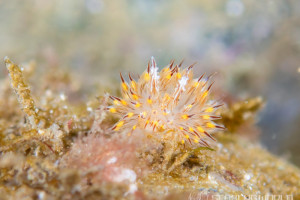
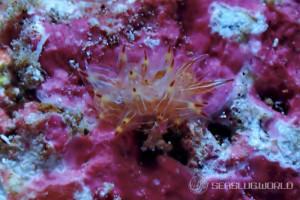
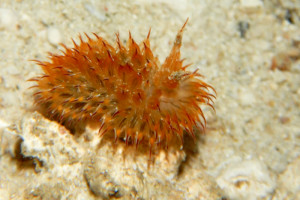
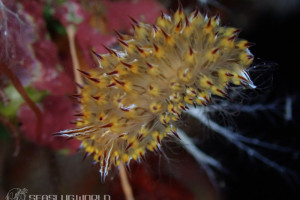
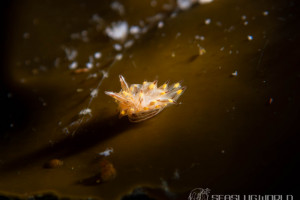
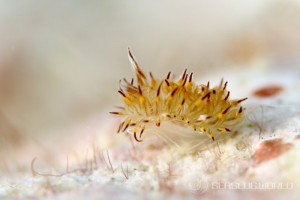
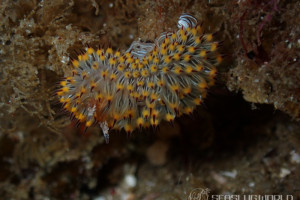
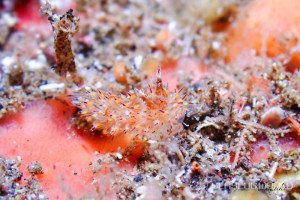
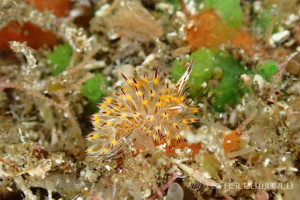
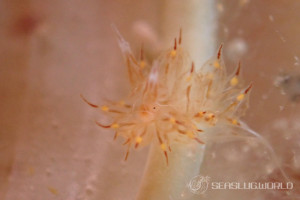
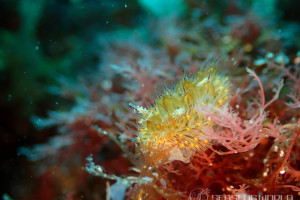
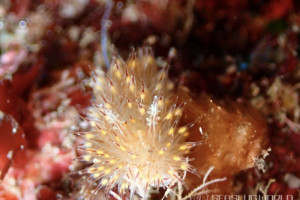
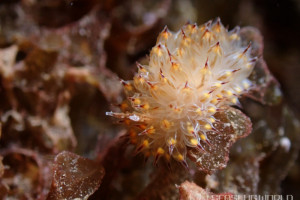
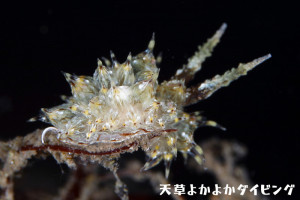
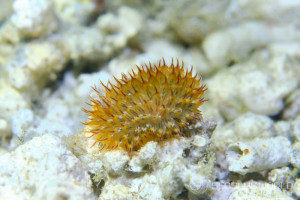
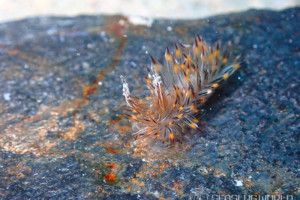
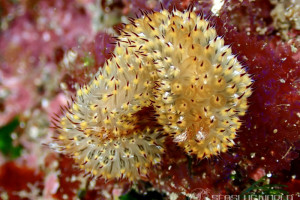
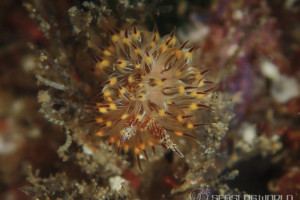
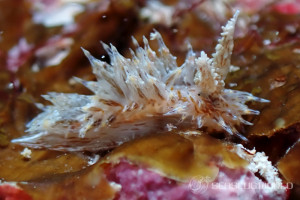
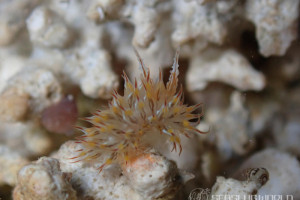
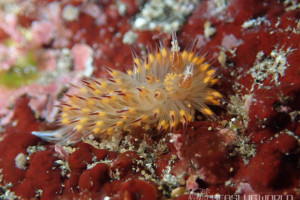
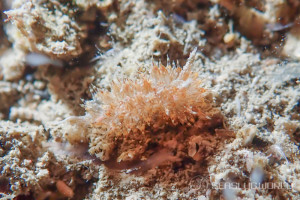
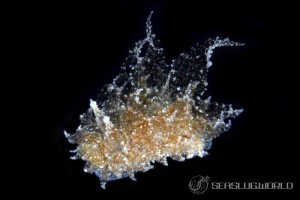
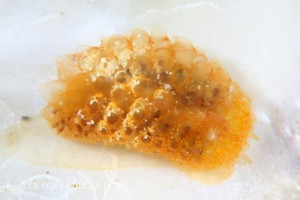
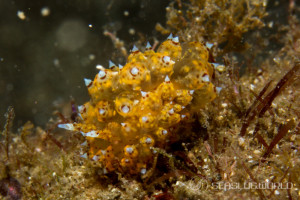
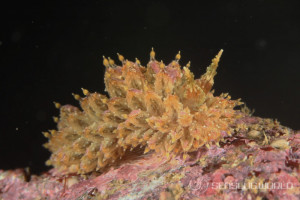
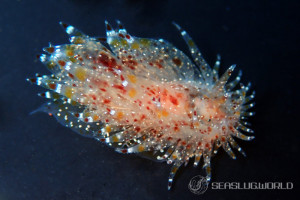
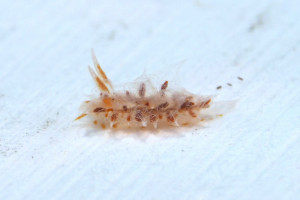
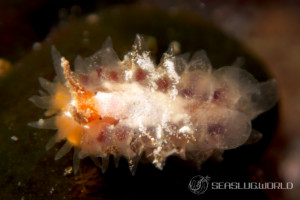
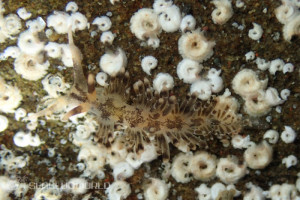
A small aeolid-type nudibranch about 10 mm in length. The oral tentacles are short and linear; the rhinophores are stout, with only a slight indication of perfoliations on the upper half (lamellae not clearly marked in the holotype). A black crest runs between the rhinophores (inter-rhinophorial crest). The branchial papillae fall off easily and are irregularly arranged in 1-2 longitudinal rows along the back margins, becoming progressively more elongated from front to rear; they are fusiform, sparsely and indistinctly tuberculated, and exceedingly drawn out into a tapering tip. The bare median part of the back is sparsely covered with minute tubercles. The anus opens in the median dorsal line, posteriorly; the genital orifice lies below and behind the right rhinophore, and the nephroproct is on the right side below the middle of the pericardial prominence. The foot is broad, with rounded corners; no tail crest is present.The general integument of the body is translucent ashy yellow, with short longitudinal lines of opaque white scattered on the back, sides, sole and branchial papillae. Additional spots of dark brown are present on the sides and the foot brim. Each cephalic structure (rhinophore, oral tentacle) is dark brown below and bears a chrome-yellow spot; the inter-rhinophorial crest is black. Each branchial papilla bears a chrome-yellow spot a short distance below the apex, which itself is tinged with reddish brown; the liver diverticulum running into the papilla is dark green.
The jaws are approximately equal, united by a ligament, yellowish brown, and the cutting edge of the jaw-plates bears no serial denticulations whatever. The radula is slightly yellowish, with the formula 20 × 10-20 · 1 · 10-20; the central tooth is unicuspidate, and the laterals are all hooked and quite smooth. The liver diverticulum within each branchial papilla is sometimes simple, but more often branched. Genitalia were not determined in the type material.
Distribution
The holotype was collected from the shore of Nakata, Toyama Bay, on the Japan Sea coast of Honshu, on 4 August 1960. Two paratypes were taken at the shore of Cape Echizen-misaki, Fukui Prefecture (Japan Sea coast), on 14 August 1966; according to a coloured drawing made from life, the rhinophores in these specimens had more developed lamellae and the inter-rhinophorial crest assumed a vertically lobate appearance. An additional specimen was collected from the shore of Okazaki, Tsuruga Bay (Japan Sea coast of Honshu) on 30 July 1955 and is represented only by a coloured drawing made by Abe. The species is so far known only from the Japan Sea side of Honshu.Etymology
The specific epithet toyamensis is Latin for "of Toyama," referring to the type locality, Toyama Bay.Remarks
The Japanese name "Koyanagi-umiushi" was proposed in the original description (Baba & Abe, 1970). Generic assignment to Janolus is based on (1) the presence of an inter-rhinophorial crest, (2) the scattered tubercles on the branchial papillae, and (3) the non-denticulated edge of the jaw-plates. It differs from its congener Janolus mirabilis, described in the same paper, in having fusiform branchial papillae drawn out into a long tapering tip, each bearing a chrome-yellow spot and a reddish brown apex.References
A Kindle field guide by the site author
Kimoto N. (2026). Sea Slugs of Japan & the Indo-Pacific, 2nd Edition.
Kindle Edition
View on Amazon PR (Amazon Associates)Seasonality
Shooting Locations
Loading shooting locations...
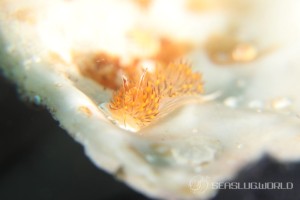
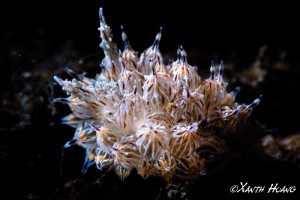
Photos of Janolus toyamensis
Tag:
























Same Genus Nudibranchs
Similar Colors Nudibranchs
Academic Database
Sea slug observation data is available in international marine biodiversity databases.