Phestilla melanobrachia Bergh, 1874
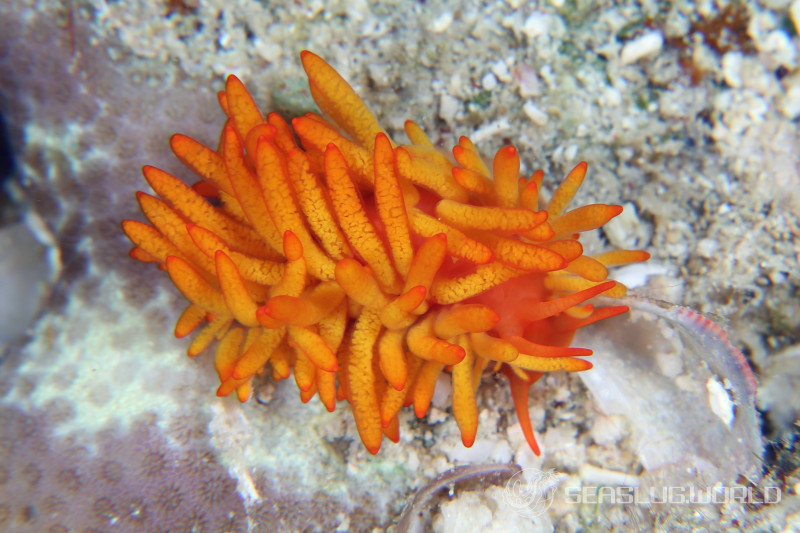
- Location
- Cape Maeda, Okinawa Island (Onna and Yomitan area), Okinawa, Japan
- Date
- 2015/09/30
- Length
- 10mm
- Depth
- 1.0m
- Water temperature
- 28.0℃
Description
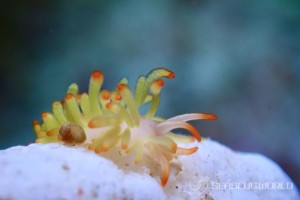
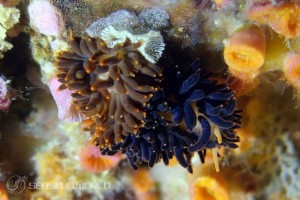
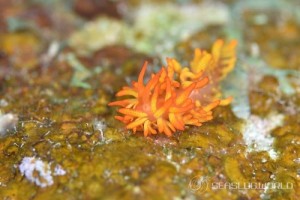
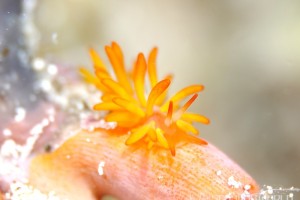
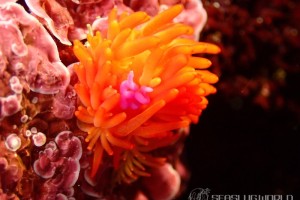
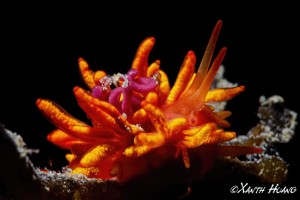
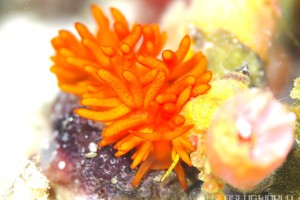
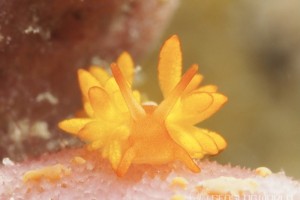
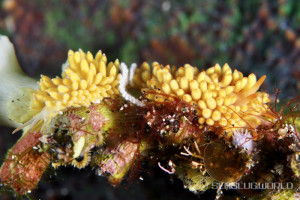
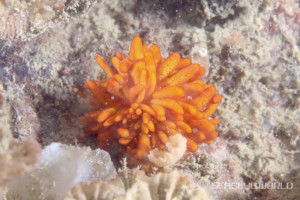
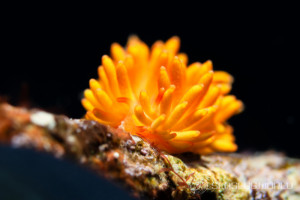
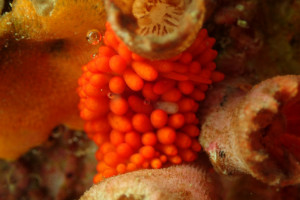
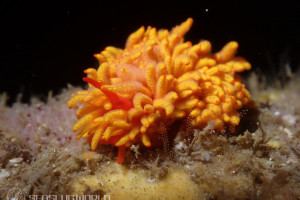
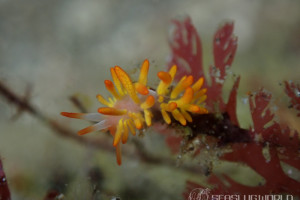
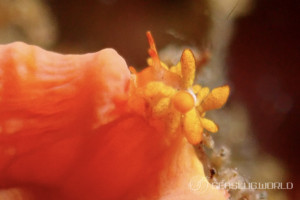
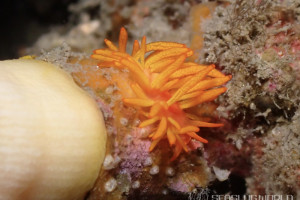
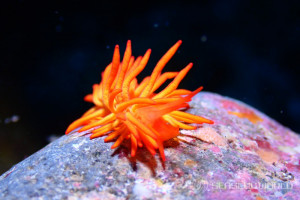
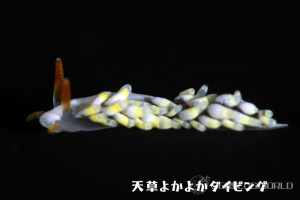
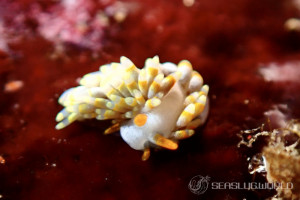
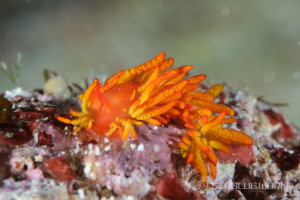
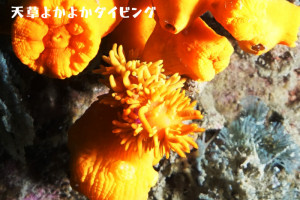
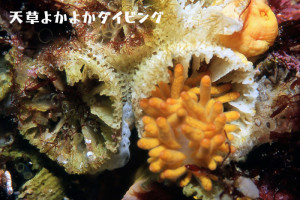
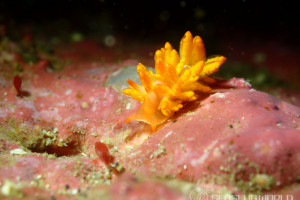
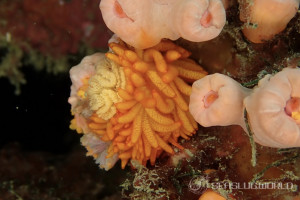
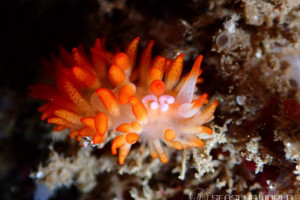
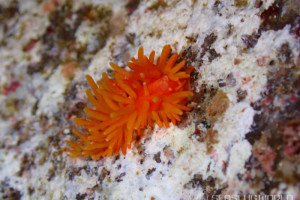
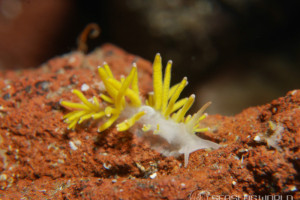
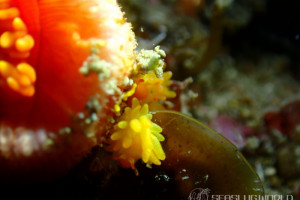
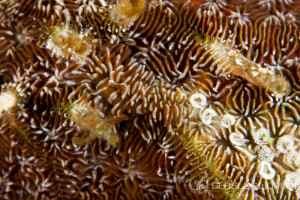
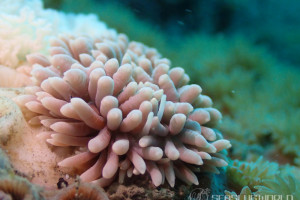
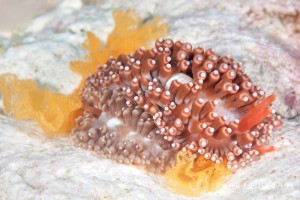
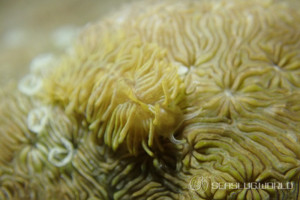
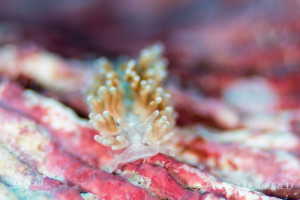
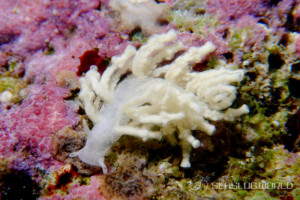
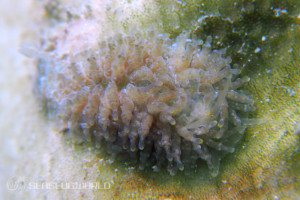
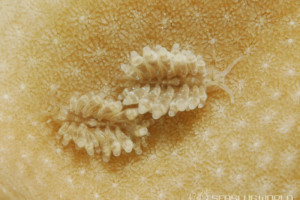
A medium-sized coral-feeding aeolid, around 20 mm in length. The cerata are blackish to black-grey with a dull greenish metallic sheen and a reddish-white apical tip — a colour pattern that gives the species its Latin name melanobrachia ("black-armed"). The body ground colour ranges from reddish-brown to grey, dusted with fine white speckles on the head and back. The cerata are arranged on about 14 ceratal pads on each side of the body, with up to 12-14 cerata in the largest groups.The species is a specialised corallivore on dendrophylliid corals, especially Tubastraea (the sun corals known in Japanese as "iboyagi"). The Japanese vernacular name iboyagi-mino-umiushi reflects this feeding preference. Animals often closely match the colour of the host coral (yellow, orange, red), so colouration varies widely between populations.
Distribution
Type locality: Philippine Sea. Widely distributed across the tropical Indo-West Pacific, with records from South Africa, Réunion, Southeast Asia, Japan (Honshu south to the Ryukyus), Hawaii, and the Pacific coast of Mexico.Etymology
The specific epithet melanobrachia derives from Greek melas / melan- ("black") plus Latin brachium ("arm-like structure", here the cerata) — "with black cerata".Remarks
The species was originally described as the type of the new monotypic genus Phestilla. The original description noted the apparent absence of cnidosacs, which became one of the diagnostic features of the genus. Phestilla was temporarily synonymised with Tenellia in earlier molecular phylogenies, but recent revisions have reinstated Phestilla as a distinct coral-feeding genus.References
- Phestilla melanobranchia Bergh, 1874, Baba K. (1984). The anatomy of Phestilla melanobrachia Bergh, 1874, found near the Amakusa Marine Biological Laboratory, Kyushu, Japan (Nudibranchia: Eolidoidea: Tergipedidae). The Veliger. 26(4): 242-247.
- イボヤギミノウミウシ, 小野篤司. (1999). ウミウシガイドブック. TBSブリタニカ.
- イボヤギミノウミウシ, 鈴木敬宇. (2000). ウミウシガイドブック〈2〉. TBSブリタニカ.
- イボヤギミノウミウシ, 殿塚孝昌. (2003). ウミウシガイドブック〈3〉. TBSブリタニカ.
- イボヤギミノウミウシ, 小野篤司. (2004). 沖縄のウミウシ. ラトルズ.
- イボヤギミノウミウシ, 中野理枝. (2004). 本州のウミウシ. ラトルズ.
- イボヤギミノウミウシ, 小野篤司 & 加藤昌一. (2009). ウミウシ. 誠文堂新光社.
- Phestilla melanobrachia, Terrence Gosliner, Ángel Valdés and David Behrens. (2015). Nudibranch and Sea Slug Identification Indo-Pacific. New World Pubns Inc.
- Mehrotra R., Arnold S., Wang A., Chavanich S., Hoeksema B.W. & Caballer M. (2020). A new species of coral-feeding nudibranch (Mollusca: Gastropoda) from the Gulf of Thailand. Marine Biodiversity. 50(3): 36. https://doi.org/10.1007/s12526-020-01050-2
- Tenellia melanobrachia, Fritts-Penniman A.L., Gosliner T.M., Mahardika G.N. & Barber P.H. (2020). Cryptic ecological and geographic diversification in coral-associated nudibranchs. Molecular Phylogenetics and Evolution. 144: 106698. https://doi.org/10.1016/j.ympev.2019.106698
Featured in this book
Terrence Gosliner, Ángel Valdés and David Behrens. (2018). Nudibranch and Sea Slug Identification Indo-Pacific 2nd Edition. New World Pubns Inc.
New World Publications
This species, Phestilla melanobrachia, is included in the book.
View on Amazon PR (Amazon Associates)Seasonality
Shooting Locations
Loading shooting locations...
Photos of Phestilla melanobrachia
Tag:






















Same Genus Nudibranchs
Academic Database
Sea slug observation data is available in international marine biodiversity databases.