Phestilla minor Rudman, 1981
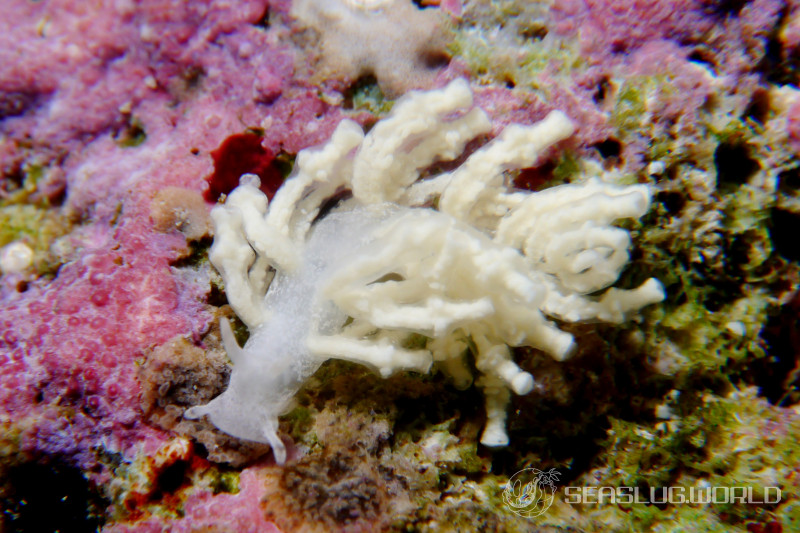
- Location
- Apogama, Okinawa Island (Onna and Yomitan area), Okinawa, Japan
- Date
- 2014/04/25
- Length
- 10mm
- Depth
- 1.0m
- Water temperature
- 22.0℃
Description
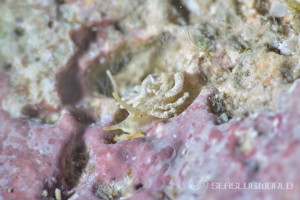
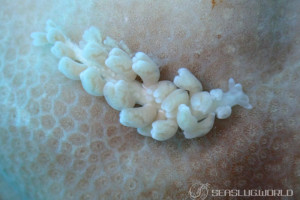
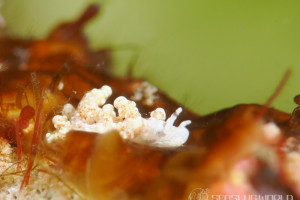
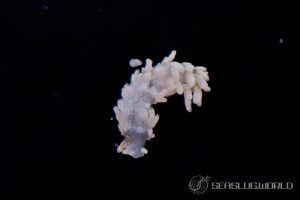
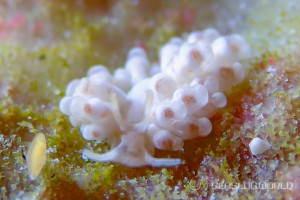
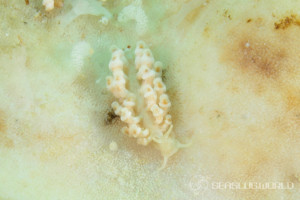
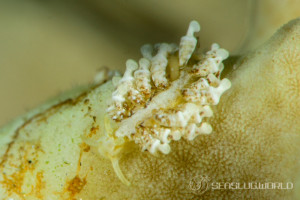
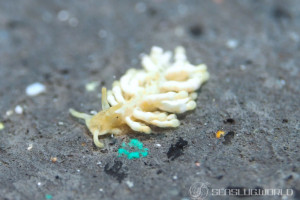
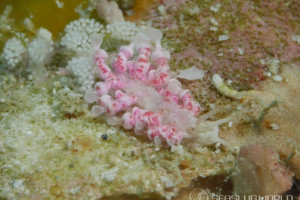
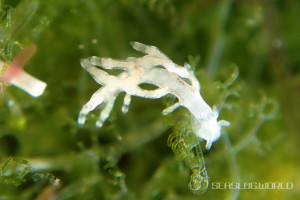
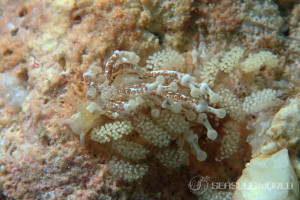
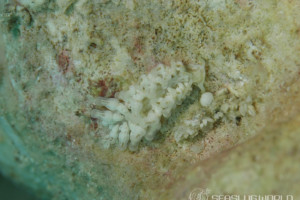
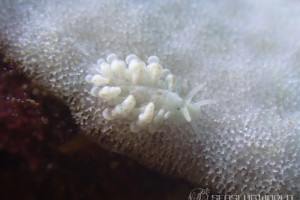
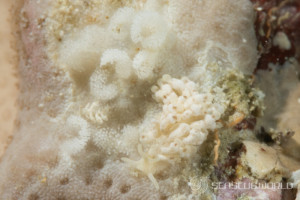
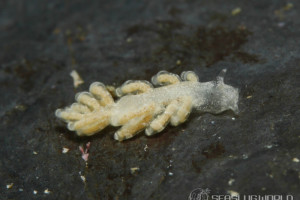
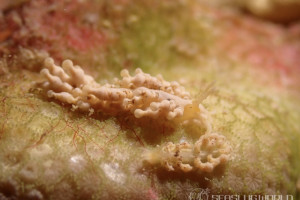
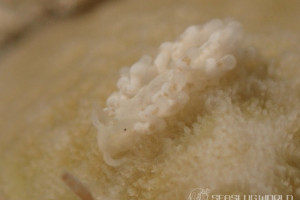
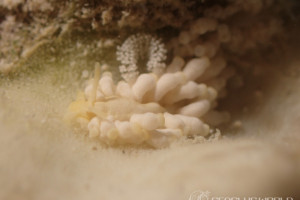
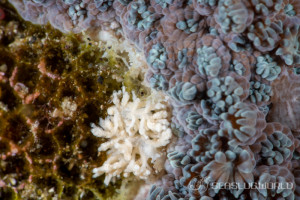
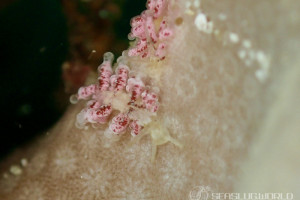
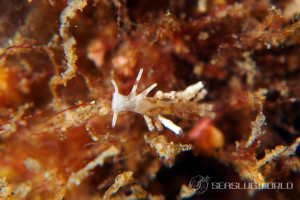
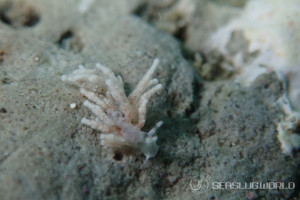
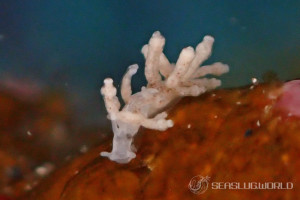
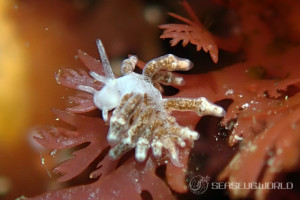
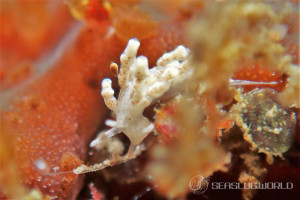
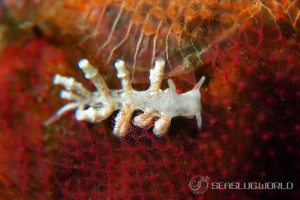
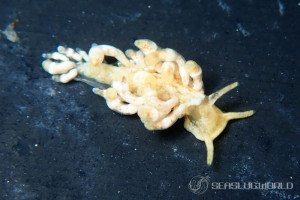
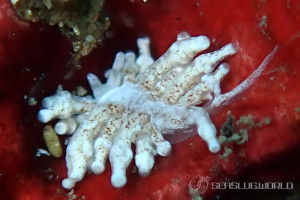
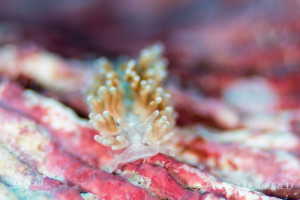
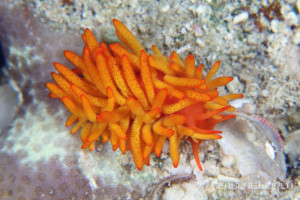
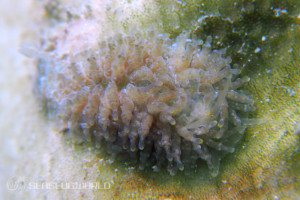
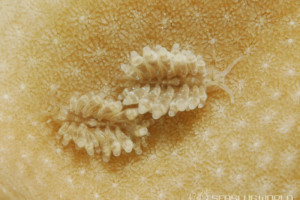
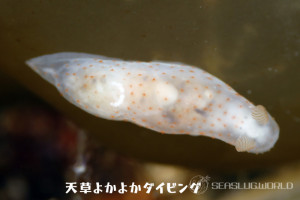
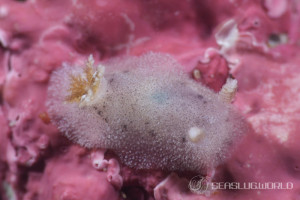
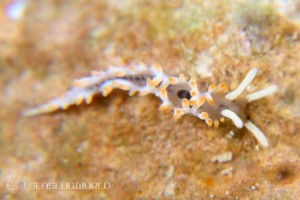
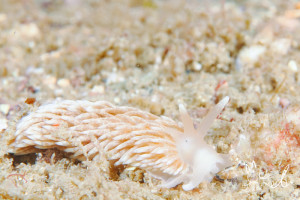
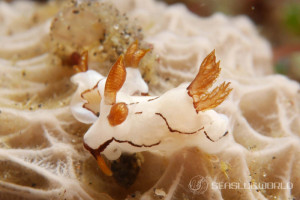
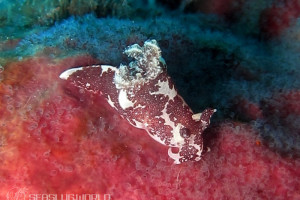
A small Phestilla, seldom longer than 7 mm. The body is narrow with long cerata. Oral tentacles arise from the inner edge of a rounded oral veil; rhinophores smooth and rounded distally. Cerata are arranged in posteriorly sloping rows (not on raised ridges), with three pre-cardiac rows and three to four post-cardiac rows. Each ceras has a swollen distal bulb topped by a small terminal nipple, then a second swollen region, sometimes with a third. Two colour forms exist: (1) a pure-white form, with a translucent body covered by dense white patching, a distinct white collar behind the rhinophores, a white pericardial region, a creamy-white digestive gland with golden-brown specks, and an intense white glandular disc just below each ceras tip; and (2) a golden-brown form, with dark-brown speckling on the cerata over the creamy-white digestive gland. The radula has 25-32 teeth (formula 0.1.0); each tooth bears a long central cusp with four long denticles and up to four secondary denticles per side. The penis has a chitinous stylet.Distribution
Type locality is on Porites colonies on a rock outcrop 1 km south of Kunduchi Beach, Dar es Salaam, Tanzania (February 1977). A widely distributed Indo-West Pacific species, originally recorded from Tanzania, the Great Barrier Reef (Lizard Island), and Hawaii. Subsequent records extend to Madagascar, Seychelles, New Caledonia, Papua New Guinea, the Philippines, Japan, and Guam.Etymology
The specific epithet minor is Latin for smaller, referring to the species' small size compared with other Phestilla (verbatim from the original description).Remarks
Co-occurs with Phestilla lugubris on the same Porites colonies; Hawaiian records are from Porites compressa. This species is unusual in deriving a major proportion of its nutrition from spirocysts (cnidocyte threads of the host coral), with the digestive gland packed with spirocysts in various stages of digestion. Unlike some Phyllodesmium relatives, Phestilla minor does not retain zooxanthellae as symbionts. Distinguished from Phestilla lugubris and Phestilla melanobrachia by (1) colour, (2) much smaller body size, (3) ceras shape (terminal bulb plus nipple plus sub-terminal swelling), and (4) details of the radular teeth.References
- ペスティッラ・ミノル, 小野篤司 & 加藤昌一. (2009). ウミウシ. 誠文堂新光社.
- Phestilla minor, Terrence Gosliner, Ángel Valdés and David Behrens. (2015). Nudibranch and Sea Slug Identification Indo-Pacific. New World Pubns Inc.
- チビミノウミウシ(新称), 中野理枝. (2018). 日本のウミウシ. 文一総合出版.
- Mehrotra R., Arnold S., Wang A., Chavanich S., Hoeksema B.W. & Caballer M. (2020). A new species of coral-feeding nudibranch (Mollusca: Gastropoda) from the Gulf of Thailand. Marine Biodiversity. 50(3): 36. https://doi.org/10.1007/s12526-020-01050-2
- Tenellia minor (T. cf. minor / T. sp. A1-A6 cryptic complex), Fritts-Penniman A.L., Gosliner T.M., Mahardika G.N. & Barber P.H. (2020). Cryptic ecological and geographic diversification in coral-associated nudibranchs. Molecular Phylogenetics and Evolution. 144: 106698. https://doi.org/10.1016/j.ympev.2019.106698
Featured in this book
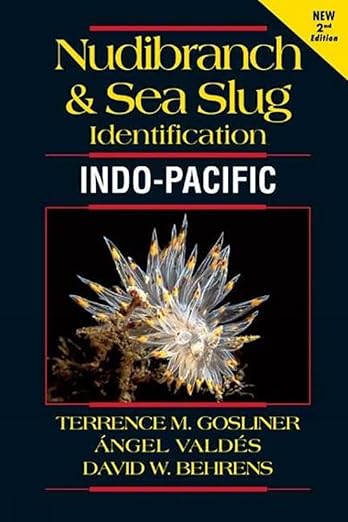
Terrence Gosliner, Ángel Valdés and David Behrens. (2018). Nudibranch and Sea Slug Identification Indo-Pacific 2nd Edition. New World Pubns Inc.
New World Publications
This species, Phestilla minor, is included in the book.
View on Amazon PR (Amazon Associates)Seasonality
Shooting Locations
Loading shooting locations...
Photos of Phestilla minor
Tag:


















Same Genus Nudibranchs
Similar Colors Nudibranchs

Academic Database
Sea slug observation data is available in international marine biodiversity databases.