Catriona signifera Baba, 1961
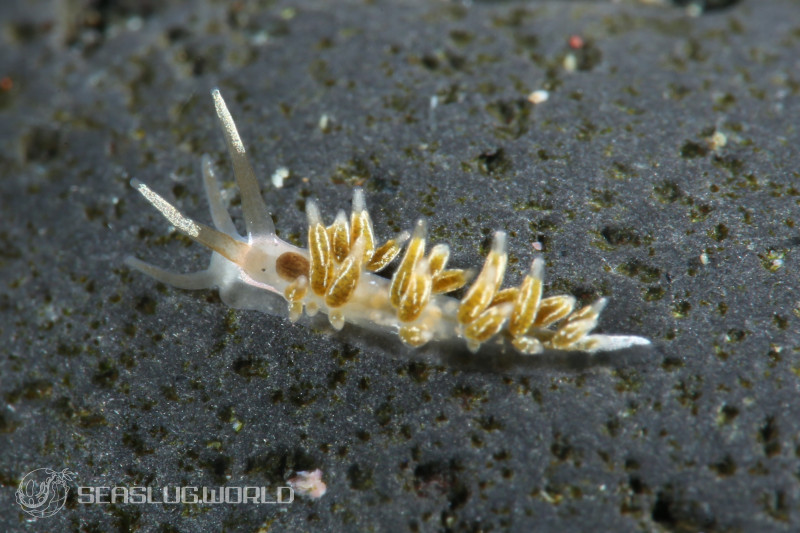
- Location
- Nodahama, Izu Oshima, Tokyo, Japan
- Date
- 2014/05/18
- Length
- 8mm
- Depth
- 5.0m
- Water temperature
- 16.0℃
Description
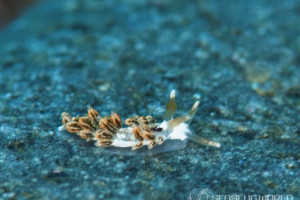
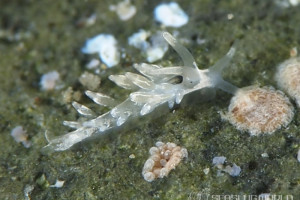
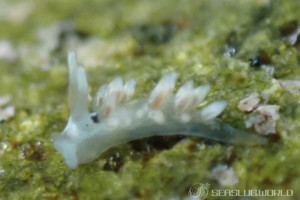
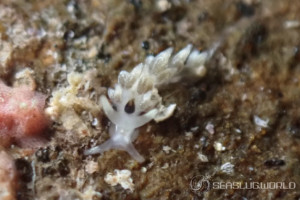
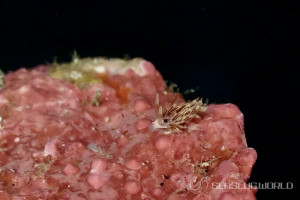
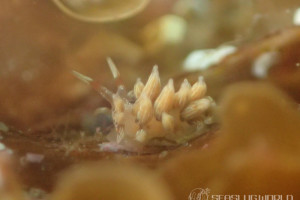
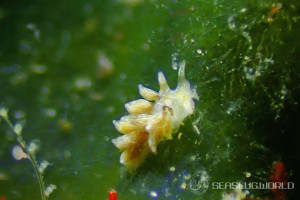
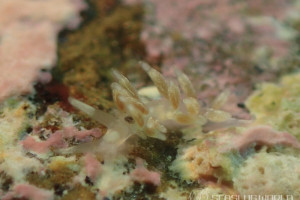
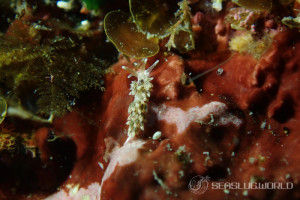
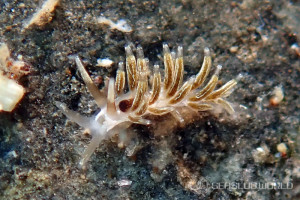
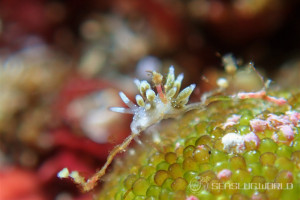
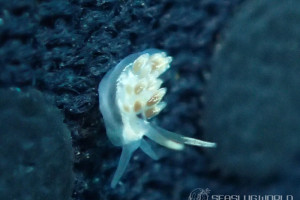
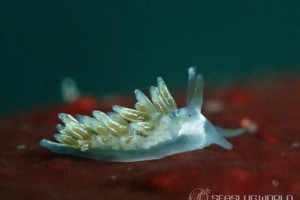
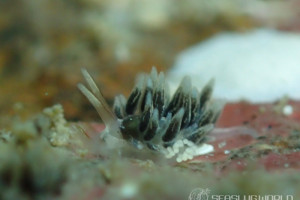
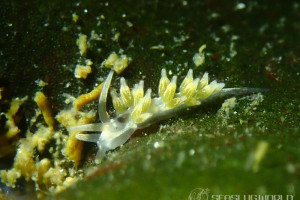
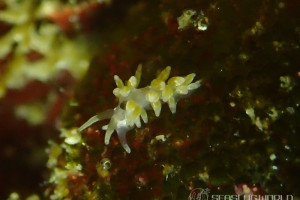
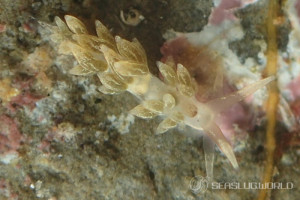
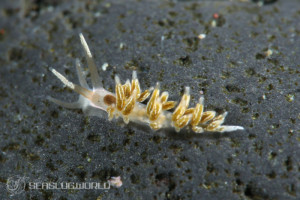
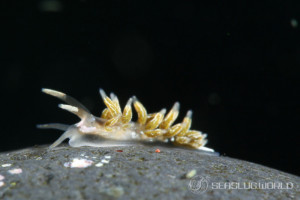
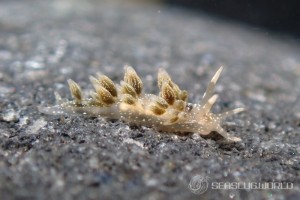
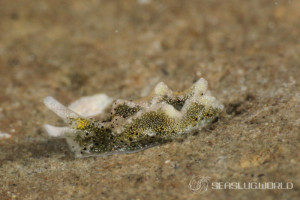
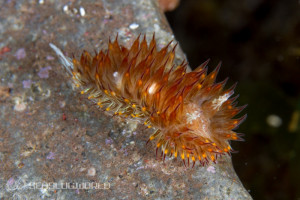
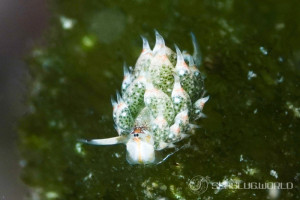
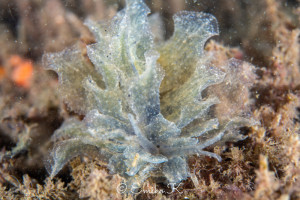
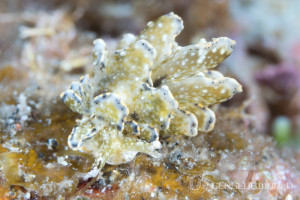
A small aeolid, body length 5-8 mm. Rhinophores as long as the cephalic tentacles, smooth. Cerata long fusiform, in 8-9 simple oblique rows on each side, with 3-4 in the largest rows. The body is translucent white, inclined to yellowish above, sprinkled with opaque white dots on the head, back, and tail. Diagnostic feature: an ovoid dark-brown to black marking on the back behind the rhinophores. The cerata are opaque white toward the tip, often longitudinally streaked, with a dark-green liver diverticulum inside.Distribution
Type locality: Tannowa, Osaka Bay, and Mukaishima, Inland Sea of Seto, Japan. The original description records the species from Osaka Bay and the Inland Sea of Seto.Etymology
The specific epithet signifera is Latin for "standard-bearer" or "banner-carrier", likening the ovoid dorsal mark to a heraldic device. The Japanese name Monshō-mino-umiushi ("heraldic-mark aeolid") refers to the same marking.Remarks
Many specimens were collected on Sargassum weeds. The species is separated from Catriona pupillae (smaller, 4-6 ceratal rows, orange-yellow rhinophore band) and Catriona purpureoanulata (11-13 ceratal rows, purple bands) by the diagnostic ovoid marking and other external characters.References
- Catriona signijera BABA, n. sp. Monsyo-minoumiushi (n. n.), Baba K. (1961). THREE NEW SPECIES OF THE GENUS CATRIONA FROM JAPAN (NUDIBRANCHIA-EOLIDACEA). Publications of the Seto Marine Biological Laboratory. 9(2): 367-372. https://doi.org/10.5134/175287
- モンショウミノウミウシ, 奥谷喬司. (2000). 日本近海産貝類図鑑. 東海大学出版会.
- トサミノウミウシ(新称), 中野理枝. (2018). 日本のウミウシ. 文一総合出版.
Featured in this book
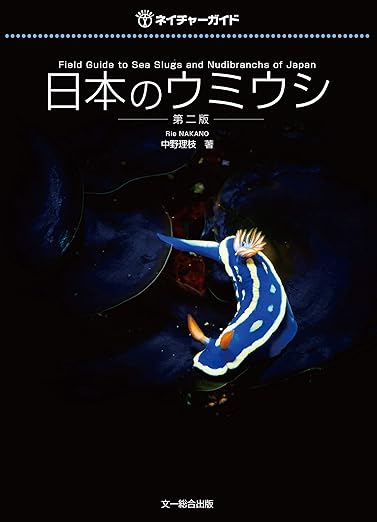
中野理枝. (2019). 日本のウミウシ. 第二版. 文一総合出版.
文一総合出版
This species, Catriona signifera, is included in the book.
View on Amazon PR (Amazon Associates)Seasonality
Shooting Locations
Loading shooting locations...
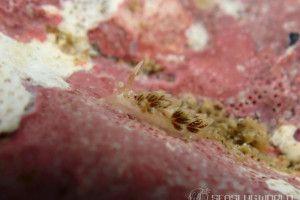
Photos of Catriona signifera
Tag:

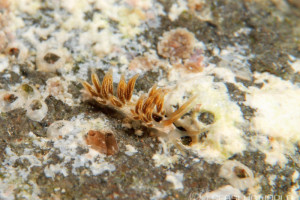















Same Genus Nudibranchs

Similar Colors Nudibranchs

Academic Database
Sea slug observation data is available in international marine biodiversity databases.