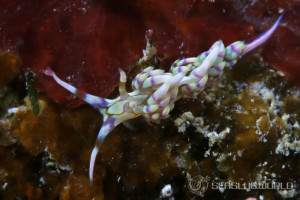
Pteraeolidia semperi (Bergh, 1870)
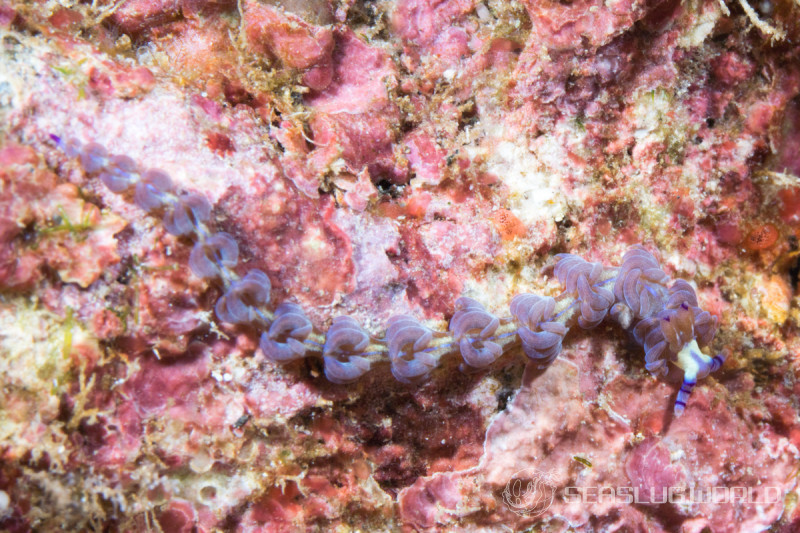
- Location
- Otchogahama, Hachijo Island, Tokyo, Japan
- Date
- 2018/10/10
- Length
- 30mm
- Depth
- 8.0m
- Water temperature
- 26.0℃
Description
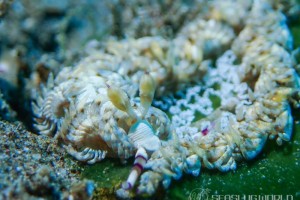
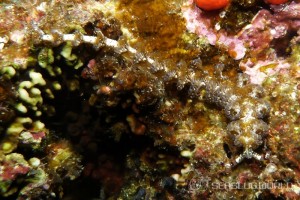
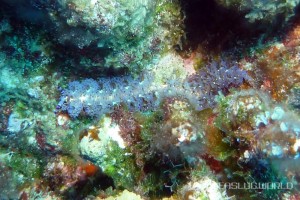
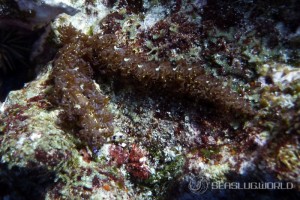
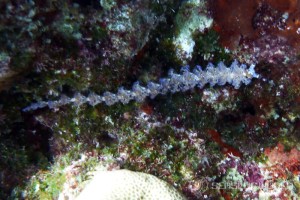
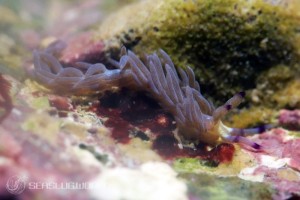
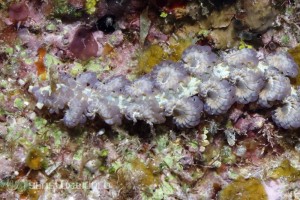
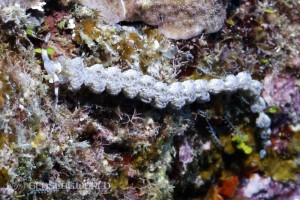
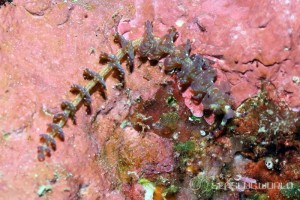
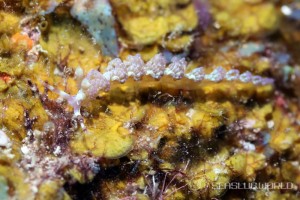
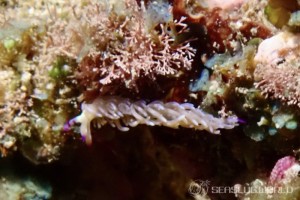
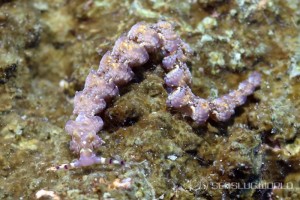
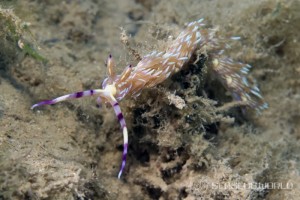
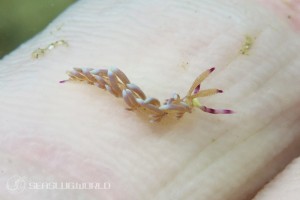
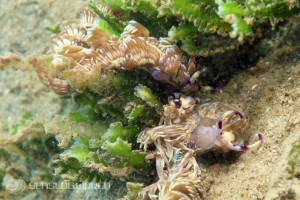
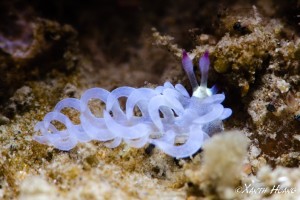
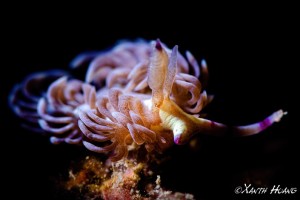
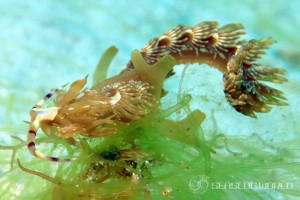
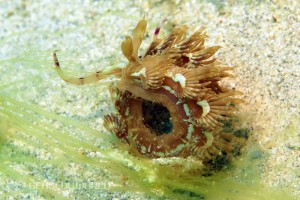
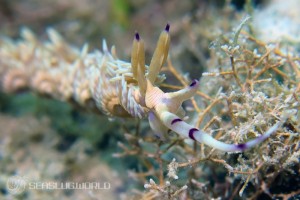
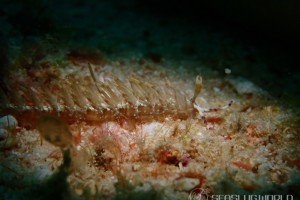
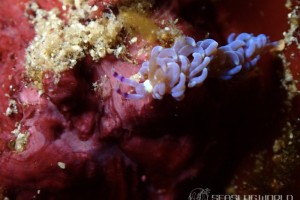
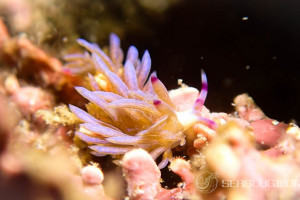
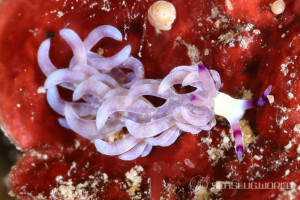
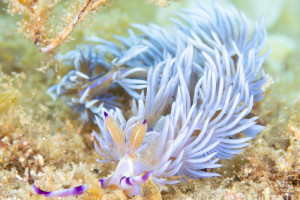
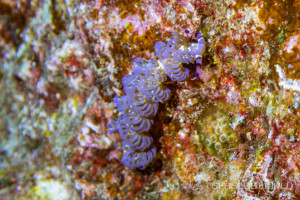
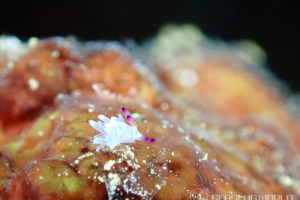
A large, elongate and somewhat flattened aeolid, typically 5 cm in length and sometimes exceeding 10 cm. The cerata stand in groups on each side of the body, with many groups arranged from front to back to give the centipede-like appearance from which the Japanese vernacular (mukade-minoumiushi, "centipede aeolid") takes its name. Ceratal colour varies from bluish-grey to greenish or brownish, sometimes purplish, often with white or blue rings. The rhinophores are long and bear numerous lamellae on the club.The cerata harbour symbiotic zooxanthellae (Symbiodinium); in bright conditions the animal spreads its cerata to expose them to the light and benefit from algal photosynthesis. The cnidosacs at the ceratal tips also store powerful nematocysts derived from hydroid prey, and direct contact with the skin can cause a painful sting.
Distribution
Type locality: Panglao, on the south-western tip of Bohol, Philippines. Widely distributed across the Indo-West Pacific in coral reef habitats; in Japan it is commonly seen from central Honshu southwards.Etymology
The specific epithet semperi honours the German zoologist Carl Gottfried Semper (1832-1893), who collected the type series in the Philippines and edited the "Reisen im Archipel der Philippinen" series in which the original description appeared.Remarks
Feeds primarily on hydroids, storing the unfired nematocysts (kleptocnides) at the tips of its cerata for defence. Type species of the genus Pteraeolidia.References
- Flabellina semperi n. sp., Bergh L.S.R. (1871). Malacologische Untersuchungen. In: C. Semper (ed.), Reisen im Archipel der Philippinen, Wissenschaftliche Resultate. Theil 2, Band 2, Heft 2: 49-118, pls 9-16.
- ムカデミノウミウシ(新称), Baba K. (1949). Opisthobranchia of Sagami Bay collected by His Majesty the Emperor of Japan (相模湾産後鰓類図譜). Iwanami Shoten, Tokyo. 4+2+194+7 pp., pls. 1-50.
- ムカデミノウミウシ, 小野篤司. (1999). ウミウシガイドブック. TBSブリタニカ.
- ムカデミノウミウシ, 鈴木敬宇. (2000). ウミウシガイドブック〈2〉. TBSブリタニカ.
- ムカデミノウミウシ, 殿塚孝昌. (2003). ウミウシガイドブック〈3〉. TBSブリタニカ.
- ムカデミノウミウシ, 小野篤司. (2004). 沖縄のウミウシ. ラトルズ.
- ムカデミノウミウシ, 中野理枝. (2004). 本州のウミウシ. ラトルズ.
- Pteraeolidia ianthina, Helmut Debelius, Rudie H. Kuiter. (2007). Nudibranchs of the World.
- ムカデミノウミウシ, 小野篤司 & 加藤昌一. (2009). ウミウシ. 誠文堂新光社.
- Pteraeolidia semperi (Bergh, 1870), comb. nov., Wilson N.G. & Burghardt I. (2015). Here be dragons - phylogeography of Pteraeolidia ianthina (Angas, 1864) reveals multiple species of photosynthetic nudibranchs (Aeolidina: Nudibranchia). Zoological Journal of the Linnean Society. 175(1): 119-133. https://doi.org/10.1111/zoj.12266
- Pteraeolidia semperi, Terrence Gosliner, Ángel Valdés and David Behrens. (2015). Nudibranch and Sea Slug Identification Indo-Pacific. New World Pubns Inc.
- オオムカデミノウミウシ(新称), 中野理枝, 朝倉知子, 池田紫, 石川雅教, 今本淳, 岩瀬南美, 西田和記, 堀江諒, 山田久子 & 渡井久美. (2017). 奄美大島北部海域における後鰓類相の調査報告. Kuroshio Biosphere. 13: 1-18 + 6 pls.
- ムカデミノウミウシ, オオムカデミノウミウシ, 中野理枝. (2018). 日本のウミウシ. 文一総合出版.
- Pteraeolidia semperi, Terrence Gosliner, Ángel Valdés and David Behrens. (2018). Nudibranch and Sea Slug Identification Indo-Pacific 2nd Edition. New World Pubns Inc.
- ムカデミノウミウシ, オオムカデミノウミウシ, 小野篤司 & 加藤昌一. (2020). 新版 ウミウシ. 誠文堂新光社.
Related articles
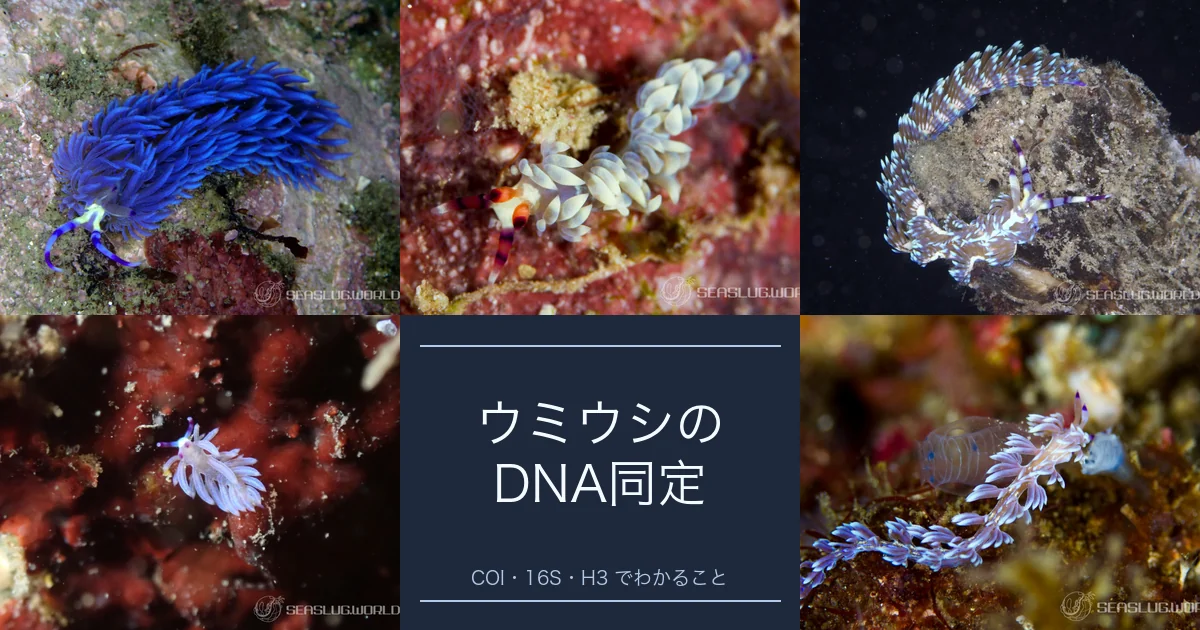
Sea slug DNA identification: what COI, 16S, and H3 reveal
Featured in this book
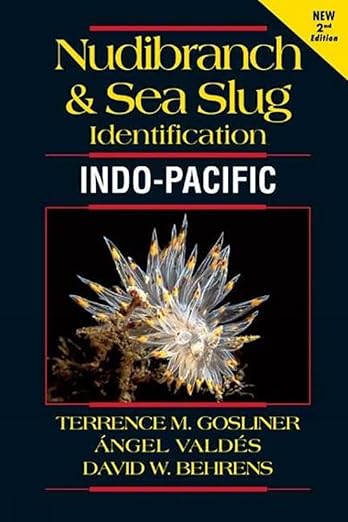
Terrence Gosliner, Ángel Valdés and David Behrens. (2018). Nudibranch and Sea Slug Identification Indo-Pacific 2nd Edition. New World Pubns Inc.
New World Publications
This species, Pteraeolidia semperi, is included in the book.
View on Amazon PR (Amazon Associates)Seasonality
Shooting Locations
Loading shooting locations...
Photos of Pteraeolidia semperi
Tag:










Same Genus Nudibranchs
Similar Colors Nudibranchs
Academic Database
Sea slug observation data is available in international marine biodiversity databases.