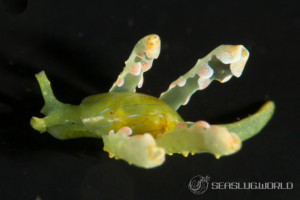
Stylocheilus striatus (Quoy & Gaimard, 1832)
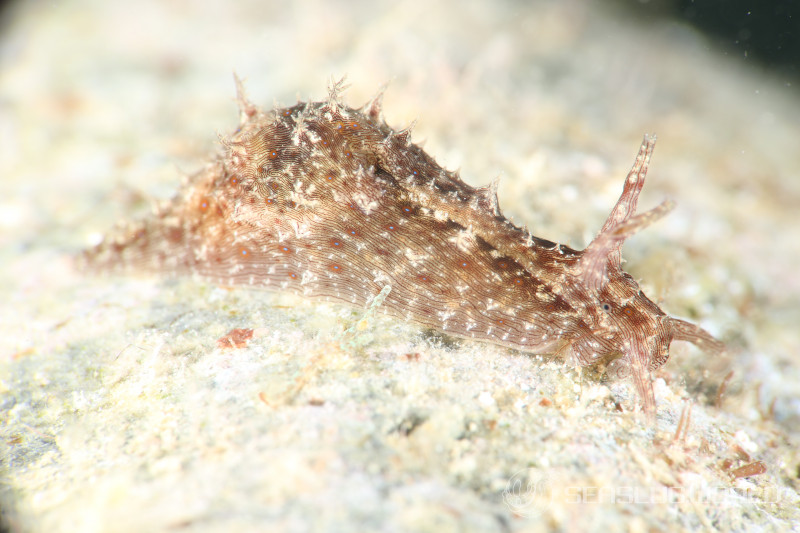
- Location
- Nago inside the bay, Okinawa Island (Motobu and Northern area), Okinawa, Japan
- Date
- 2017/01/08
- Length
- 20mm
- Depth
- 3.0m
- Water temperature
- 24.0℃
Description
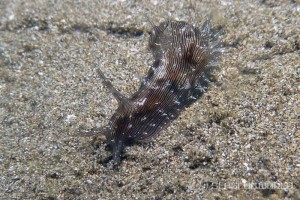
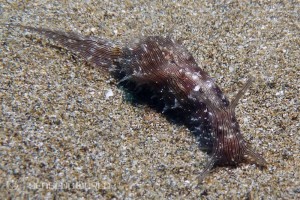
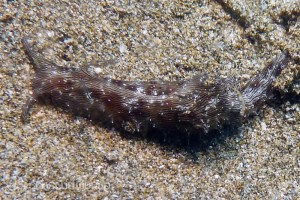
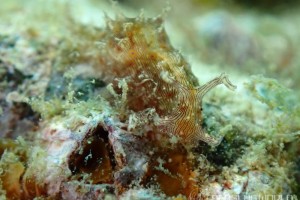
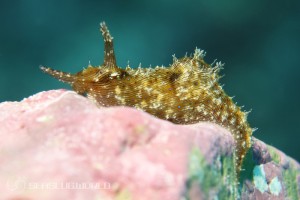
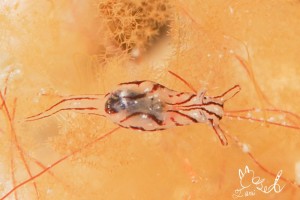
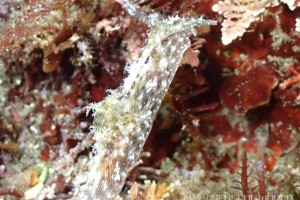
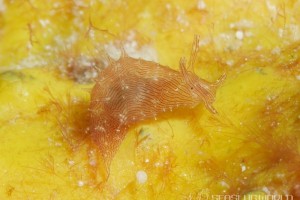
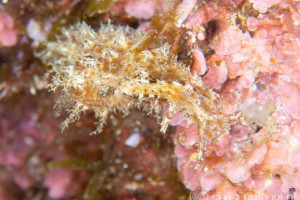
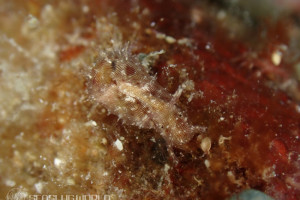
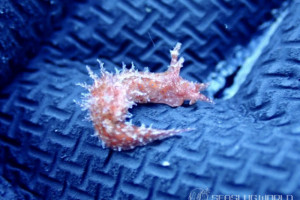
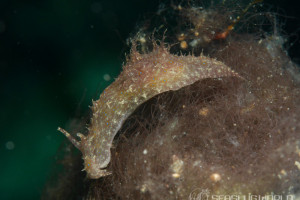
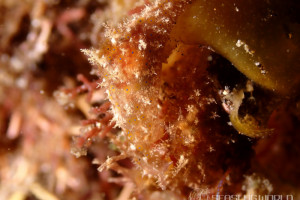
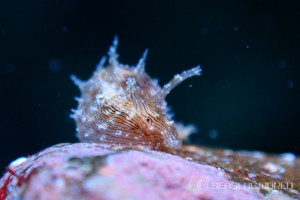
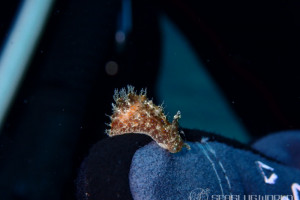
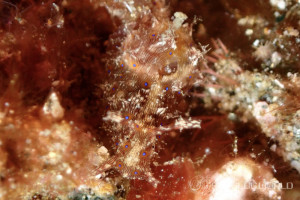
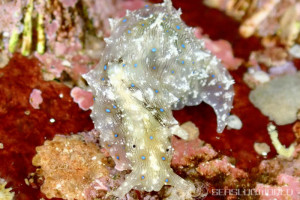
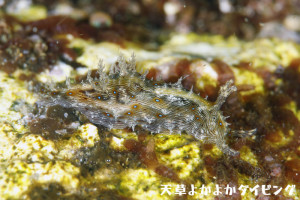
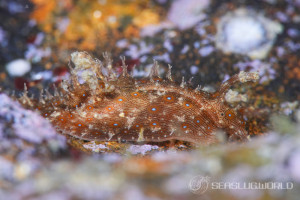
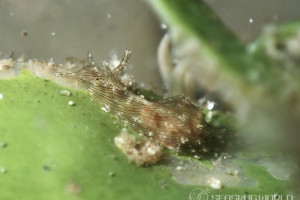
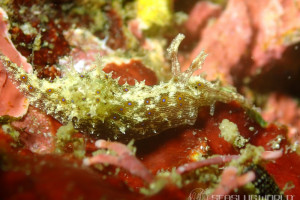
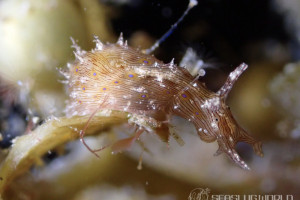
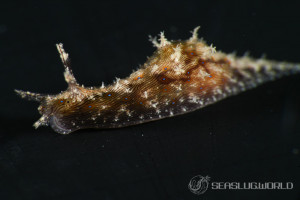
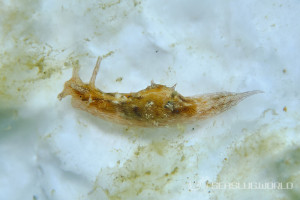
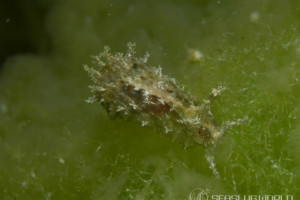
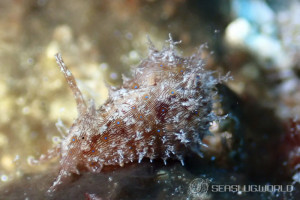
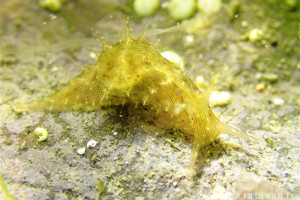
Body colour ranges from translucent brown to greenish, sometimes with scattered blue or pink eyespots, sometimes without. The defining feature is a dense set of dark longitudinal stripes running along the body, which both the Japanese name (kurosuji-amefurashi, "black-striped sea hare") and the English name "lined sea hare" reflect. Branched papillae line the dorsum but vary considerably in size, shape and colour between individuals. Reaches about 65 mm in length.Distribution
Widely distributed across tropical and subtropical waters of the Indo-Pacific. The type locality is the western part of New Guinea (present-day West Papua, Indonesia). Records span the Red Sea, South Africa, Japan, the Hawaiian Islands, the Galápagos, Baja California and the Caribbean, from the intertidal down to about 30 m. Recent molecular work has revealed that this pantropical complex contains multiple cryptic species.Etymology
From the Latin striatus ("striped"), referring to the longitudinal stripes that run along the body. The original combination is Aplysia striata Quoy & Gaimard, 1832, described from material collected during the Pacific expedition of the French corvette Astrolabe (1826-1829).Remarks
A shallow-water sea hare with a planktonic larval stage. It feeds primarily on cyanobacteria, especially Lyngbya species, and is thought to sequester cyanobacterial toxins for defence against predators. The Japanese name kurosuji-amefurashi was coined by Baba & Hamatani 1952 in their list of Kii opisthobranchs, where the species was treated under Notarchus (Stylocheilus) longicaudus. Long confused with Stylocheilus longicauda (Quoy & Gaimard, 1825), the two are now recognised as distinct, and Stylocheilus striatus (Quoy & Gaimard, 1832) is the accepted name. Notarchus stimpsoni Pilsbry, 1896 is among the synonyms.References
- クロスジアメフラシ(新稱), 馬場菊太郎 & 濱谷巌. (1952). 紀州産後鰓類目録. 南紀生物. Supplement 1: 1-11.
- クロスジアメフラシ, 生物學御研究所編. (1955). 相模湾産後鰓類図譜〈補遺〉. 岩波書店.
- クロスジアメフラシ, 高岡高等学校生物研究会(編). (1964). 富山湾産後鰓類図譜.
- クロスジアメフラシ, 小野篤司. (1999). ウミウシガイドブック. TBSブリタニカ.
- クロスジアメフラシ, 鈴木敬宇. (2000). ウミウシガイドブック〈2〉. TBSブリタニカ.
- 高岡生物研究会. (2002). 日本海のウミウシ. 第2版.
- ステュロケイルス・ストリアトゥス, 殿塚孝昌. (2003). ウミウシガイドブック〈3〉. TBSブリタニカ.
- クロスジアメフラシ, 小野篤司. (2004). 沖縄のウミウシ. ラトルズ.
- クロスジアメフラシ, 中野理枝. (2004). 本州のウミウシ. ラトルズ.
- クロスジアメフラシ, 小野篤司 & 加藤昌一. (2009). ウミウシ. 誠文堂新光社.
- Stylocheilus striatus, Terrence Gosliner, Ángel Valdés and David Behrens. (2015). Nudibranch and Sea Slug Identification Indo-Pacific. New World Pubns Inc.
Featured in this book

Terrence Gosliner, Ángel Valdés and David Behrens. (2018). Nudibranch and Sea Slug Identification Indo-Pacific 2nd Edition. New World Pubns Inc.
New World Publications
This species, Stylocheilus striatus, is included in the book.
View on Amazon PR (Amazon Associates)Seasonality
Shooting Locations
Loading shooting locations...
Photos of Stylocheilus striatus
Tag:




















Same Genus Nudibranchs
Similar Colors Nudibranchs
Academic Database
Sea slug observation data is available in international marine biodiversity databases.