Syphonota geographica (A. Adams & Reeve, 1850)
Description
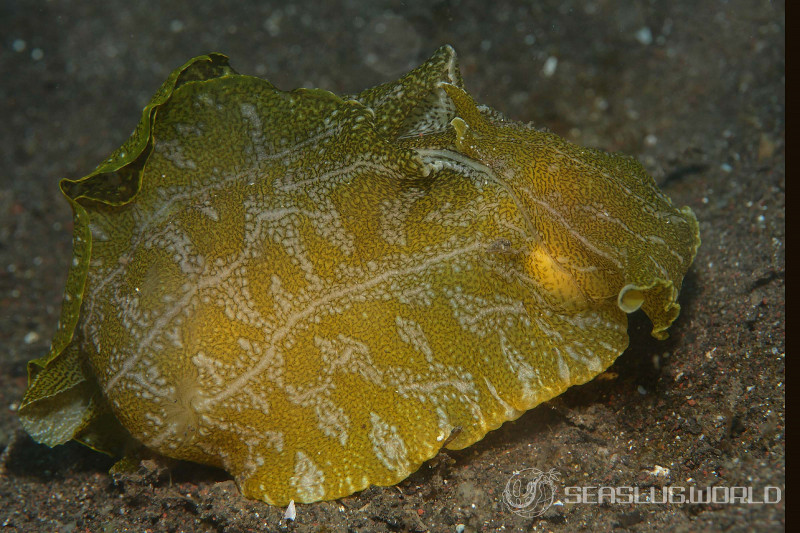
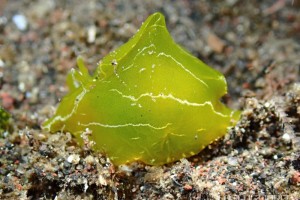
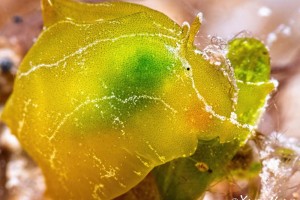
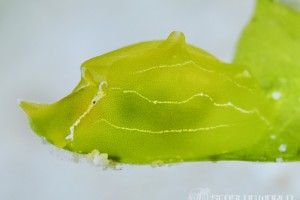
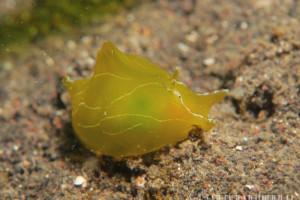
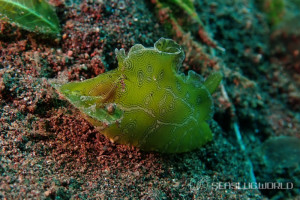
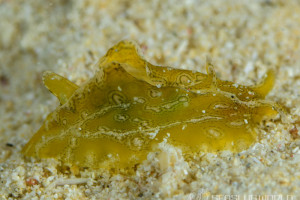
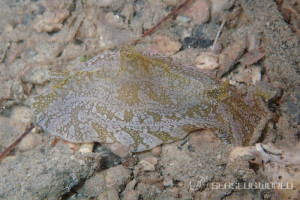
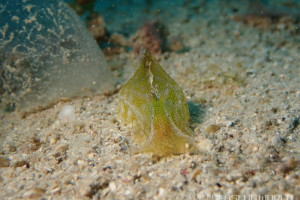
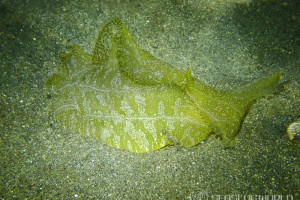
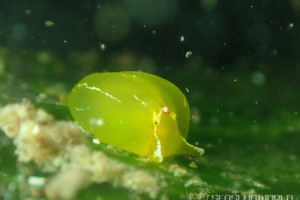
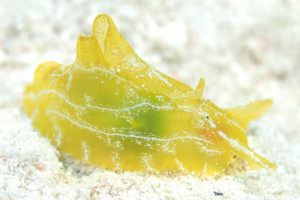
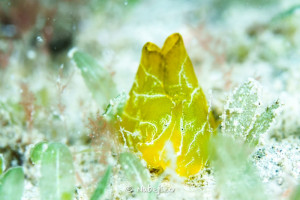
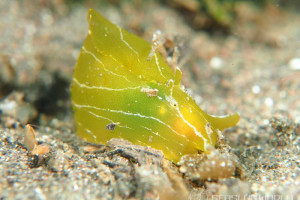
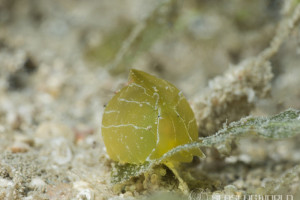
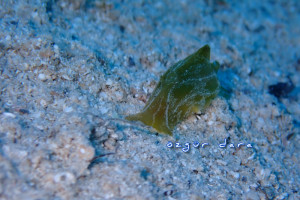
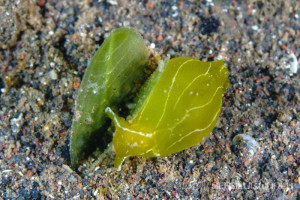
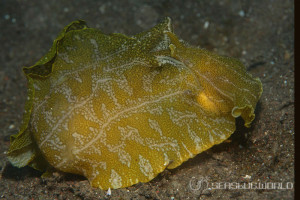
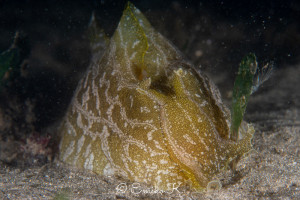
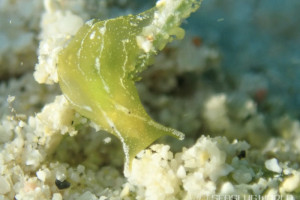
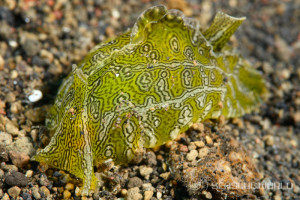
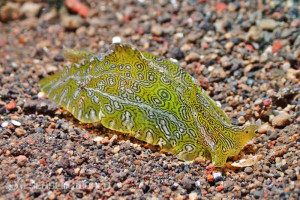
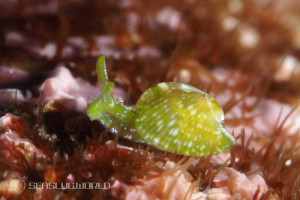
A medium-sized sea hare reaching about 100 mm in length. The body is whitish-brown overall, marked with a complex network of fine white lines and dots; this white netting is often edged with green or darker pigment. The underside of the foot is a vivid yellow. The left side of the foot projects as a flap that overlaps the right side. The posterior end of the mantle is drawn out into a long, tapering, siphon-like tube — the feature that originally gave rise to the genus name. The animal swims by flapping its parapodia.Distribution
Originally described from the Java Sea, among floating masses of brown algae (Fuci). Subsequently recorded broadly across the Indo-West Pacific, including South Africa, Australia, New Caledonia, Papua New Guinea, Indonesia, the Philippines, Japan, Singapore, and the Dominican Republic. In recent decades the species has also entered the eastern Mediterranean as a Lessepsian migrant via the Suez Canal, with records from Greece and Italy.Etymology
The specific epithet geographica is Latin for "geographic" or "map-like", referring to the map-like network of white markings on the body. The genus name Syphonota (original spelling Siphonotus) alludes to the siphon-like tube at the posterior end of the mantle.Remarks
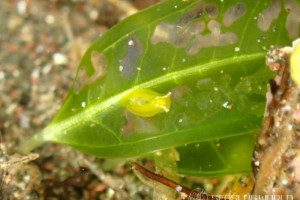
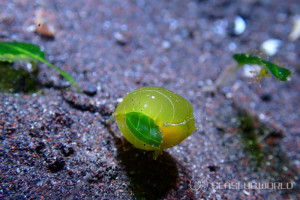
The sole species of the genus, S. geographica is a near-obligate specialist on the seagrass Halophila stipulacea. Its successful invasion of the Mediterranean depends on the prior establishment there of its food plant, itself a Lessepsian invader — the seagrass paved the way for the sea hare. Chemical studies show that S. geographica sequesters flavonoids from the seagrass for use in chemical defence. Recent molecular phylogenies of Aplysiidae have low resolution at the genus level, and S. geographica may in fact nest within Aplysia; the standing of Syphonota as a separate genus therefore awaits further revision.References
- Siphonotus geographicus n. g., n. sp., Adams A. & Reeve L.A. (1850). The Zoology of the Voyage of H.M.S. Samarang; under the command of Captain Sir Edward Belcher, C.B., F.R.A.S., F.G.S., during the years 1843-1846. Mollusca. London: Reeve & Benham. x + 87 pp., 24 pls.
- クサモチアメフラシ, 生物學御研究所編. (1955). 相模湾産後鰓類図譜〈補遺〉. 岩波書店.
- 高岡生物研究会. (2002). 日本海のウミウシ. 第2版.
- Aplysia属の一種, 殿塚孝昌. (2003). ウミウシガイドブック〈3〉. TBSブリタニカ.
- クサモチアメフラシ, 小野篤司. (2004). 沖縄のウミウシ. ラトルズ.
- Syphonota geographica, Klussmann-Kolb A. (2004). Phylogeny of the Aplysiidae (Gastropoda, Opisthobranchia) with new aspects of the evolution of seahares. Zoologica Scripta. 33(5): 439-462.
- Syphonota geographica, Mollo E., Gavagnin M., Carbone M., Castelluccio F., Pozone F., Roussis V., Templado J., Ghiselin M.T. & Cimino G. (2008). Factors promoting marine invasions: a chemoecological approach. Proceedings of the National Academy of Sciences USA. 105(12): 4582-4586.
A Kindle field guide by the site author
Kimoto N. (2026). Sea Slugs of Japan & the Indo-Pacific, 2nd Edition.
Kindle Edition
View on Amazon PR (Amazon Associates)Seasonality
Shooting Locations
Loading shooting locations...
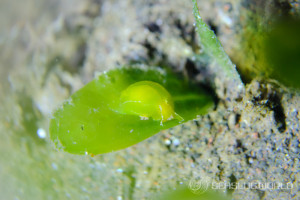
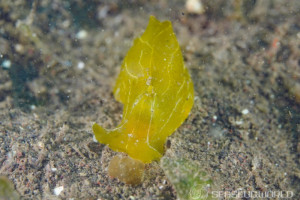
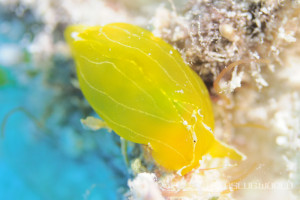
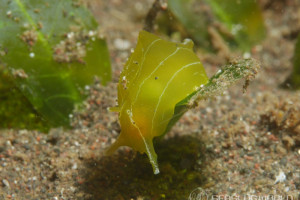
Photos of Syphonota geographica
Tag:

























Similar Colors Nudibranchs


Academic Database
Sea slug observation data is available in international marine biodiversity databases.