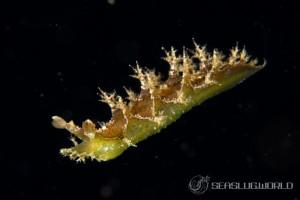
Elysia viridis (Montagu, 1804)
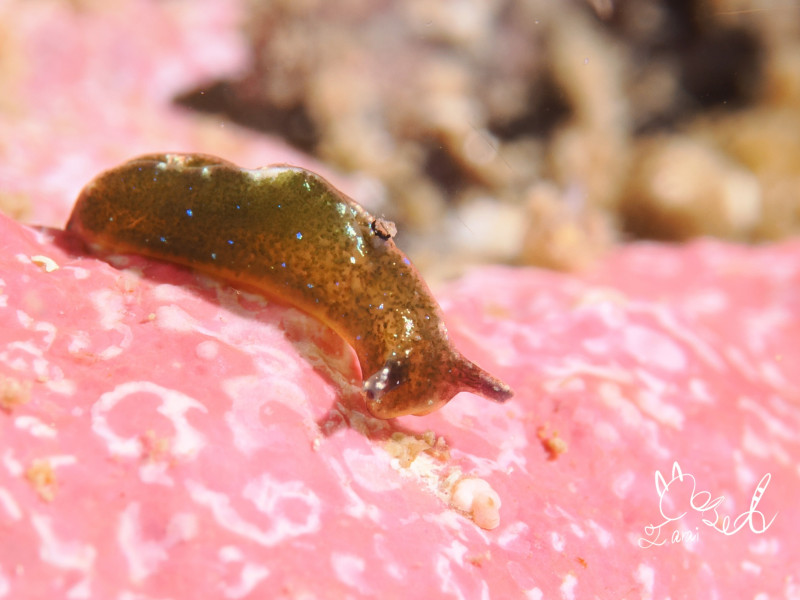
- Location
- SOL SKORVEN, West Coast of Sweden, Sweden
- Date
- 2025/06/28
- Length
- 8mm
- Depth
- 15.0m
- Water temperature
- 14.5℃
Description
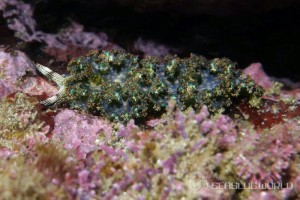
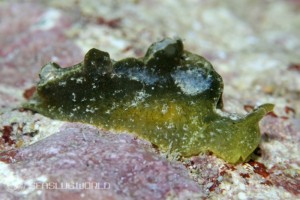
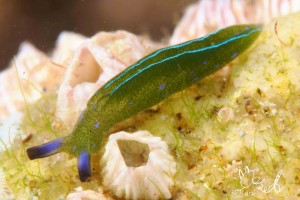
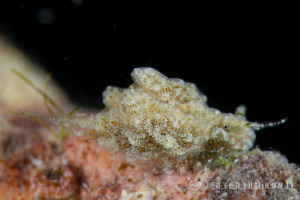
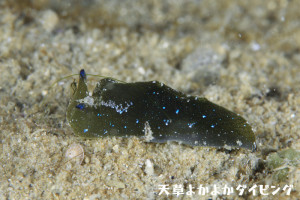
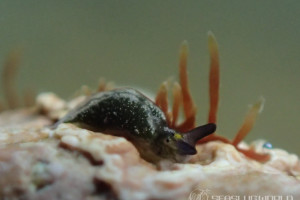
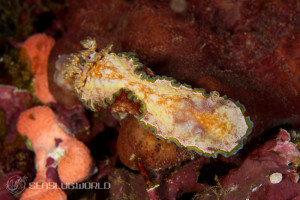
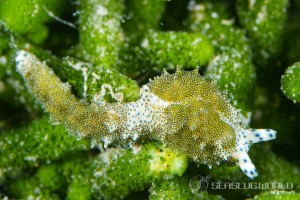
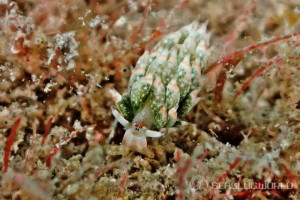
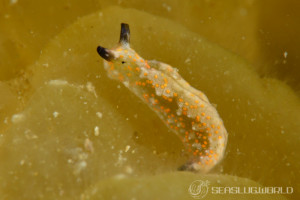
A small to medium-sized elysiid sacoglossan reaching about 15–20 mm in adults (commonly), with records up to 55 mm from Atlantic coasts. Body leaf-shaped, broad anteriorly and tapering posteriorly, with the parapodia laterally extended and undulated to lobed at the margin. Background colour highly variable: vivid apple-green or bottle-green to brownish, dappled with tiny glistening spots of red, yellow, blue and green; small light-blue spots are irregularly arranged on the outer and inner sides of the parapodia and on the head, and white patches may surround the eyes. Rhinophores rolled with a truncated apex, of the same colour as the body. Radula with about 14–15 teeth (4 in ascending limb, 7 in descending), the leading tooth ca. 125 μm long and bearing 31 or more very small rounded denticles along its blade-shaped cutting edge. Penis elongate, cone-shaped, devoid of stylet (Martín-Hervás et al., 2023).Distribution
North-eastern Atlantic and Mediterranean. Known from the British Isles south to the Iberian Peninsula and into the Mediterranean (Valencia, Banyuls-sur-Mer, Puglia coasts of Italy among confirmed molecular records).Etymology
The specific epithet 'viridis' is a Latin adjective meaning 'green', referring to the typical body colour.Remarks
Originally described by Montagu 1804 as Laplysia viridis and transferred to Elysia. The species feeds on green algae (especially Codium) from which it sequesters chloroplasts (kleptoplasty); the resulting body coloration depends partly on the algal host. Martín-Hervás et al. 2023 included E. viridis in a global molecular phylogeny of the genus and showed it to be sister to the tropical E. evelinae, which is reported here from European coasts for the first time. The intraspecific colour polymorphism in E. viridis is extensive and has historically caused taxonomic confusion with congeners.References
A Kindle field guide by the site author

Kimoto N. (2026). Sea Slugs of Japan & the Indo-Pacific, 2nd Edition.
Kindle Edition
View on Amazon PR (Amazon Associates)Seasonality
Shooting Locations
Loading shooting locations...
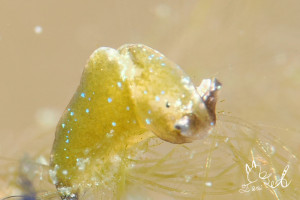
Photos of Elysia viridis

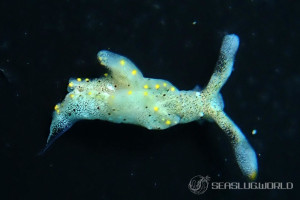
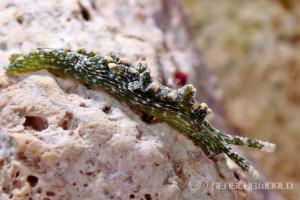
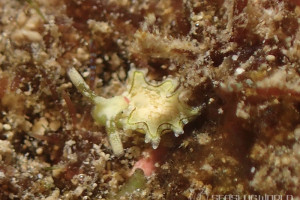
Same Genus Nudibranchs
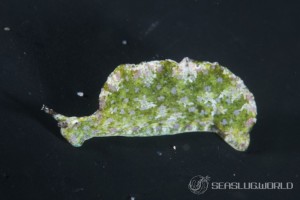
Similar Colors Nudibranchs
Academic Database
Sea slug observation data is available in international marine biodiversity databases.