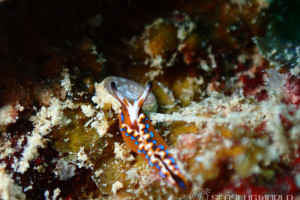
Julia exquisita A. A. Gould, 1862
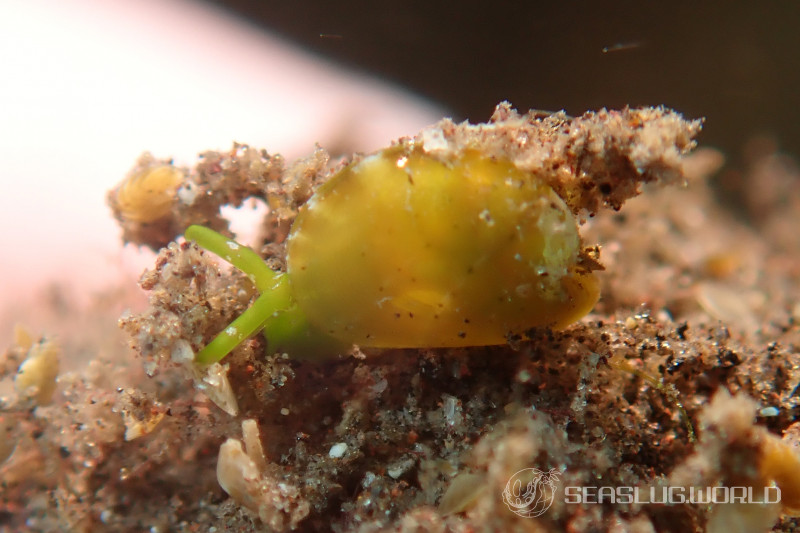
- Location
- Batu Niti, Tulamben, Pulau Bali, Indonesia
- Date
- 2018/02/04
- Length
- 10mm
- Depth
- 15.0m
- Water temperature
- 26.0℃
Description
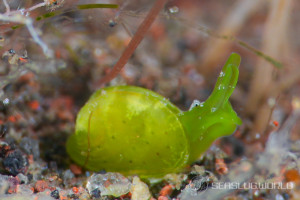
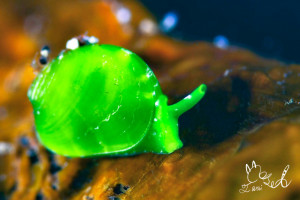
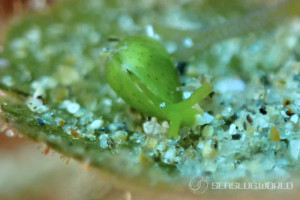
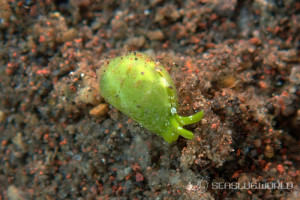
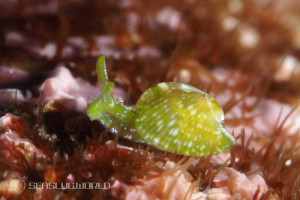
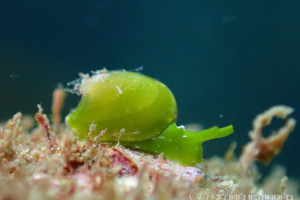
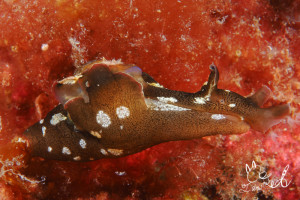
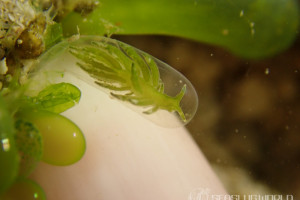
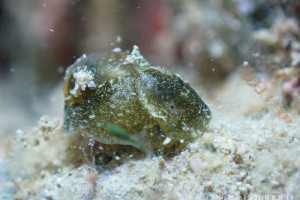
A small juliid sacoglossan, 4-6 mm in length, characterised by a strikingly bivalve-like shell consisting of two convex valves covering the soft body. The shell is greenish with thin concentric bands of reddish-brown or white. The body is dark green with scattered small white patches outlined by brown rings. Julia exquisita closely resembles Julia japonica but is distinguished by a posterior end that is not pointed.Distribution
Type locality: Hawaiian Islands. Broadly distributed in the tropical Indo-Pacific, with records from Madagascar, New Zealand and Reunion. Occurs in intertidal sand-mud flats and has been observed down to about 10 m depth.Etymology
The specific epithet exquisita is Latin for "exquisite" or "elaborate", in reference to the finely sculpted bivalve-like shell. The Japanese vernacular "ハワイユリヤガイ" ("Hawaiian Julia") reflects the Hawaiian type locality.Remarks
The family Juliidae is unique among sacoglossans in bearing a bivalved external shell. Julia exquisita feeds on green algae and is known to retain the algal chloroplasts in its digestive gland for continued photosynthesis (kleptoplasty).References
- ハワイユリヤガイ, 川口四郎. (1983). 二殻腹足類ユリヤガイ. 川崎医療短期大学紀要. 2: 93-100. https://doi.org/10.18928/00000643
- Julia exquisita, McCarthy-Taylor J.B., Krug P.J., Muro S., Vendetti J., Maestrati P., Wong N.L.W.S., Gosliner T.M. & Valdés Á. (2025). The slug within the bivalve: molecular and morphological systematics of the family Juliidae (Gastropoda: Panpulmonata: Sacoglossa). Zoological Journal of the Linnean Society. 204(2): zlaf056. https://doi.org/10.1093/zoolinnean/zlaf056
A Kindle field guide by the site author
Kimoto N. (2026). Sea Slugs of Japan & the Indo-Pacific, 2nd Edition.
Kindle Edition
View on Amazon PR (Amazon Associates)Seasonality
Shooting Locations
Loading shooting locations...
Photos of Julia exquisita
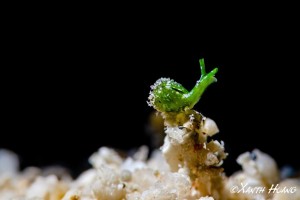

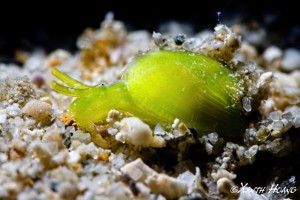





Same Genus Nudibranchs

Similar Colors Nudibranchs

Academic Database
Sea slug observation data is available in international marine biodiversity databases.