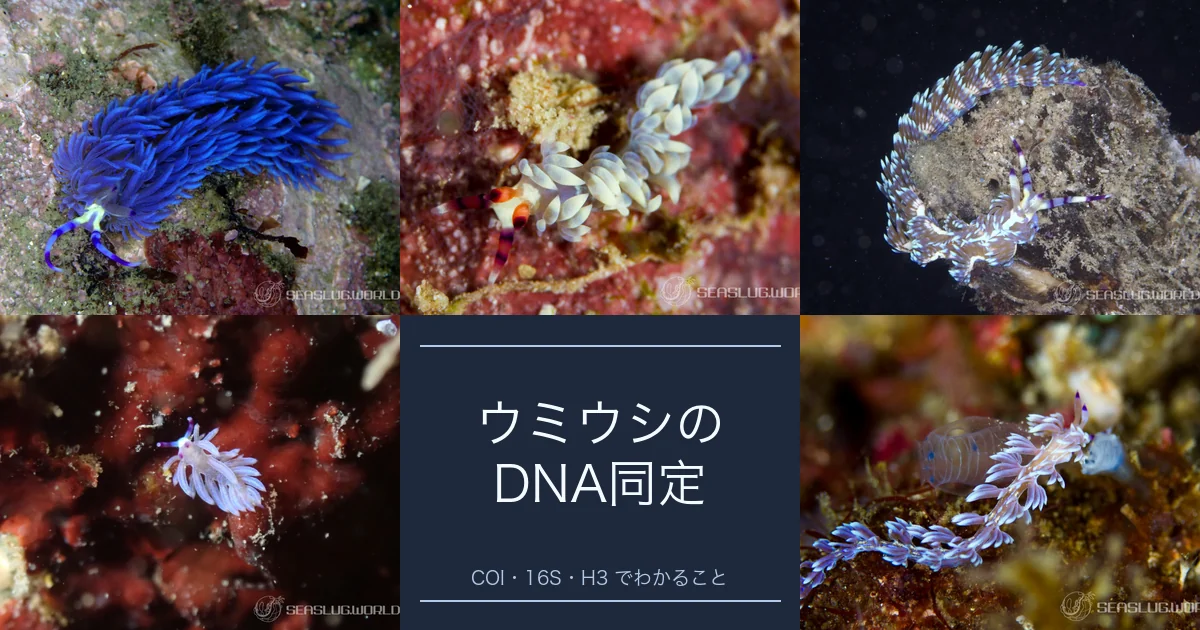
Sea slug DNA identification: what COI, 16S, and H3 reveal
If you read recent sea slug field guides or species-description papers, you keep meeting sentences like "DNA analysis revealed it to be a distinct species" or "genetically closest to this species." The field guide soon to be published from Okinawa — "a modern classification atlas based on DNA analysis" (in Japanese) — likewise puts DNA analysis front and center. But what does that "DNA analysis" actually look at, and on what grounds does it call two animals "the same" or "different" species?
This article sorts out the three genes that turn up in almost every molecular identification of sea slugs — COI, 16S, and H3 — what each is used for, how far each can take you, and where each stops, from a diver's and enthusiast's point of view. I'll keep the jargon to a minimum, but with this in hand you'll be able to read what is really inside that one line, "DNA analysis showed…," in a paper or field guide.
Cryptic species: when looks aren't enough
Sea slugs look like a group where photo identification works well — their colors and shapes are striking, and many species can be told apart by the pattern on the back or the shape of the rhinophores.
But over the past twenty years or so, research has turned up case after case where something long treated as "a single species," or brushed off as "just a color form or individual variation," splits cleanly into distinct species under DNA. Distinct species that couldn't be separated by morphology, and so were lumped together as one, are what we call cryptic species.
One example is the Hantazuia group. Long treated as a single species, under DNA it splits into Hantazuia yugoikedai, Hantazuia kimotoi, and others, with COI differences of over 12% between species — easily large enough for distinct species. And yet they look much alike, and pinning a species on them from a photo alone is not easy.
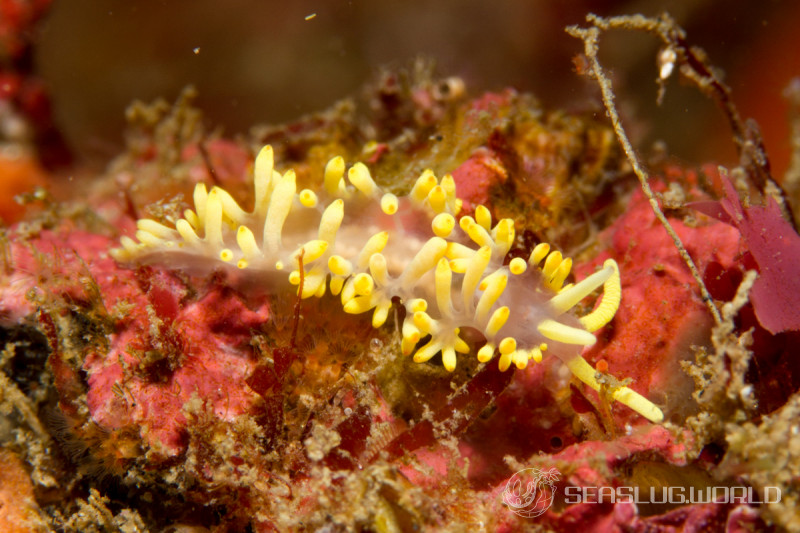
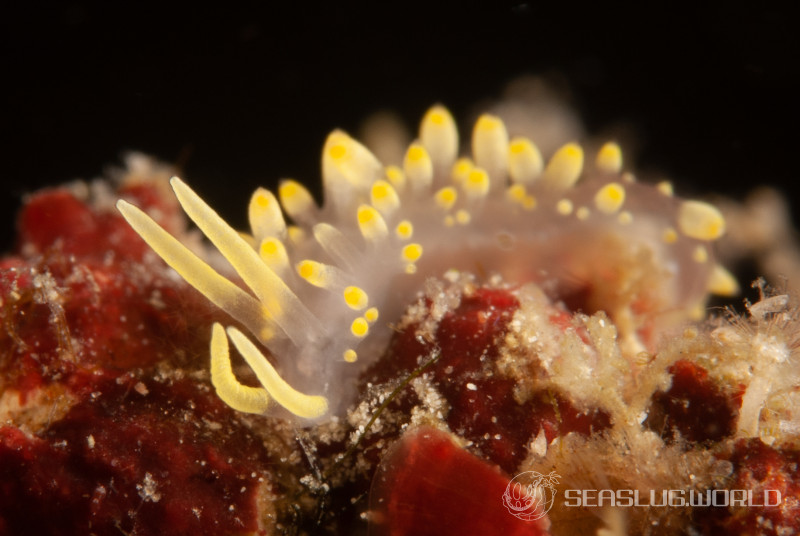
In other words, the features visible to the eye and the boundary of a species as a living thing do not always line up. One tool for checking that mismatch from the outside is the comparison of gene sequences.
COI, 16S, and H3: a division of labor among three genes
In molecular identification, you usually read and compare part of the following three genes. Each differs in how fast it evolves and where it sits, and so they play different roles.
| Gene | Where it sits | Rate of change | Distance it works best at |
|---|---|---|---|
| COI | mitochondrion | fast | telling one species from another |
| 16S | mitochondrion | medium | reinforcing the species-to-genus range |
| H3 | nucleus | slow | the larger frame of genus and family |
- COI is the worldwide standard, the animal "DNA barcode." It evolves fast, so even close species tend to differ, which makes it good for asking "are these two individuals the same species, or different ones?"
- 16S sits in the same mitochondrion as COI but changes a little more slowly. It stays more stable when sequences are lined up and compared (alignment), so it is used alongside COI.
- H3 is a gene for the protein histone, and it is the only one of the three that sits in the nucleus. It changes very slowly, so it is poor at fine species-level distinctions, but it works as the backbone supporting larger frames like genus and family.
More than the numbers or the speeds, just remember the difference in location for now: COI and 16S are mitochondrial, H3 is nuclear. It matters in the next section.
Mitochondrial genes travel as a single block
"If COI alone is fast and can separate species, isn't one gene enough?" you might ask. In practice, provisional field IDs often do use COI alone. But when a paper draws a firm conclusion, it uses several genes together — because of how the mitochondrion works.
Mitochondrial genes are inherited only from the mother and passed to the offspring as one whole block, without recombination. Since COI and 16S both sit in the same mitochondrion, they are not two separate pieces of evidence but a single linked vote. So if, say, a past hybridization leaves only a close relative's mitochondrion behind (a phenomenon known across animals generally), both COI and 16S get dragged together toward "looks like a different lineage." Two genes, telling the same lie together.
This is where H3, in the nucleus, earns its keep. Nuclear genes are inherited from both parents and travel independently of the mitochondrion. When the mitochondrion says "different lineage," does nuclear H3 paint the same picture, or disagree? That agreement or disagreement is itself the clue. If they agree, the conclusion firms up; if they disagree, you can stay cautious — "maybe hybridization or a takeover is behind this." Using several genes is a way of calling independent witnesses.
"Knowing they're different" is not the same as "having a name"
This is the most easily misunderstood point.
Comparing two individuals by DNA and saying "these are different lineages" can be done fairly clearly — measure the distance, and the difference comes out as a number. But deciding "then what species, by name, is this individual?" is an entirely separate task.
A species' scientific name is fixed to a single individual designated in the paper that first described it: the type specimen, the reference standard. However clearly a new lineage appears to split off, which lineage an existing name refers to cannot be settled without tracing back to that type specimen.
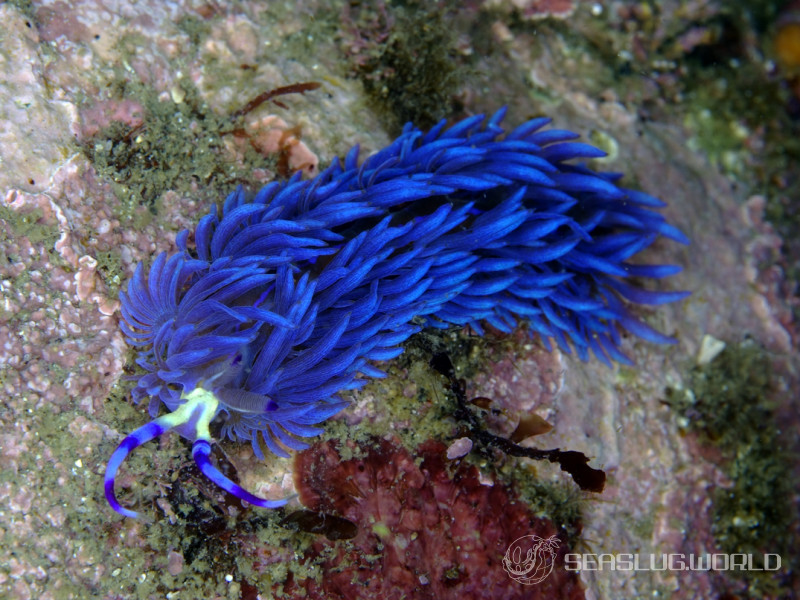
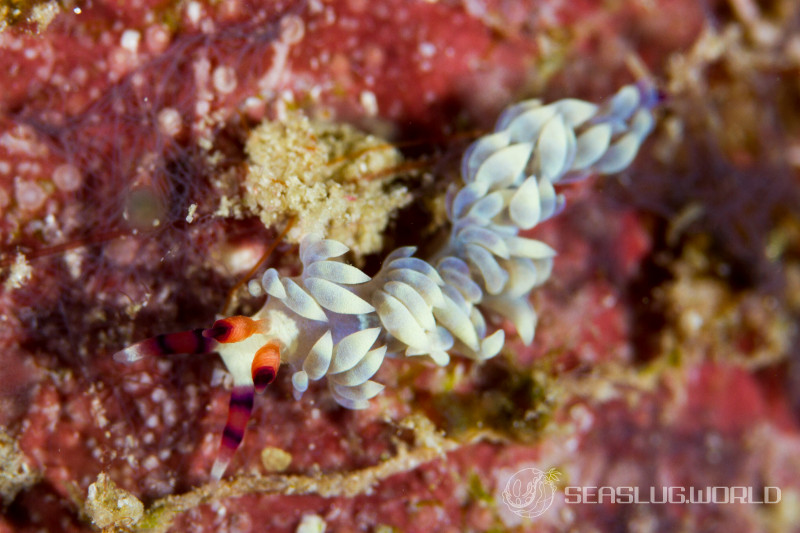
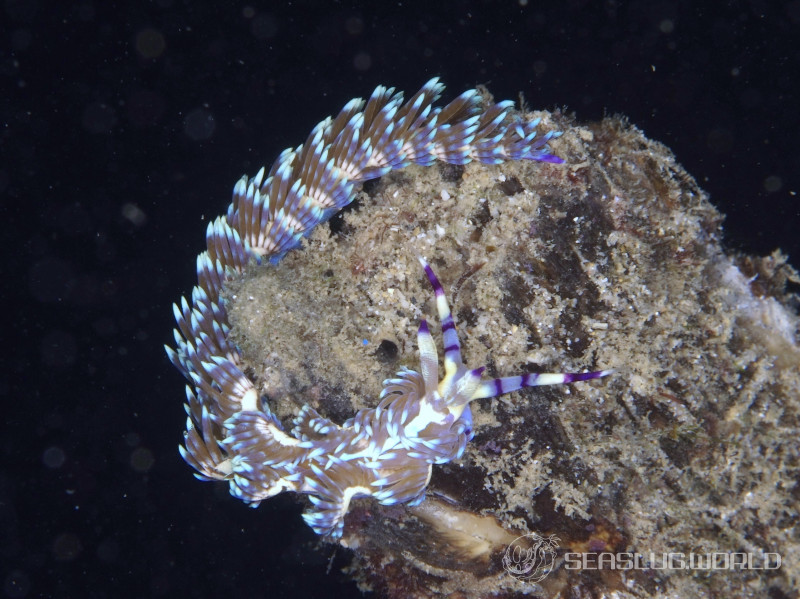
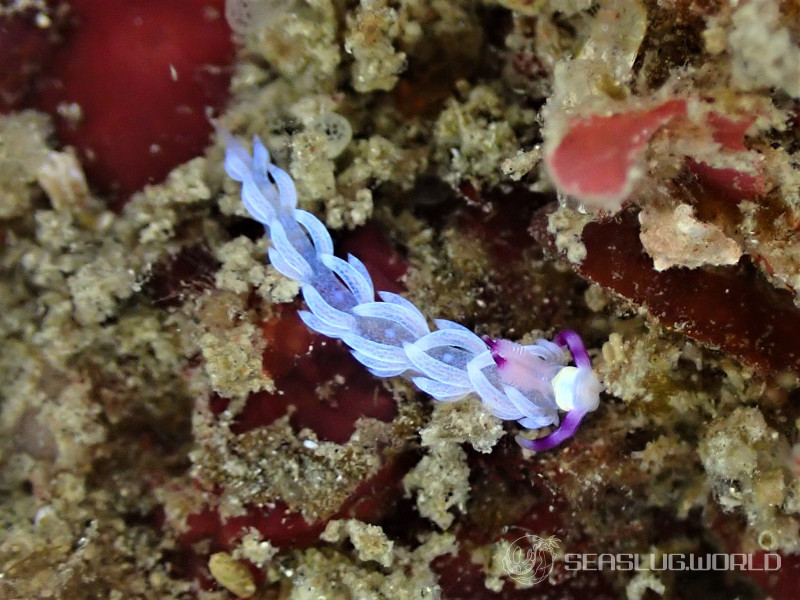
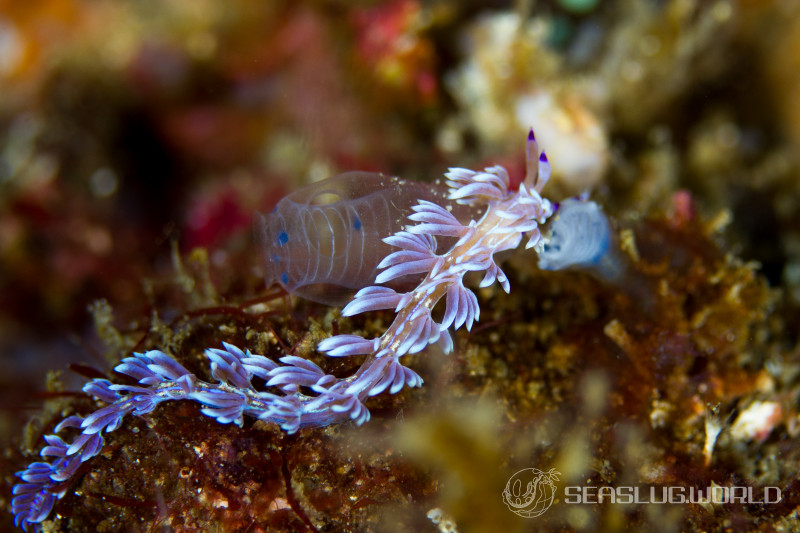
The species that runs squarely into this wall is one divers know well: the large, familiar aeolid Pteraeolidia. One of the most common sea slugs of all, it was long treated as a single species under the name Pteraeolidia ianthina. But once its DNA was read, it turned out that several lineages were bundled under that one name. The individuals around Sydney, Australia, are the true Pteraeolidia ianthina; everything else should be reassigned to the once-suppressed old name Pteraeolidia semperi.
And that Pteraeolidia semperi is itself a species complex: in Japanese waters alone it holds two distinct species, but their names aren't sorted out yet — for now both are placed under Pteraeolidia semperi, with no separate names of their own. Worldwide, there may be still more lineages without names.
The photos below are members of the Pteraeolidia semperi species complex.
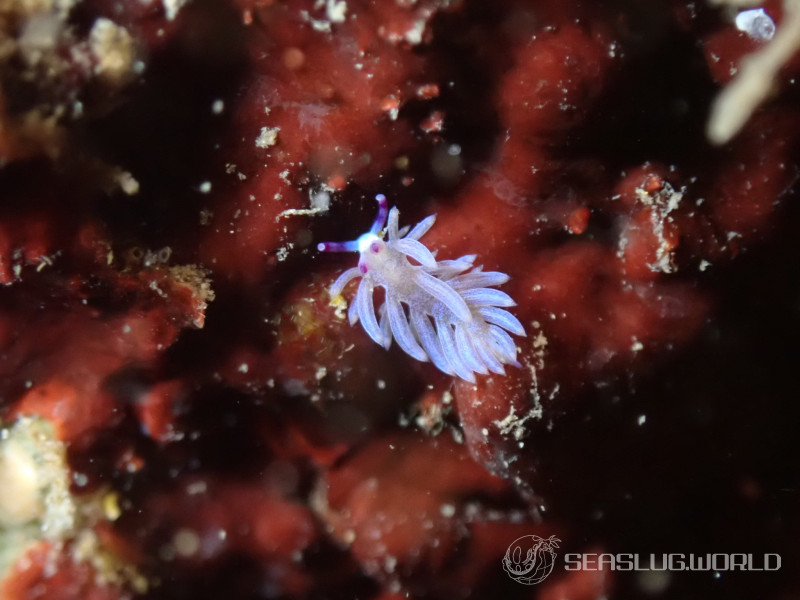
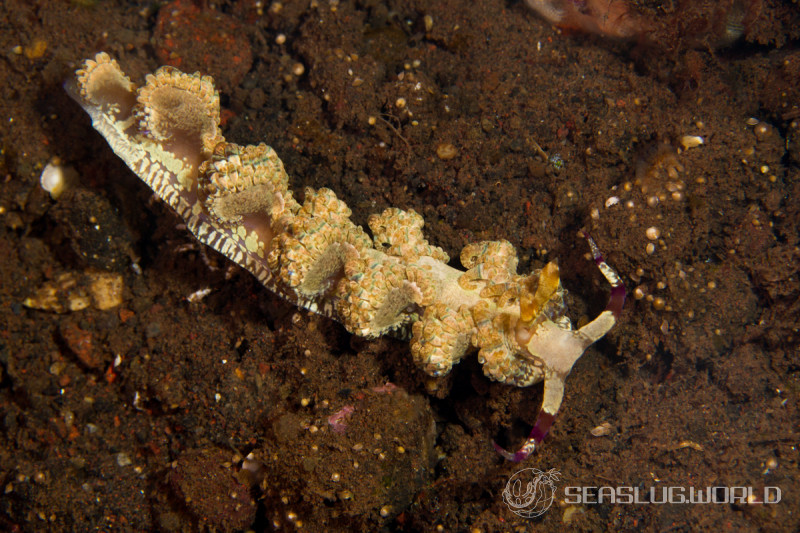
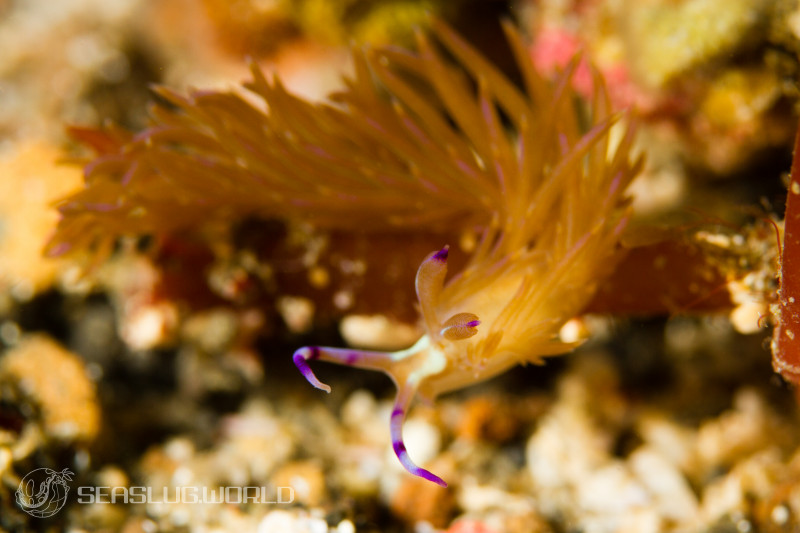
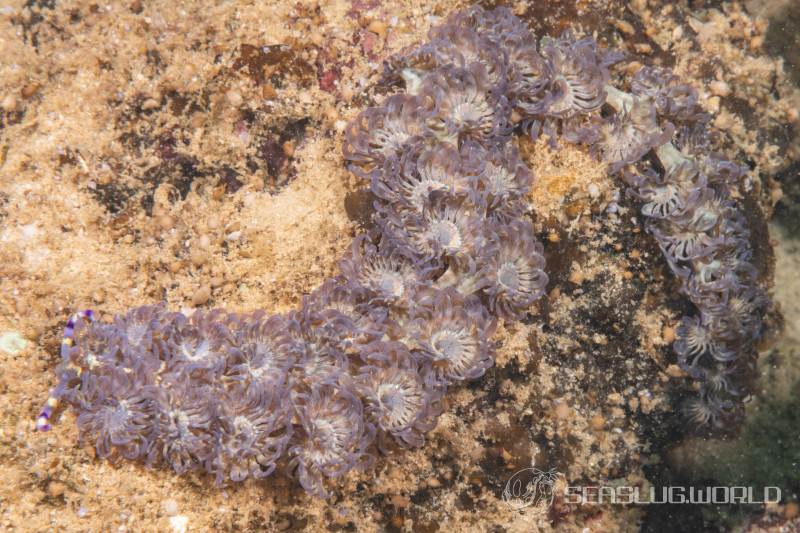
So why don't they simply get separate scientific names? First, each lineage has to be matched to the type specimen of a previously described name, and then formally described as a distinct species, down to morphology and ecology. The type of Pteraeolidia semperi, for instance, is from the Philippines, and the lineages seen in Japan may not match it. Which lineage inherits which existing name, and which needs a brand-new one, simply isn't settled yet.
What's more, the older a description is, the more likely it is that DNA can't be read from the type specimen, or that it's unclear which individual or locality the type even came from. Then, however cleanly the lineages separate under DNA, you can't pin down which lineage the existing name belongs to, and the description can't move forward. Between "knowing they're different lineages" and "having a name" lies exactly this kind of gap.
So the correct order in DNA identification runs this way: first fix the existing name with a reference point (the type, or individuals from the type locality), then place your own specimen by its distance from there. Racing ahead to "genetically a new species" without checking the name's reference point is doing it backwards.
How to read "a 99% BLAST match to X"
Once you have a sequence, the first thing you do is check it against a public database called GenBank to find "the most similar registered sequence" (this search is called BLAST). You may have seen the phrase "BLAST result: a 99% match to X" in a post or an article.
Here you need to pause for a beat. What BLAST returns is "the registered sequence most similar to yours" — not "the correct species name." The label whoever submitted it attached is not necessarily correct. In fact, public databases carry a certain share of mix-ups and misidentified labels. If the reference sequence that is supposed to be your benchmark is itself mislabeled, then matching it at 99% still leaves you on the wrong name.
So "the top BLAST hit is X at 99%" is the fact that "it is close to a registered sequence labeled X" — and it is safest, for now, to keep that separate from the conclusion "this individual is X."
So how far can we actually get?
That is the map for how to read a DNA identification: separate species with COI, back it up with H3, fix the name with the type, and don't take database labels at face value.
But apply this map to real animals and you won't get a clean answer every time. There are gray zones where within-species and between-species differences don't divide at a clean valley, and judgment is left hanging. Sometimes you can measure the distance, but the crucial reference sequence isn't public, so the comparison never closes. Sometimes several lineages really are hidden under one name. And there are groups where neither any gene nor morphology has yet settled the whole framework.
From the sequences we've actually measured on this site, we plan to take up such concrete examples — how far we can tell, and where it stops being clear — one case at a time, with specific individuals and photos, in follow-up articles.
And on that foundation, we plan to read the Okinawa field guide soon to be published, "a modern classification atlas based on DNA analysis," as a review timed to its release.
Closing
Even said in one breath, "DNA analysis" has clearly divided strengths and weaknesses. Showing that two individuals are different lineages is relatively easy. But giving that lineage the correct name takes a separate job that reaches all the way back to the type specimen.
With this line drawn in your head, you can read the phrase "revealed by DNA" in a paper or field guide calmly — telling apart how much is solid and where the holding pattern begins.
Enjoyed this post? You can tip the author directly —
Tip this post