What is a Sea Slug? — Nine Orders to Twelve Lineages, 25 Years On
What is a Sea Slug?
In 2000, Yoshiaki Hirano's Umiushi-gaku — Jewels of the Sea, Their Mysteries Explored (Tokai University Press) was published. Hirano, a Japanese marine biologist specializing in opisthobranch fauna, distilled decades of work on the group into this book-length synthesis. It was an unusual title for its time: a scholarly work that put the Japanese word umiushi (sea slug) front and center.
In the opening pages, Hirano lays out a genealogy of the word umiushi. He positions Tsunenobu Fujita's 1892 series of papers as the first scholarly use of the term, defines the scope of umiushi-rui (the umiushi group) by enumerating the nine orders of Opisthobranchia, calls the Nudibranchia "the umiushi within umiushi", and acknowledges that the classification framework is beginning to shift.
A quarter-century later, several of the frameworks that supported "umiushi" really did move. This article traces what happened between Hirano's 2000 picture of the umiushi world and the present.
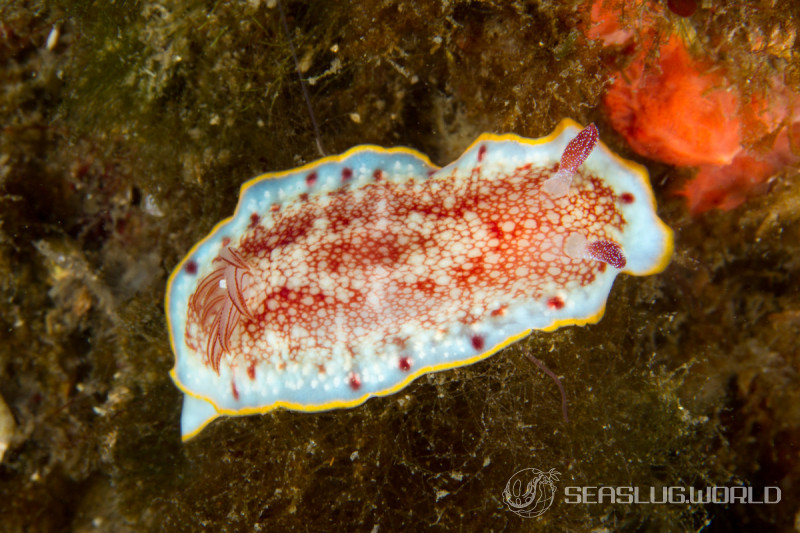
The Genealogy of "Umiushi" in Umiushi-gaku (2000)
Origin: Tsunenobu Fujita, 1892
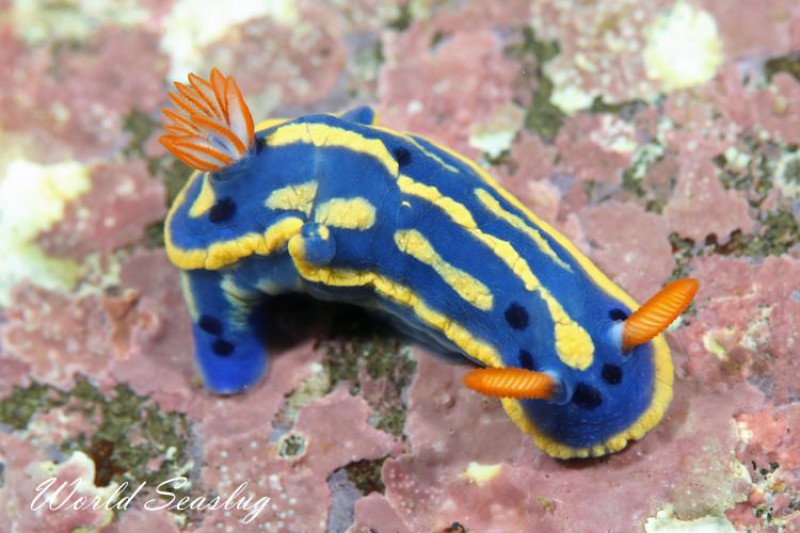
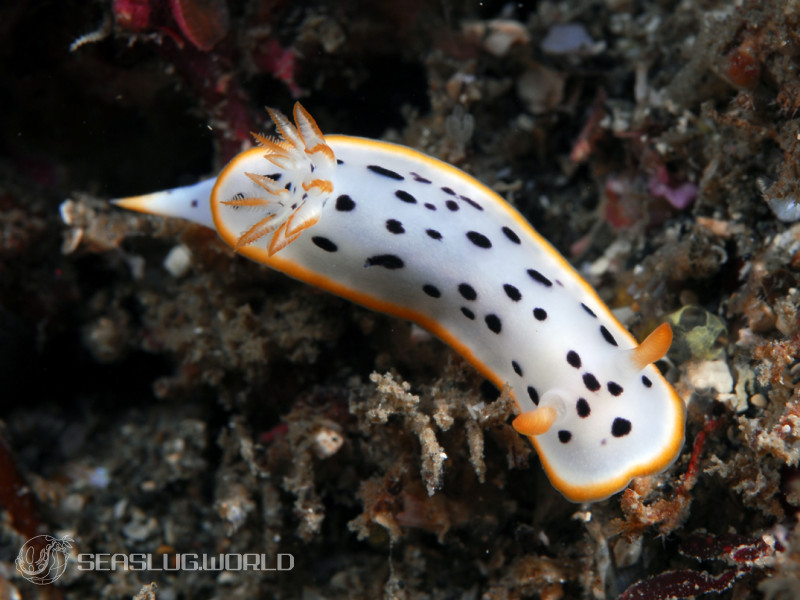
"Umiushi" was applied to nine species described by Tsunenobu Fujita over three years from 1892 in three papers. This appears to be the first formal use (?) of the four kana umiushi in the scholarly world, and the name has been carried forward ever since.
— Yoshiaki Hirano, Umiushi-gaku (2000, Tokai University Press), Chapter 1
Fujita ran a series in Dōbutsugaku Zasshi (Zoological Magazine) from September 1892 to January 1894 titled "Cryptobranchiate umiushi from waters near Misaki, Sagami Province". Beginning with ao-umiushi (blue umiushi) and shiro-umiushi (white umiushi), and continuing through nashiji, komon, sarasa, nishiki, kumogata, nezu, and nikuiro, he coined nine new vernacular Japanese names.
Opisthobranchia = nine orders
Hirano defines the scope of "umiushi" by enumerating these nine orders:
- Nudibranchia
- Sacoglossa
- Notaspidea
- Anaspidea (sea hares)
- Cephalaspidea
- Gymnosomata
- Thecosomata
- Acochlidiacea
- Rhodopemorpha
He treats the orders of the then-current subclass Opisthobranchia as precisely the umiushi-rui. The framework leaves the overall containment to the formal taxon Opisthobranchia, while the scope of the word "umiushi" itself is conveyed by listing orders. This "definition by enumeration" was already in place by 2000.
Nudibranchia = "the umiushi within umiushi"
These — exactly these — are the umiushi within "umiushi": the taxonomic group that includes the nine species described by Tsunenobu Fujita.
— Yoshiaki Hirano, Umiushi-gaku (2000), entry on Nudibranchia
A broad sense (umiushi = the nine orders of Opisthobranchia) and a narrow-sense core (umiushi = Nudibranchia). Hirano laid out this two-layer structure explicitly.
Already aware of the impending shifts
The Opisthobranchia have long been classified as one of the three subclasses of the class Gastropoda (snails) within the molluscs. However, with the marked recent advances in taxonomy, the classification system of Gastropoda has been substantially revised, and they will be downgraded to a lower rank. In the new framework, the Opisthobranchia are placed within the superorder Heterobranchia of the subclass Orthogastropoda, as one group inside it. But even with the change of rank, the membership remains almost unchanged.
— Yoshiaki Hirano, Umiushi-gaku (2000)
By 2000, Hirano was already aware of the tectonic shifts on the taxonomic side. At that point, however, he framed it as "the membership remains unchanged" — a downgrade in rank, not a reorganization of contents. The "membership itself being reorganized" would happen after this.
2005 — Bouchet & Rocroi: the first big wave
Bouchet and Rocroi (Muséum national d'Histoire naturelle, Paris) published Classification and Nomenclator of Gastropoda Families in 2005, the first large-scale reorganization of gastropod classification to fully incorporate molecular phylogenetics. Here, shelled opisthobranchs such as bubble snails (Hydatina), Bullinidae, and Acteonidae were split off from the Opisthobranchia and placed in Heterostropha (among the snails). Several of the orders in Hirano's nine moved to the "snail, not umiushi" side.
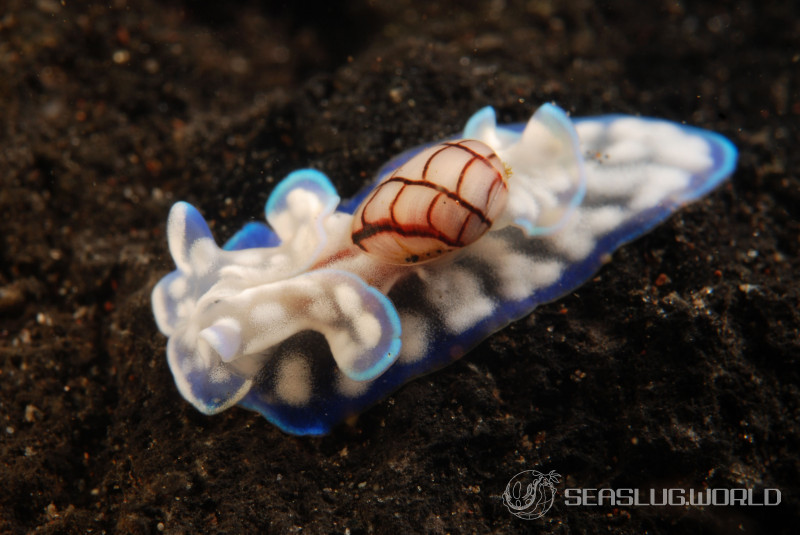
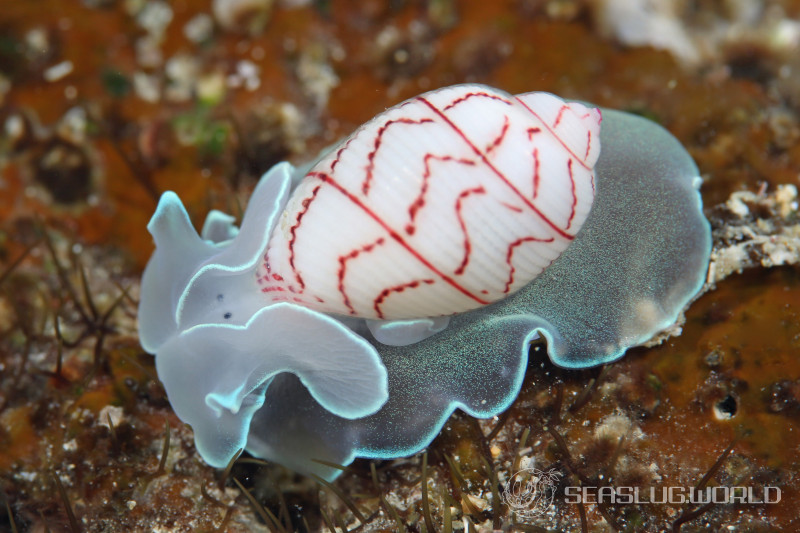
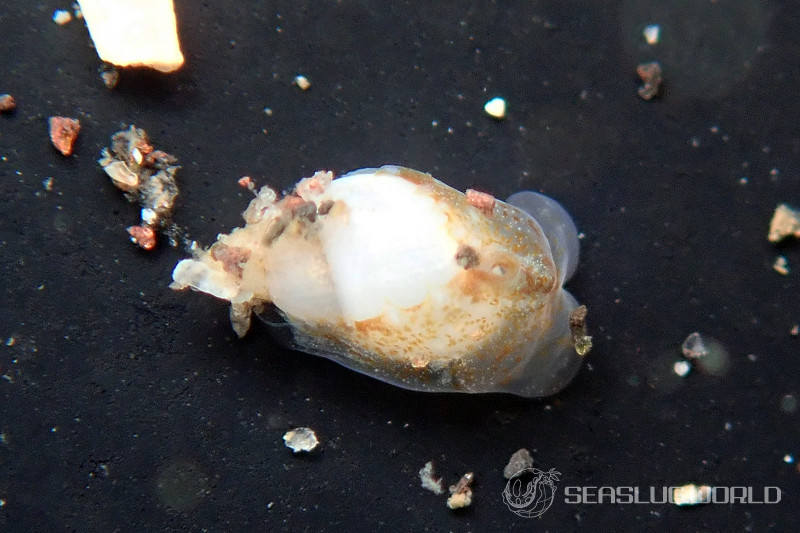
However, this reorganization did not immediately permeate the Japanese umiushi field-guide community. The 2016 site post we examine in the next section preserves the air of that transitional period.
2016 — Creatures Living on the Boundary
The post is by Imagawa, titled "Sea Slugs and Snails: Creatures on the Boundary" (this site's blog, January 2016). Here is the relevant passage.
Previously, conoidean shells, Bullinidae, and bubble snails were treated as cephalaspidean umiushi and included in umiushi field guides.
However, in Classification and Nomenclator of Gastropoda Families by Bouchet and Rocroi (2005, Paris National Museum of Natural History), they came to be treated as Heterostropha (among the snails).
That said, there are also researchers who, while removing them from Cephalaspidea, still keep them within Opisthobranchia (the umiushi side).
Snail or umiushi? It looks like it will take some time before a clear answer emerges.
At SEASLUG.WORLD, in response to many requests, we decided to also include creatures of Acteonoidea and Ringiculoidea — historically treated as umiushi — under the rank of Heterobranchia.
— SEASLUG.WORLD blog, "Sea Slugs and Snails: Creatures on the Boundary", January 2016 (author: Imagawa)
Even during the period when the taxonomic side was wavering between "snail or umiushi?", this site had already declared its position: it treats them as broad-sense umiushi. After this, the site's stance has not changed.
2018 — Rie Nakano, Sea Slugs of Japan
Rie Nakano is one of the most active contemporary Japanese authors documenting the country's sea slug fauna. Sea Slugs of Japan (Bun-ichi Sōgō Shuppan, 2018) is her major field-guide synthesis, covering more than 1,400 species recorded from Japanese waters. The book's classification chapter is unusually candid about the transitional state of opisthobranch taxonomy at the time of writing, and the passage below is taken from there.
Since the 1990s, with molecular phylogenetic analysis becoming a standard tool, Bouchet & Rocroi (2005) dismantled the morphology-based classification system. The Prosobranchia disappeared as further subdivisions cut it apart, and only the term Opisthobranchia survived as a usable label.
After this, many researchers proposed various classifications. Even during the writing of this book, the framework changed several times. The biggest change is that the academic term Opisthobranchia, which represented umiushi, was invalidated, and Euthyneura was adopted in its place.
The classification system in this book is based on the World Register of Marine Species (WoRMS) as of February 2018, but it is not impossible that everything will look different a year from now.
— Rie Nakano, Sea Slugs of Japan (2018), classification chapter
Nakano explicitly notes "The classification framework of this book is based on WoRMS as of February 2018", explicitly framing this as a transitional book. The academic term Opisthobranchia had been invalidated and replaced by Euthyneura — knowing this, Nakano writes "It might be more appropriate to call them Euthyneura rather than Opisthobranchia, but since this is a general-audience field guide, I judged that using only the word 'umiushi' would not cause any particular problems." Amid academic terms being replaced one after another, what survived was neither "Opisthobranchia" nor "Euthyneura" but the Japanese vernacular word "umiushi". Probably because there was a strong human constituency — umiushi enthusiasts — who kept the word alive.
2019 — Defining "Umiushi-rui" Per Paper
When the formal taxon (Opisthobranchia) that bracketed broad-sense umiushi disappeared, what could researchers do? One answer is the opening footnote of Sho Kashio's "Umiushi-rui inhabiting the tidal flats of Osaka Bay: rare species and their conservation" (Umiushi Tsushin No. 105, December 2019).
*1: "Umiushi-rui" here refers to Nudibranchia, Euthyneura, and Sacoglossa within Panpulmonata (excluding Pyramidelloidea and Glacidorboidea), and Acochlidiacea, as shown in Okutani (2017).
— Kashio 2019 (Umiushi Tsushin No. 105)
Defining what range umiushi-rui refers to in a given paper, by listing the orders at the start. Hirano had also defined the range with nine orders, but at the time he had the formal taxon "Opisthobranchia" behind him — saying "animals classified as Opisthobranchia" with one phrase fixed the scope. Now that Opisthobranchia is no longer a formal taxon, researchers can no longer rely on that single phrase. Kashio places this footnote at the head of every paper of his that uses umiushi-rui — it is not a one-off workaround but an unavoidable procedural step for fixing the scope without Opisthobranchia.
2025 — From Nine Orders to Twelve Groups
If joint work on Japanese vernacular names is going to proceed, the participants need to share what range umiushi-rui covers.
In May 2025, a volunteer group launched the "Japanese Umiushi-rui Vernacular Names Cataloguing Project" (Sho Kashio, Nobuhiko Kimoto, Kazuki Nishida, Tarō Maeda, Hiroki Sato). It defines the working scope of vernacular-name organization as twelve groups and is proceeding accordingly. The scope follows the ten orders shown by Fukuda (2021), augmented with Rhodopoidea (a superfamily within order Allomorpha) and the splitting off of Doridida from Nudibranchia per Korshunova et al. (2025). This is strictly an internal definition for the project's working scope, and whether it will be widely adopted as a standard for Japanese umiushi taxonomy is yet to be seen.
The twelve groups are as follows (Japanese order names; Latin equivalents vary):
- Allomorpha / Rhodopoidea — Rhodope, etc.
- Acteonimorpha — Hydatina, Bullina, Aplustridae, Acteonidae, etc. (treated at subterclass rank in this site's internal category tree)
- Ringipleurida
- Pleurobranchida
- Doridida — Hypselodoris, Sagaminopteron, etc.
- Nudibranchia (sensu stricto) — Aeolidiella, Pteraeolidia, etc.
- Umbraculida
- Cephalaspidea — Haminoea, Aglaja, etc.
- Anaspidea (Aplysiida) — Aplysia, Dolabella, etc.
- Pteropoda — Limacina, etc.
- Acochlidiida
- Sacoglossa — Elysia, Plakobranchus, etc.
Hirano's nine orders versus Kashio et al.'s twelve groups. The count is up by three, but this is not because "three new orders have been discovered". With molecular phylogenetic progress, the internal structure of the old Nudibranchia was rearranged: Doridida and Nudibranchia (sensu stricto) are now treated as separate orders, and previously unrecognized independent orders such as Ringipleurida have been confirmed. Even after the bracketing label (Opisthobranchia) disappeared, definition-by-enumeration without a formal taxon is now in use, in order to keep maintaining the working group called umiushi-rui in practice.
The Narrow-Sense Umiushi Is Moving Too
So far we have mostly tracked the fate of "broad-sense umiushi" (= Opisthobranchia equivalent). What about the narrow-sense umiushi (= Nudibranchia) — what Hirano called "the umiushi within umiushi"?
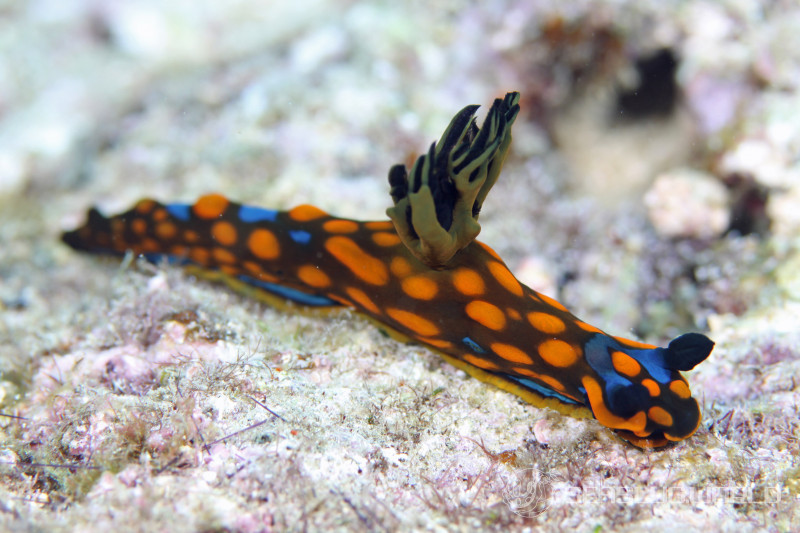
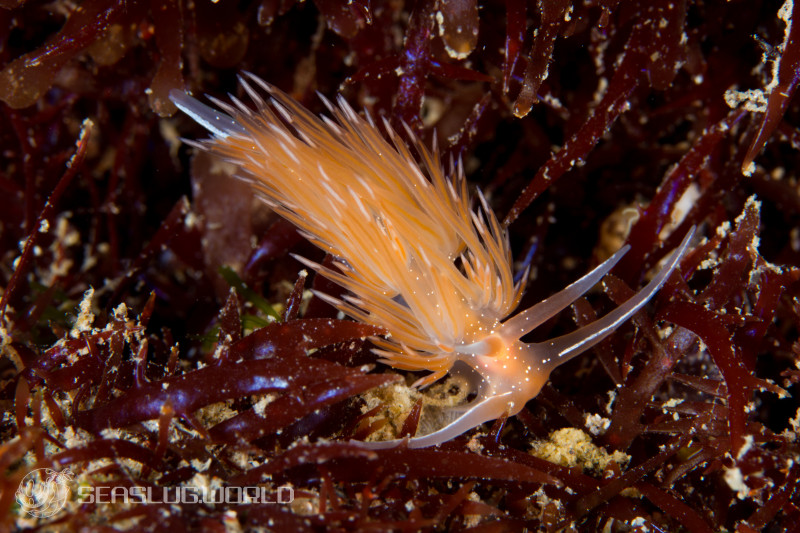
Recall that in the twelve-group list above, Doridida and Nudibranchia were listed as separate orders. This is the result of the cataloguing project incorporating Martynov & Korshunova (2025), which splits the traditional Nudibranchia into Doridida and Nudibranchia sensu stricto (covered in detail in a separate article). The single Nudibranchia that Hirano called "the umiushi within umiushi" is already being treated as two distinct orders.
The Question Hirano Left Behind
Looking back, what Hirano did in Umiushi-gaku in 2000 was to write down a clean record of the then-current understanding of "umiushi". The two-layer structure — broad sense as Opisthobranchia's nine orders, narrow sense as Nudibranchia. The book also acknowledged that the tectonic shifts in the classification system were already beginning.
Over the quarter-century that followed, more moved than Hirano had imagined.
- The label that bracketed broad-sense umiushi — Opisthobranchia — disappeared from formal classification.
- In its place, the practice of conveying the broad sense by enumerating orders (Kashio 2019, Kashio et al. 2025) became necessary.
- The broad-sense scope was subdivided from 9 orders to 12 groups.
- Even the narrow-sense Nudibranchia itself was proposed by Martynov & Korshunova (2025) to be split into Doridida / Nudibranchia, and the cataloguing project adopted this.
And yet, the word "umiushi" itself has survived. Opisthobranchia disappeared, the order arrangement was reorganized, and even the internal structure of Nudibranchia received a split proposal. Even so, those four kana still travel smoothly between the people who pick them off the beach, the divers who see them underwater, the readers who look them up in field guides, and the researchers who write about them in papers. Umiushi was never a taxonomic term to begin with — and that, probably, is why.
Main References
- Yoshiaki Hirano (2000). Umiushi-gaku — Jewels of the Sea, Their Mysteries Explored. Tokai University Press, 222 pp.
- Tsunenobu Fujita (1892–1894). "Cryptobranchiate umiushi from waters near Misaki, Sagami Province". Dōbutsugaku Zasshi 4(47), 5(53), 5(55), 5(57), 6(63).
- Bouchet P. & Rocroi J.-P. (2005). Classification and Nomenclator of Gastropoda Families. Malacologia 47(1-2).
- Imagawa (2016). "Sea Slugs and Snails: Creatures on the Boundary". SEASLUG.WORLD blog, January 2016.
- Rie Nakano (2018). Sea Slugs of Japan. Bun-ichi Sōgō Shuppan.
- Sho Kashio (2019). "Umiushi-rui inhabiting the tidal flats of Osaka Bay: rare species and their conservation". Umiushi Tsushin No. 105.
- Hiroshi Fukuda (2021). Review of the 'Higher classification of the extant classes of Mollusca' in the Biology and Evolution of the Mollusca, with the Japanese name of each taxon. Molluscan Diversity 6(2): 89-180.
- Martynov A. & Korshunova T. (2025). Hidden diversity of the North Pacific prompts reorganization of the taxonomic system. Moscow: Neptune, 48 pp.
- Sho Kashio, Nobuhiko Kimoto, Kazuki Nishida, Tarō Maeda, Hiroki Sato (2025-). Toward a Japanese vernacular-name catalogue of "umiushi-rui" (in progress).
Enjoyed this post? You can tip the author directly —
Tip this post