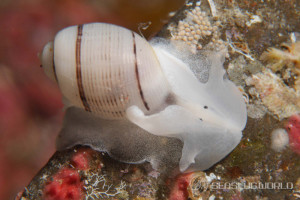
Bullina lineata (J. E. Gray, 1825)
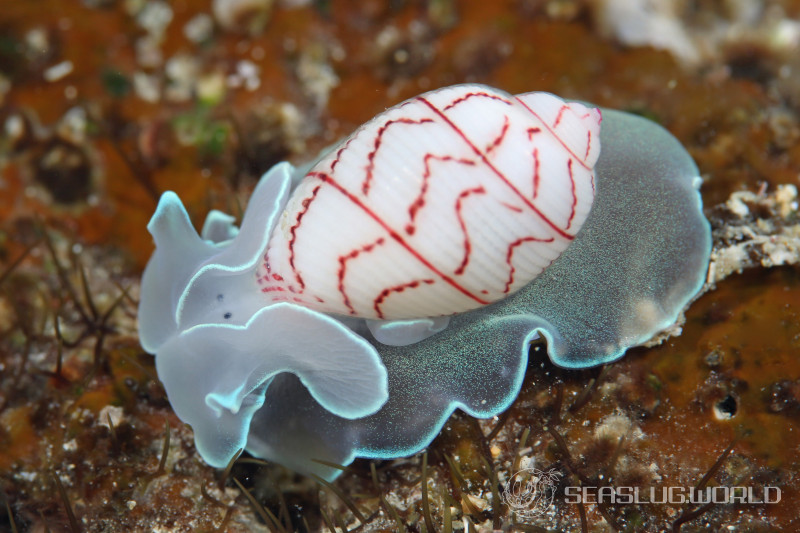
- Location
- Sunabe Water Treatment Plants, Okinawa Island (Chatan and Southern area), Okinawa, Japan
- Date
- 2014/04/16
- Length
- 10mm
- Depth
- 1.0m
- Water temperature
- 22.0℃
Description
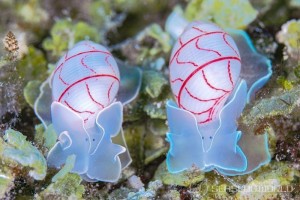
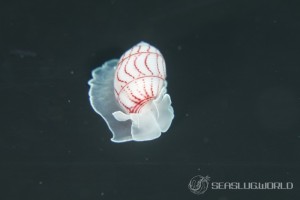
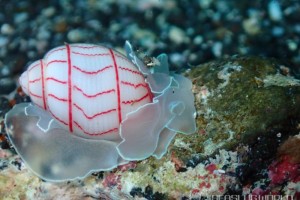
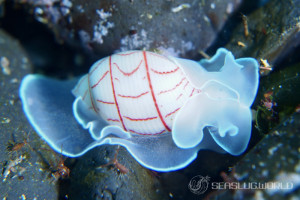
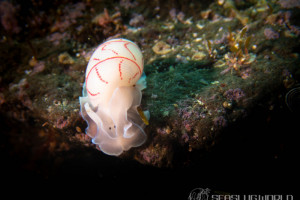
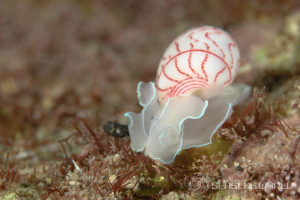
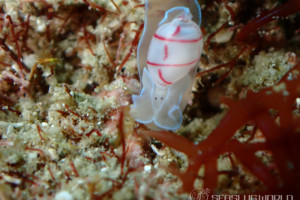
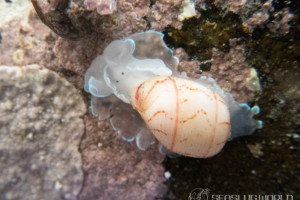
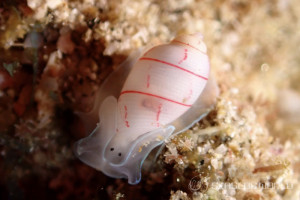
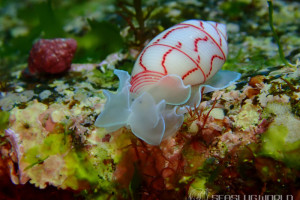
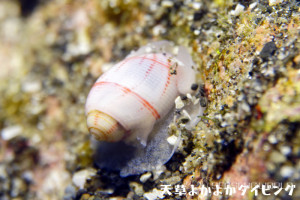
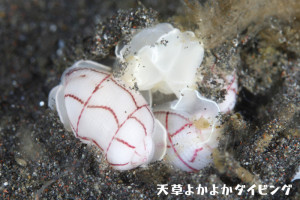
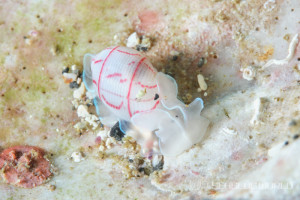
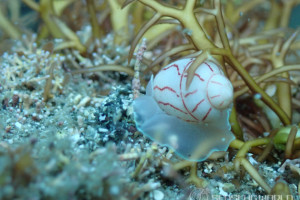
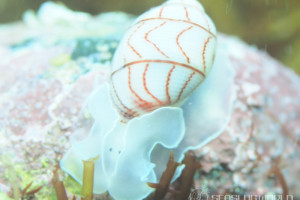
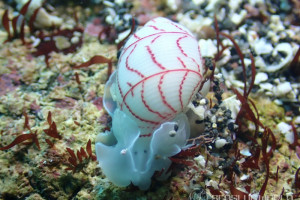
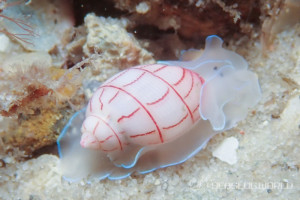
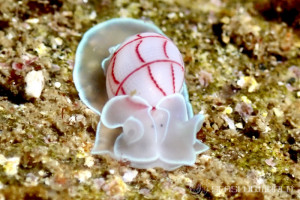
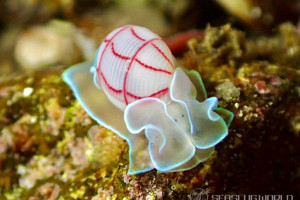
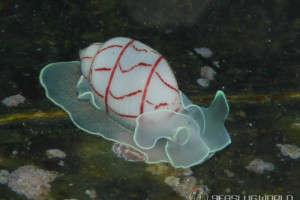
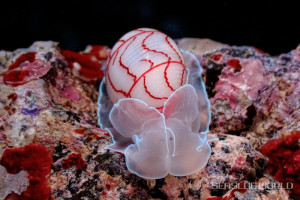
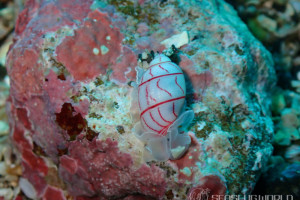
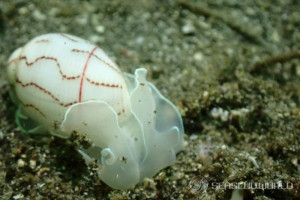
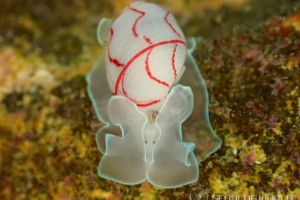
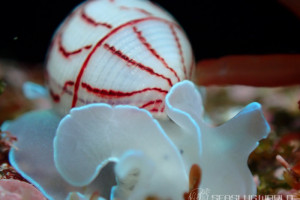
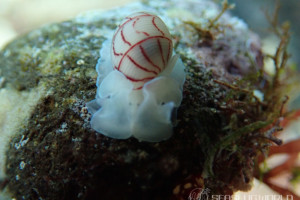
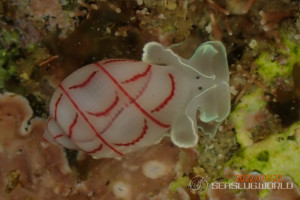
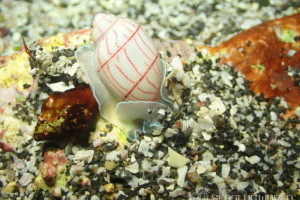
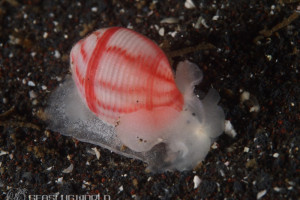
A small bubble-shaped sea slug with a thin, translucent, cream-white shell marked by pink to reddish spiral bands, with wavy or zigzag fine lines running between them. Shell length reaches about 15–20 mm. The soft body is translucent white, its margin bordered in pale blue. Unusually for its closest relatives, Bullina lineata retains a thin operculum and can fully withdraw into its shell — a transitional form between heavily-shelled gastropods and shell-less sea slugs.Distribution
Widespread in the tropical and subtropical Indo-West Pacific, with records from southern Africa, Hong Kong, China, southeastern Australia, New Zealand, and Japan. In the tropics it is usually intertidal or very shallow; in temperate regions such as Japan and New Zealand it tends to occur in deeper water.Etymology
The specific epithet lineata is from the Latin lineatus ("lined, marked with lines"), referring to the spiral bands on the shell. Described by J. E. Gray in 1825 as Bulla lineata in Annals of Philosophy, new series, 9(6): 407–415, page 408.Remarks
Like Hydatina physis, this species is a specialised predator on cirratulid polychaete worms.The Japanese name Benishibori ("crimson shibori") compares the red-banded shell pattern to benizome (crimson-dyed) shibori textile. The species was already catalogued in 1843 by Musashi Sekijū in Mokuhachi-fu under the name beni-ko-shibori (紅粉絞) — a mark of how early Japanese naturalists had recognised this shell.
References
- Bulla lineata, Gray J.E. (1825). A list and description of some species of shells not taken notice of by Lamarck. Annals of Philosophy, new series, 9(6): 407-415.
- 紅粉絞, 武蔵石寿. (1843). 目八譜.
- ベニシボリ, 中野理枝. (2004). 本州のウミウシ. ラトルズ.
- ベニシボリ, 中野理枝. (2018). 日本のウミウシ. 文一総合出版.
- ベニシボリガイ, 髙重博 & 武井哲史. (2019). 日本の貝. 学研プラス.
- ベニシボリガイ, 小野篤司 & 加藤昌一. (2020). 新版 ウミウシ. 誠文堂新光社.
Featured in this book
小野篤司 & 加藤昌一. (2020). 新版 ウミウシ. 誠文堂新光社.
誠文堂新光社
This species, Bullina lineata, is included in the book.
View on Amazon PR (Amazon Associates)Seasonality
Shooting Locations
Loading shooting locations...
Photos of Bullina lineata
Tag:


























Same Genus Nudibranchs
Similar Colors Nudibranchs

Academic Database
Sea slug observation data is available in international marine biodiversity databases.