Hydatina physis (Linnaeus, 1758)
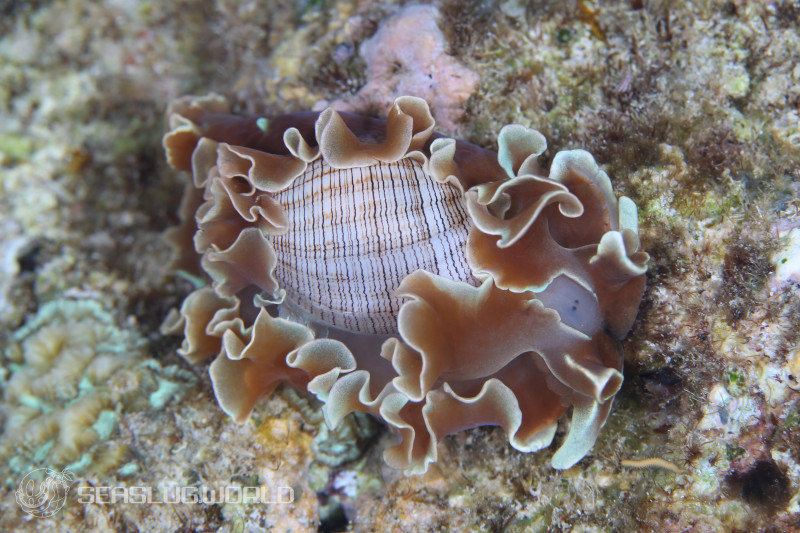
- Location
- Cape Maeda, Okinawa Island (Onna and Yomitan area), Okinawa, Japan
- Date
- 2015/07/03
- Length
- 30mm
- Depth
- 2.0m
- Water temperature
- 29.0℃
Description
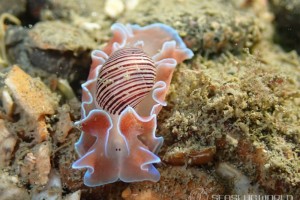
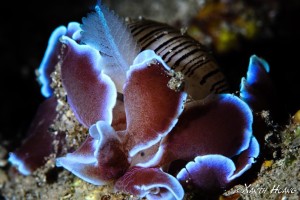
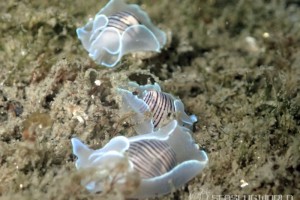
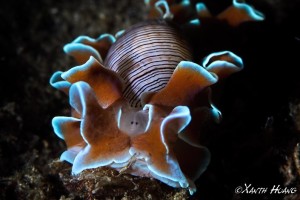
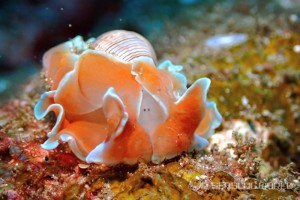
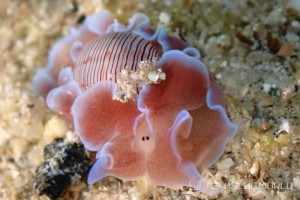
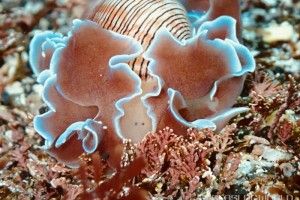
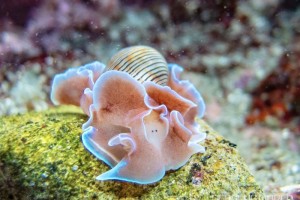
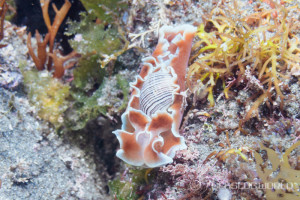
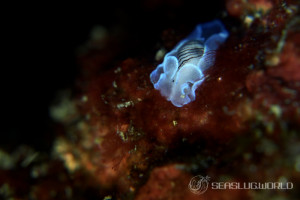
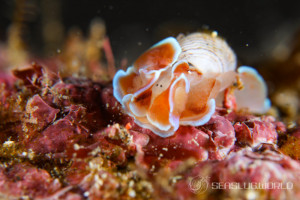
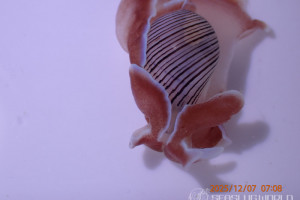
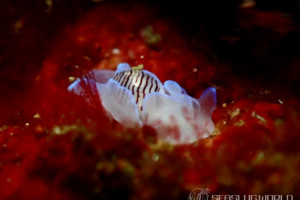
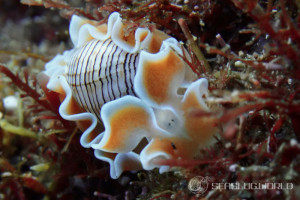
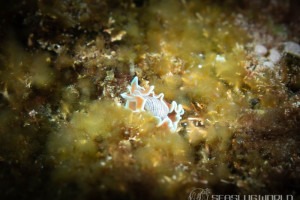
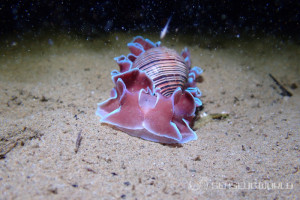
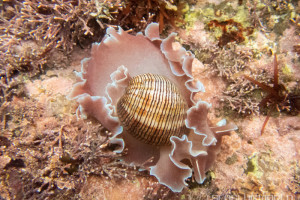
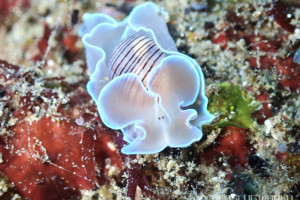
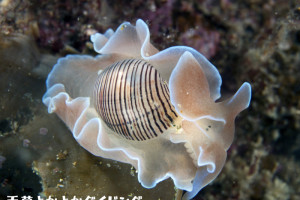
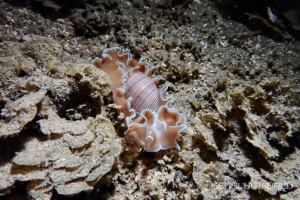
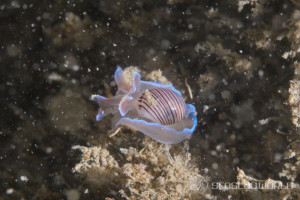
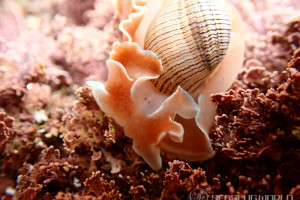
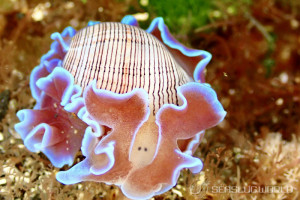
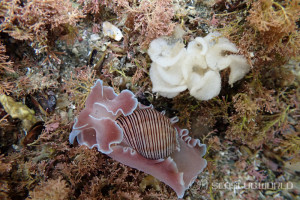
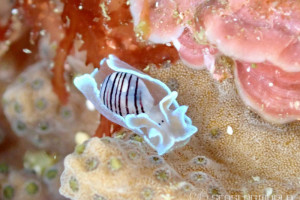
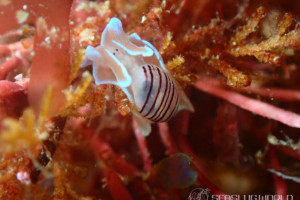
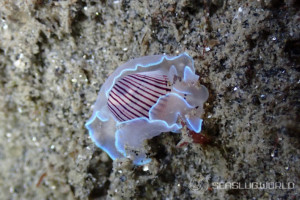
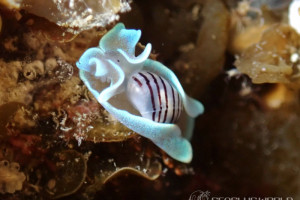
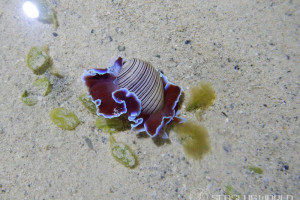
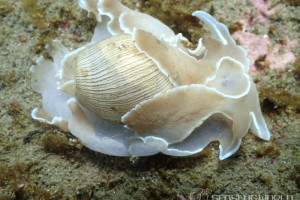
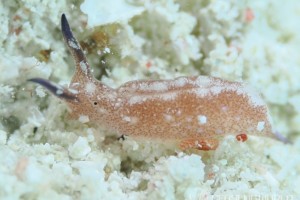
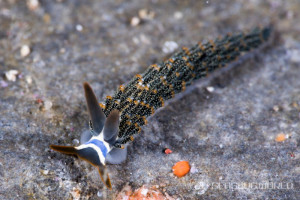
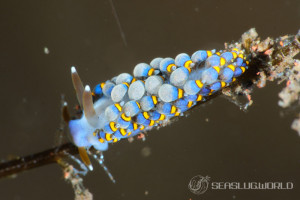
Shell thin and translucent, bearing wavy transverse lines in brown to blackish hues and reaching about 60 mm in length. The body is too large to retract fully into the shell; a broad, frilly mantle and parapodia, typically pink to cream-colored with a blue or purple marginal line, wrap around and partly cover the shell in life.The head bears Hancock's organ — a row of chemosensory folds used to detect prey. The mouth opens into a long, extensible proboscis that can be inserted deep into a worm's burrow to seize the inhabitant with the jaws.
Distribution
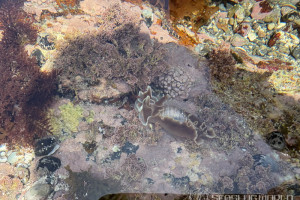
A circumtropical species, with records across the Indo-West Pacific (Red Sea, South Africa, Arabian Sea, the Maldives, the Philippines, Hawaii, Australia, New Zealand) and the Atlantic (West Africa, the Canary Islands, Brazil). Common on shallow sandy bottoms around Japan. Mainly nocturnal, but sometimes active on intertidal flats during the day.Etymology
The specific epithet physis is from the Greek φύσις, meaning "nature" or "growth," and is generally interpreted as a reference to the inflated, bladder-like shape of the shell. Described by Linnaeus in the 10th edition of Systema Naturae (1758) as Bulla physis.Remarks
Although often grouped colloquially among the "sea slugs," Hydatina physis is not a nudibranch: it retains a thin external shell and belongs to the family Aplustridae within the superfamily Acteonoidea. It is a highly specialised predator that feeds exclusively on cirratulid polychaete worms, inserting its long proboscis into the worm's burrow to reach its prey. Large breeding aggregations can form, and unusually among shelled heterobranchs, Hydatina produces its entire egg mass before anchoring it to the substrate rather than laying it gradually.The Japanese name Misugai ("court-blind shell") alludes to the shell's transverse brown stripes, which recall the ribs of a misu — the fine-woven bamboo blind hung in traditional Japanese palace interiors.
References
- Bulla physis, Linnaeus C. (1758). Systema Naturae per regna tria naturae, secundum classes, ordines, genera, species, cum characteribus, differentiis, synonymis, locis. Editio decima, reformata. Tomus I. Laurentius Salvius, Holmiae. 824 pp.
- ミスガイ, 益田一. (1999). 海洋生物ガイドブック. 第2刷. 東海大学出版会.
- ミスガイ, 鈴木敬宇. (2000). ウミウシガイドブック〈2〉. TBSブリタニカ.
- ミスガイ, 殿塚孝昌. (2003). ウミウシガイドブック〈3〉. TBSブリタニカ.
- ミスガイ, 中野理枝. (2004). 本州のウミウシ. ラトルズ.
- ミスガイ, 小野篤司 & 加藤昌一. (2009). ウミウシ. 誠文堂新光社.
- Hydatina physis, Terrence Gosliner, Ángel Valdés and David Behrens. (2015). Nudibranch and Sea Slug Identification Indo-Pacific. New World Pubns Inc.
Featured in this book

Terrence Gosliner, Ángel Valdés and David Behrens. (2018). Nudibranch and Sea Slug Identification Indo-Pacific 2nd Edition. New World Pubns Inc.
New World Publications
This species, Hydatina physis, is included in the book.
View on Amazon PR (Amazon Associates)Seasonality
Shooting Locations
Loading shooting locations...
Photos of Hydatina physis
Tag:
























Same Genus Nudibranchs
Similar Colors Nudibranchs


Academic Database
Sea slug observation data is available in international marine biodiversity databases.