Hydatina zonata ([Lightfoot], 1786)
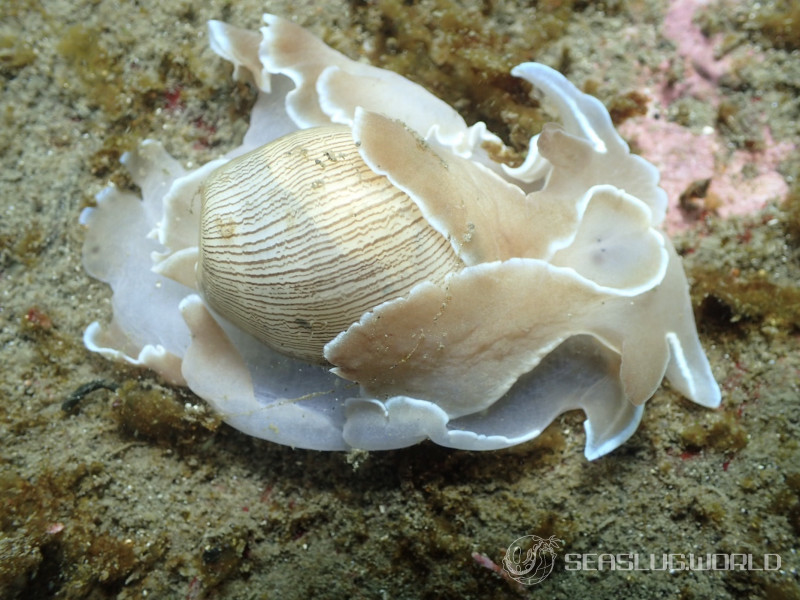
- Location
- Okaiso, Enoshima / Eboshi Rock, Kanagawa, Japan
- Date
- 2019/01/26
- Length
- 20mm
- Depth
- 7.0m
- Water temperature
- 15.0℃
Description
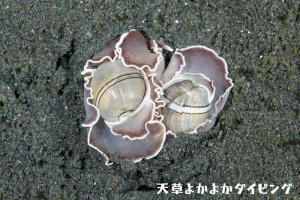
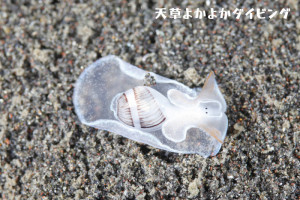
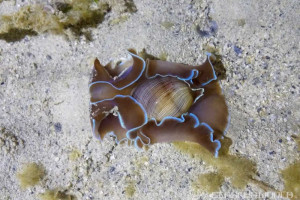
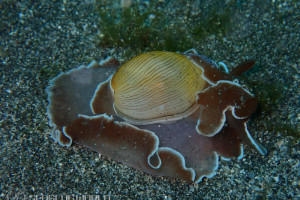
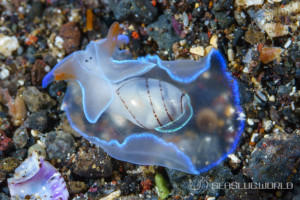
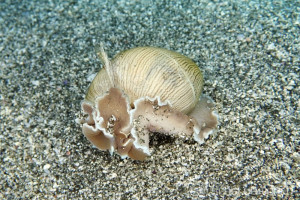
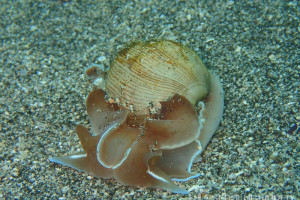
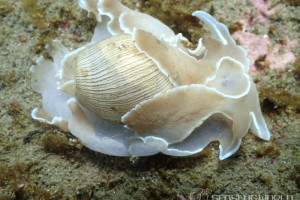
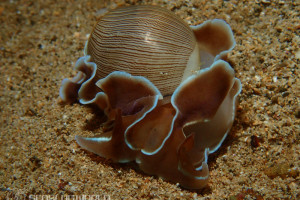
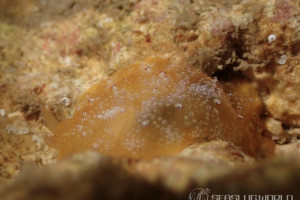
A small aplustrid (Hydatinidae) with a relatively thin shell reaching about 2.5 cm in shell length. The shell is encircled by two broad pale yellowish-brown spiral bands bordered by black margins, with numerous fine, wavy black axial lines crossing the interspaces. The inner lip is purplish-brown with a greenish-white margin. Living animals are translucent white with diffuse pale reddish-brown pigment, and the mantle margin is bordered by a white to pale-blue line. The species burrows in sand.Distribution
The original description in the Portland Catalogue (lot 95) gives the type locality as Coromandel (the Coromandel Coast of southeast India), describing the specimens as "very rare". Okutani (ed.) 2000 (Marine Mollusks in Japan) records the species from Boso Peninsula southward to the tropical Indo-West Pacific, on fine sand bottoms from the intertidal zone to 50 m depth.Etymology
The specific epithet zonata is the Latin feminine of zonatus, "girdled" or "banded" (from zona, "girdle"), referring to the conspicuous transverse brown bands on the shell.Remarks
Originally described as Bulla Zonata in lot 95 of the [Lightfoot] (1786) Catalogue of the Portland Museum; the suffix "S." in the original entry indicates Solander as the author of the manuscript name. The Portland Catalogue is an anonymously published auction catalogue, and the ICZN attributes its authorship to the Rev. John Lightfoot, with the year [1786] in brackets to indicate inferred authorship.References
- Bulla Zonata, [Lightfoot J.] (1786). A Catalogue of the Portland Museum, lately the Property of the Duchess Dowager of Portland, deceased: which will be sold by auction, by Mr. Skinner and Co. London. viii + 194 pp. (Anonymously published auction catalogue; authorship attributed by ICZN convention to Rev. John Lightfoot)
- ひめやかた(新名), 岩川友太郎(編). (1919). 日本産貝類標本目録.
- ヒメヤカタガイ Hydatina zonata (Lightfoot, 1786), 奥谷喬司. (2000). 日本近海産貝類図鑑. 東海大学出版会.
A Kindle field guide by the site author
Kimoto N. (2026). Sea Slugs of Japan & the Indo-Pacific, 2nd Edition.
Kindle Edition
View on Amazon PR (Amazon Associates)Seasonality
Shooting Locations
Loading shooting locations...
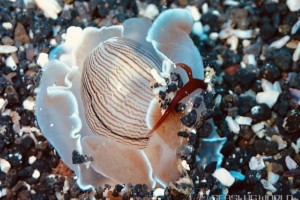
Photos of Hydatina zonata


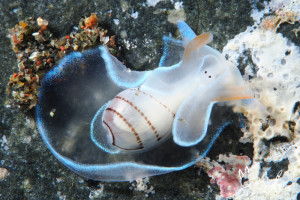

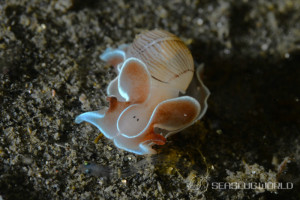

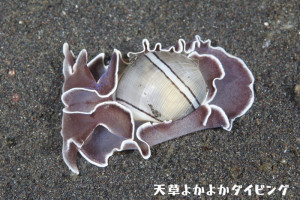

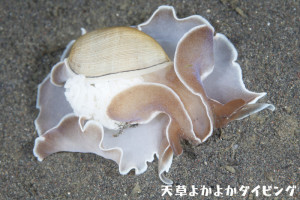






Same Genus Nudibranchs
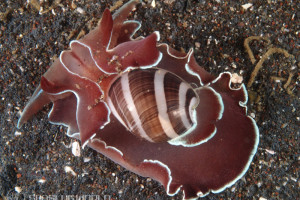
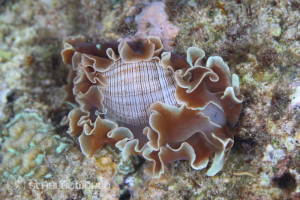
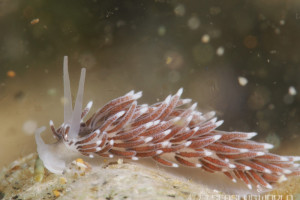
Similar Colors Nudibranchs

Academic Database
Sea slug observation data is available in international marine biodiversity databases.