Doto pita Er. Marcus, 1955
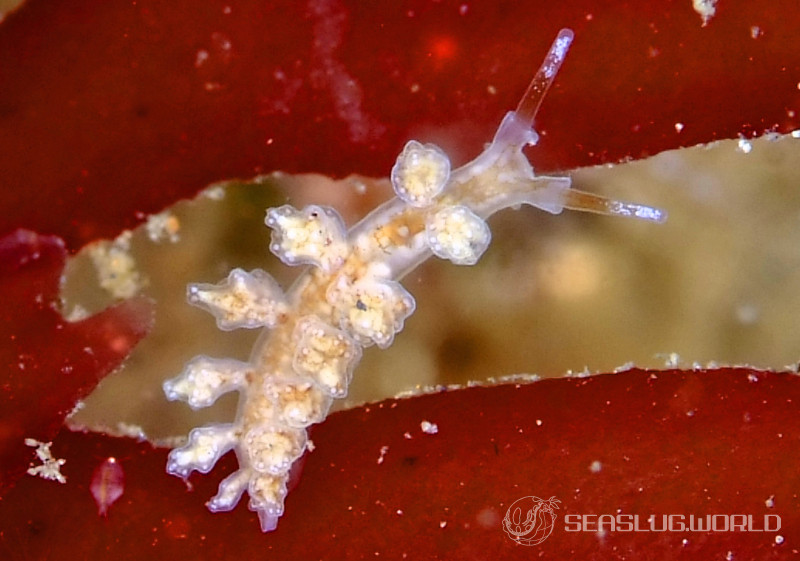
- Location
- Gontarouiwaoki, Hayama, Kanagawa, Japan
- Date
- 2008/04/03
- Length
- 10mm
- Depth
- 10.0m
- Water temperature
- 19.0℃
Description
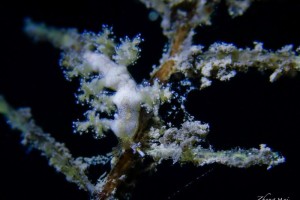
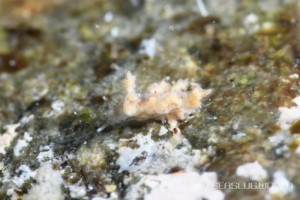
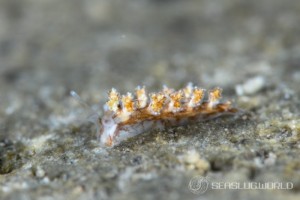
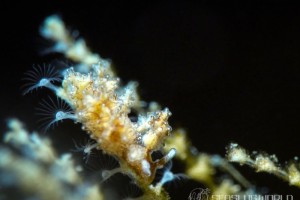
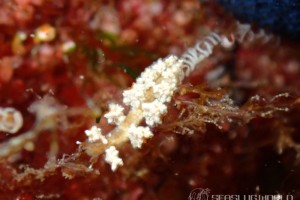
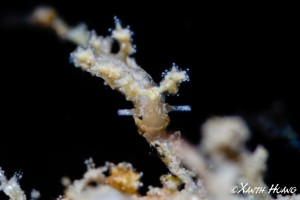
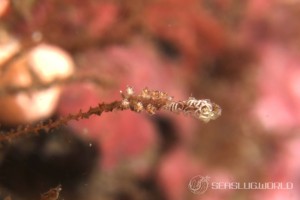
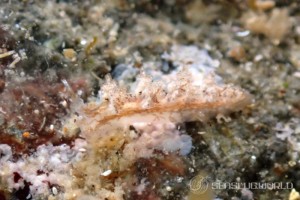
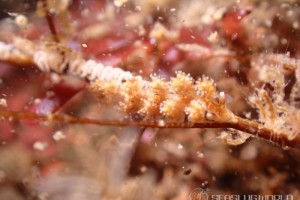
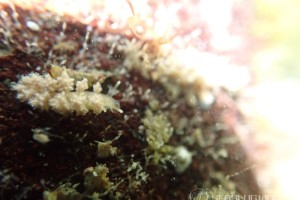
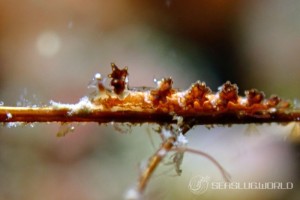
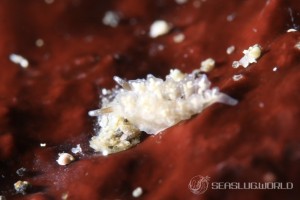
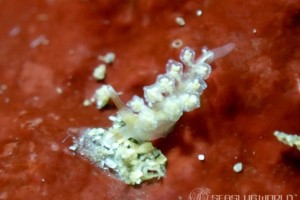
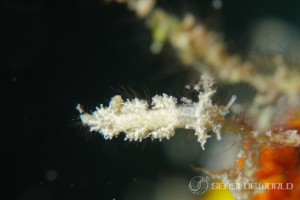
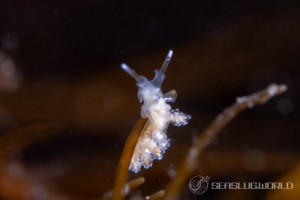
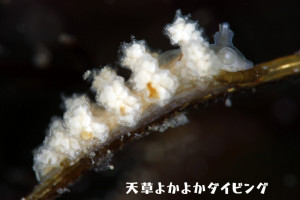
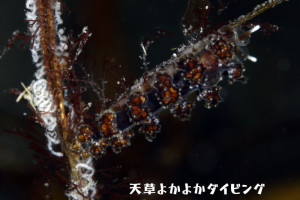
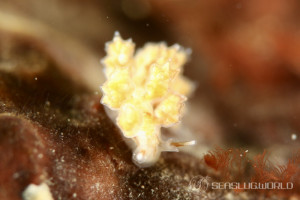
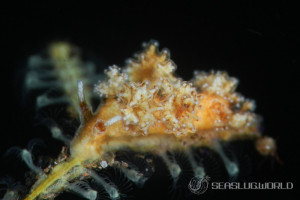
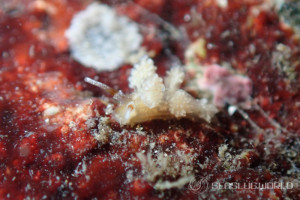
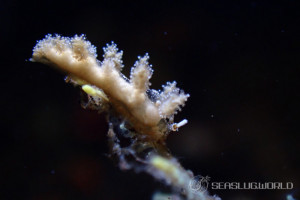
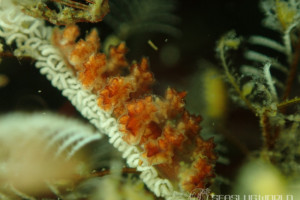
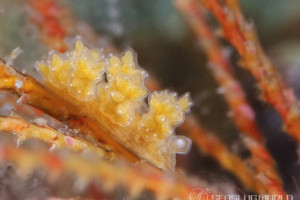
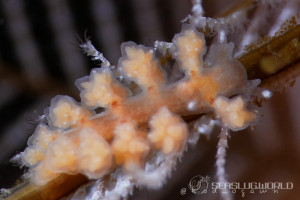
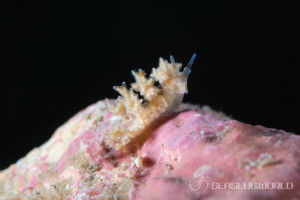
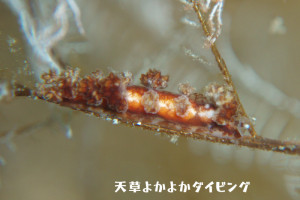
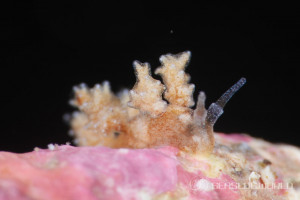
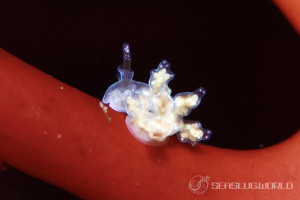
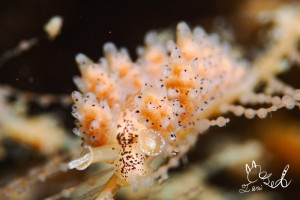
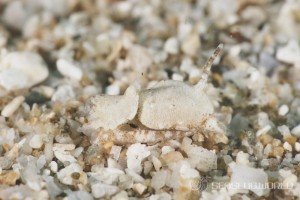
A small dotid (Dotidae) reaching about 15 mm in body length. Ground colour ranges among individuals from translucent white through brown to dark brown, the dorsum overlaid with irregular brown patches.There are 6-7 pairs of cerata, each shaped like a pine cone with segmental swellings of variable size and form. A white spot marks the tip of each ceras. The rhinophore sheath is the same colour as the body; the rhinophore itself is a smooth rod, basally brown and distally white.
Distribution
Western Atlantic and western Pacific. Records come from Brazil, the Bahamas and Japan. The species is found on hydroid colonies in rocky-reef habitats.Etymology
The specific epithet pita was coined by Marcus 1955 from Brazilian material; the original description gives no stated reason for the name.Remarks
The Japanese vernacular name "Hīragi-umiushi" was proposed by Baba 1971 in "Anatomical studies on three species of Doto (D. bella, D. japonica and D. pita) from Japan" (Publ. Seto Mar. Biol. Lab. 19: 73-79). Like other species of Doto, it is a hydroid-feeder.References
A Kindle field guide by the site author
Kimoto N. (2026). Sea Slugs of Japan & the Indo-Pacific, 2nd Edition.
Kindle Edition
View on Amazon PR (Amazon Associates)Seasonality
Shooting Locations
Loading shooting locations...
Photos of Doto pita
Tag:




















Same Genus Nudibranchs


Similar Colors Nudibranchs
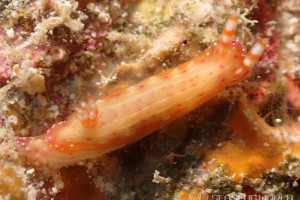
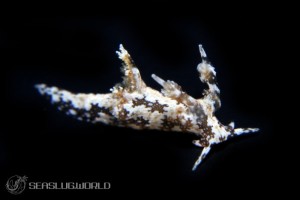
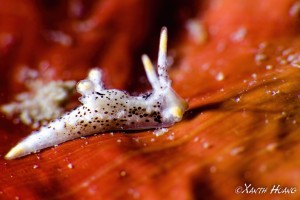
Academic Database
Sea slug observation data is available in international marine biodiversity databases.