Hyalocylis striata (Rang, 1828)
Description
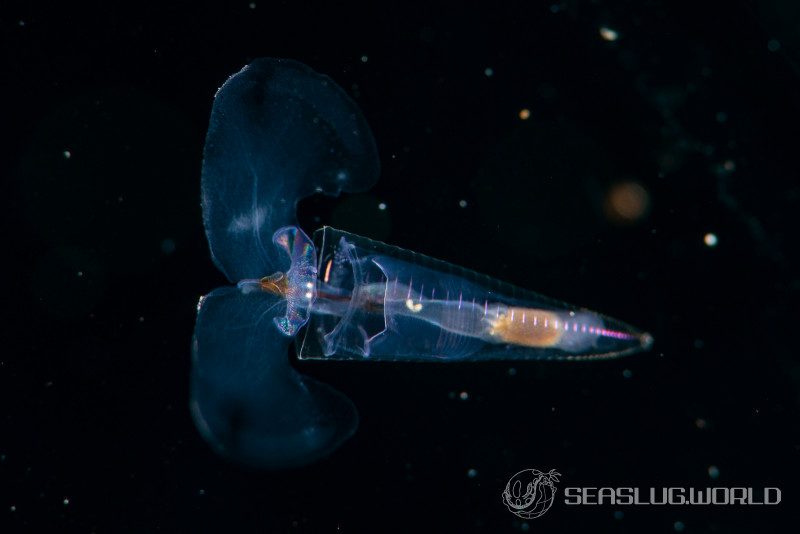
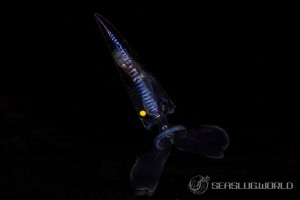
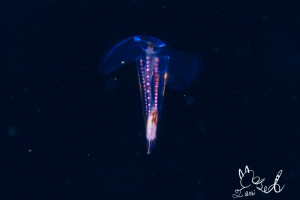
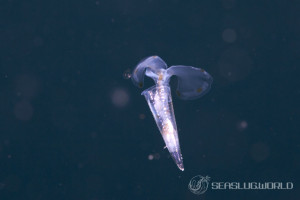
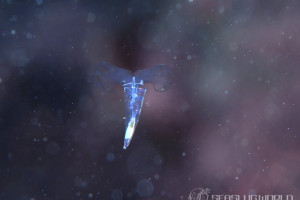
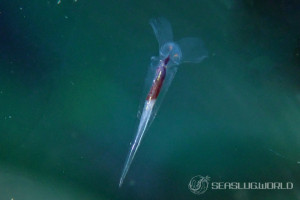
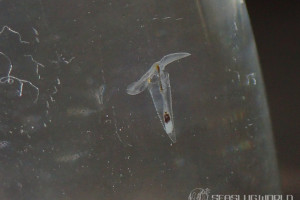
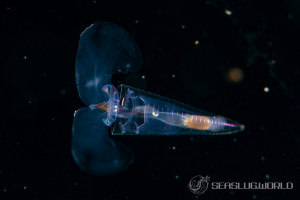
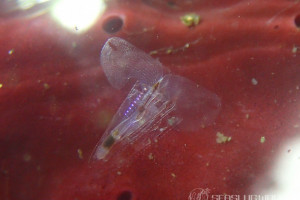
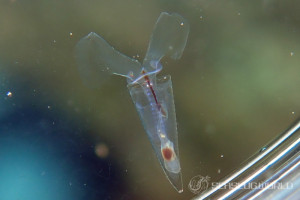
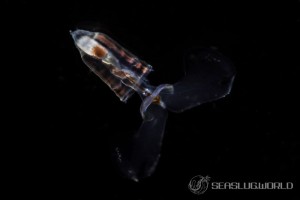
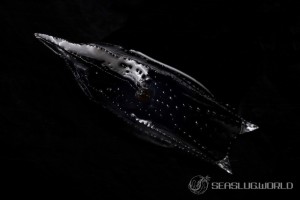
A small pelagic pteropod ("sea butterfly") with a thin, transparent, conical shell about 10 mm in length. The surface carries a regular series of strong, glass-like ring-shaped ribs, accompanied by very fine, discontinuous longitudinal lines that are only visible under a microscope. The conical protoconch (embryonic shell) usually breaks off during growth, so the apex ends in a somewhat blunt tip. The oval aperture bears a pair of rounded oval wing-feet that the animal flaps to swim through the water column. Hyalocylis is a monotypic genus — Hyalocylis striata is its only species.Distribution
Essentially circumtropical, occurring in the tropical and warm-temperate zones of all oceans except the eastern Pacific. In Japanese waters it is found in areas influenced by the Kuroshio Current. The species was originally described in 1828 by the French naval surgeon and naturalist Sander Rang.Etymology
The specific epithet striata is derived from Latin stria ("groove" or "streak") and means "furrowed" or "striped", referring to the conspicuous ring-shaped ribs on the shell. The generic name Hyalocylis incorporates Greek hyalos ("glass"), reflecting the transparent, glass-like quality of the shell.Remarks
The shell is extremely fragile, and the apertural margin often chips off during collection. Long placed within Cavoliniidae (subfamily Clioninae or similar), the species is now assigned in WoRMS to its own family Hyalocylidae, which contains only this single genus and species.References
- Cleodora (Creseis) striata n.sp., Rang S. (1828). Notice sur quelques mollusques nouveaux appartenant au genre Cléodore, et établissement et monographie du sous-genre Créseis. Annales des Sciences Naturelles, Paris, 13: 302-319, pls. 17-18.
- ガラスウキヅノ Hyalocyris striata (Rang, 1828), 奥谷喬司 (2016). わが国近海に見られる浮遊性巻貝類―IV. 有殻翼足類 (1):カメガイ科のウキビシガイ亜科・ウキヅツガイ亜科. うみうし通信 91: 8-9.
- ガラスウキヅノガイ, 中野理枝. (2019). 日本のウミウシ. 第二版. 文一総合出版.
Featured in this book

中野理枝. (2019). 日本のウミウシ. 第二版. 文一総合出版.
文一総合出版
This species, Hyalocylis striata, is included in the book.
View on Amazon PR (Amazon Associates)Seasonality
Shooting Locations
Loading shooting locations...
Photos of Hyalocylis striata






Same Genus Nudibranchs
Similar Colors Nudibranchs
Color:
Transparent
Academic Database
Sea slug observation data is available in international marine biodiversity databases.