Phyllidiella rosans (Bergh, 1873)
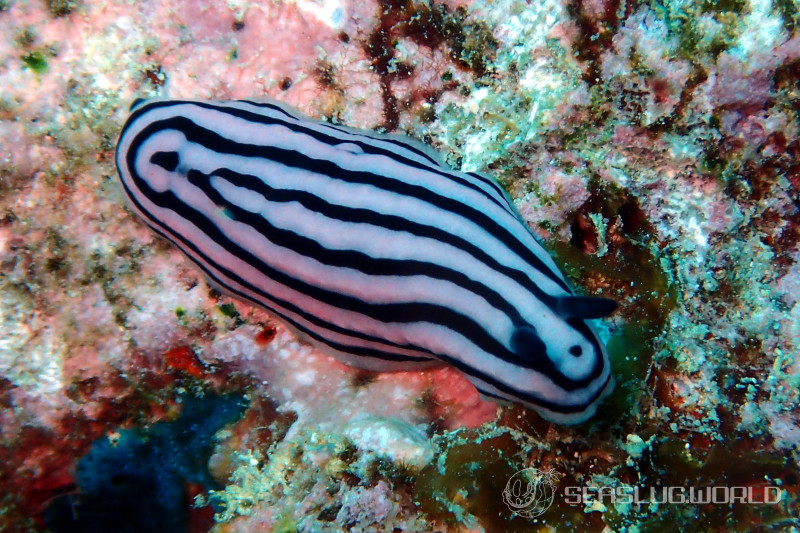
- Location
- Big Castle, Belle Mare, Mauritius, Mauritius
- Date
- 2017/01/23
- Length
- 30mm
- Depth
- 20.0m
- Water temperature
- 28.0℃
Description
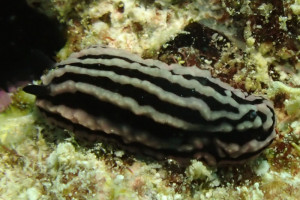
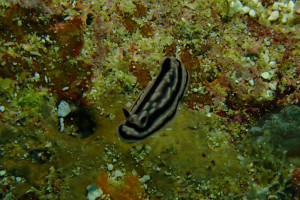
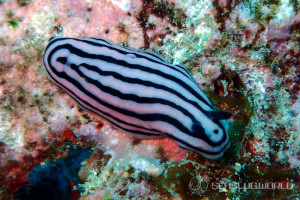
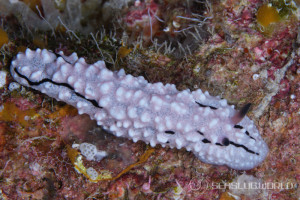
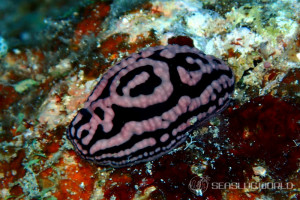
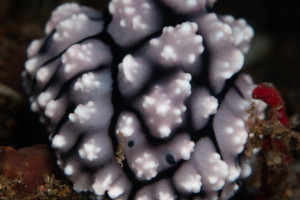
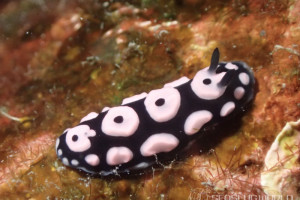
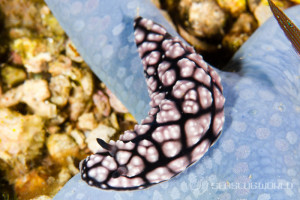
A medium-sized phyllidiid; the preserved type specimen reaches 32 mm long, 17 mm wide and up to 9 mm high. In life the dorsum combines a pinky-flesh ground colour with deep velvet black: a broad red band runs along the midline from in front of the rhinophores almost to the anus, flanked on each side by a similar red band separated from it by a black band; outside these three red bands lies a continuous elliptical black ring, then a red ring (sometimes itself divided by a narrow black stripe), another black ring, another red ring, and finally a very narrow black ring with a pale outermost margin. The rhinophores are black behind and pinky-flesh in front and below; the underside is pale greenish-white; the foot sole yellowish. In alcohol the red tones fade and only the contrast between velvet black and white remains.Distribution
Type locality: a reef at Tahiti, Society Islands, Pacific. The species ranges widely across the Indo-West Pacific on coral reefs, occurring on rocky and rubble bottoms and in cave-like environments.Etymology
The specific epithet rosans is a Latin present participle from rosa ("rose"), meaning "becoming rose-coloured" or "rose-tinged" — a descriptive epithet evoking the combination of pinky-flesh and deep velvet black in life.Remarks
Originally described in Phyllidia, the species was later transferred to Phyllidiella (the parentheses in the author citation reflect this generic transfer). As in other phyllidiids, the species feeds on sponges and is presumed to sequester defensive metabolites from its prey for chemical defence.References
A Kindle field guide by the site author
Kimoto N. (2026). Sea Slugs of Japan & the Indo-Pacific, 2nd Edition.
Kindle Edition
View on Amazon PR (Amazon Associates)Seasonality
Shooting Locations
Loading shooting locations...
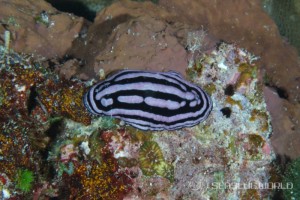
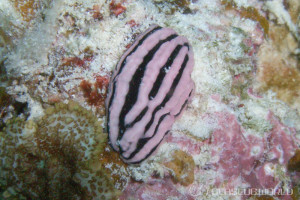
Photos of Phyllidiella rosans




Same Genus Nudibranchs

Academic Database
Sea slug observation data is available in international marine biodiversity databases.