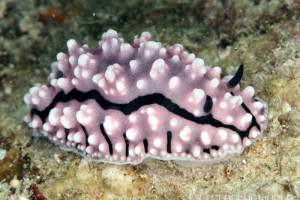
Phyllidiella annulata (J. E. Gray, 1853)
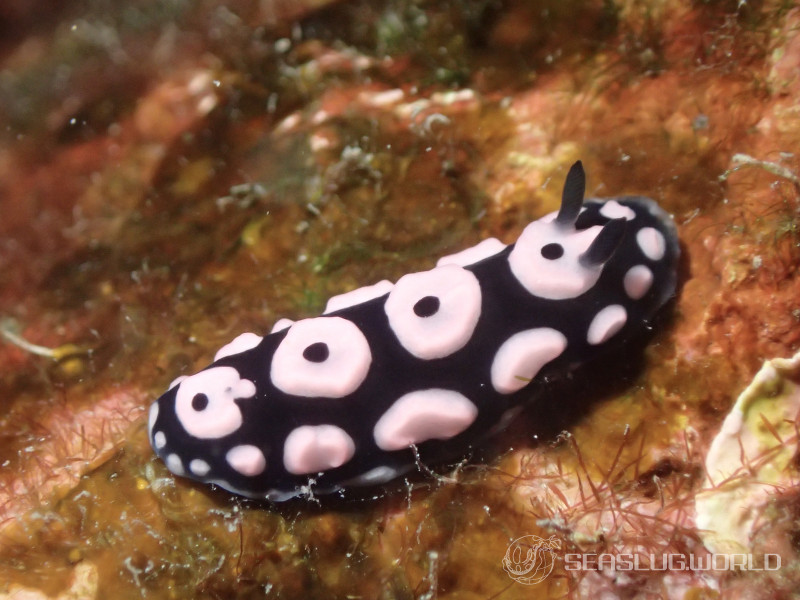
- Location
- Lau Lau Beach, Saipan, United States
- Date
- 2020/01/08
- Length
- 18mm
- Depth
- 12.0m
- Water temperature
- 27.0℃
Description
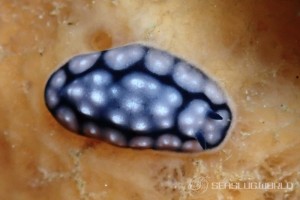
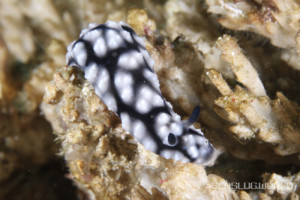
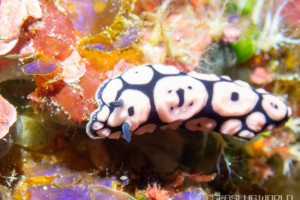
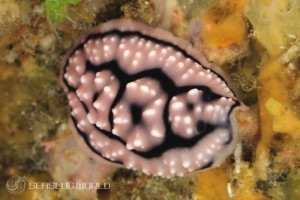
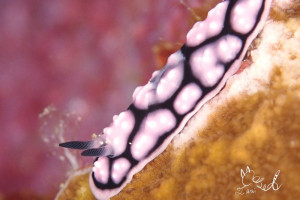
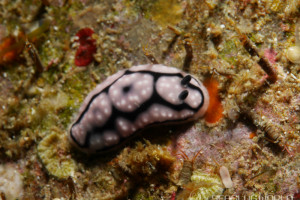
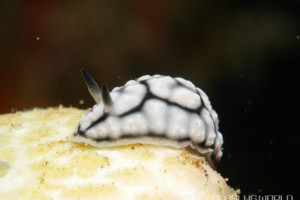
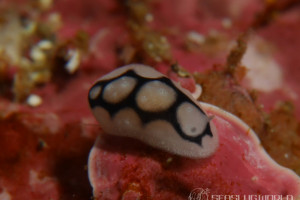
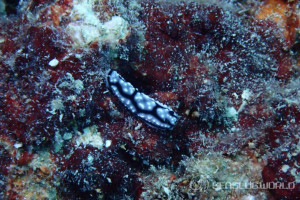
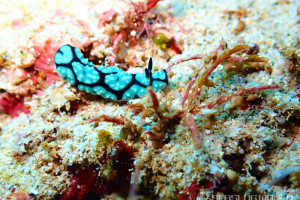
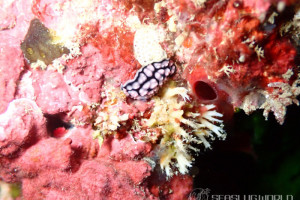
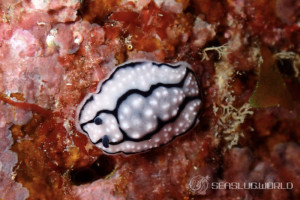
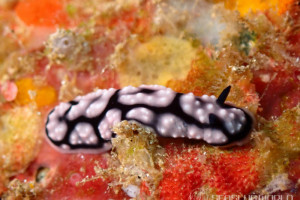
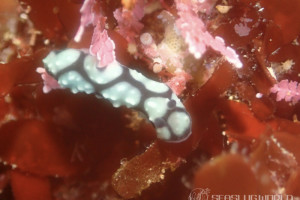
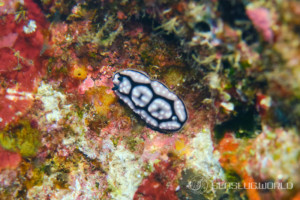
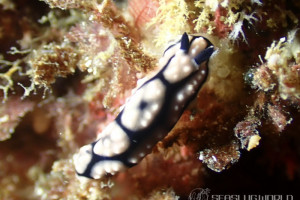
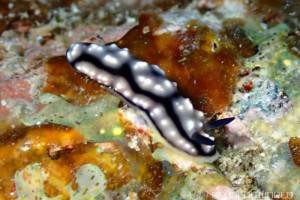
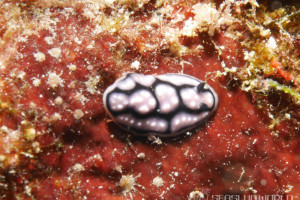
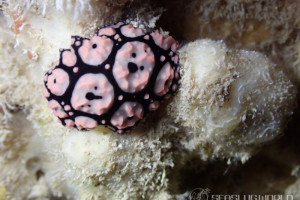
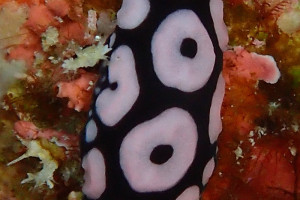
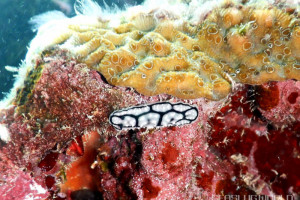
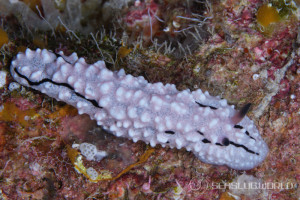
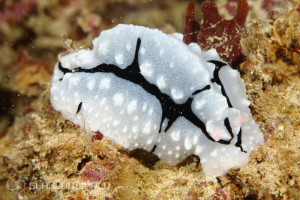
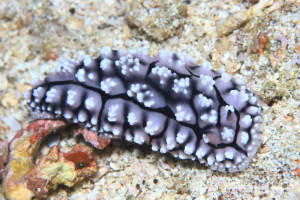
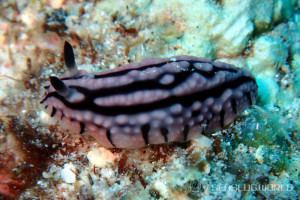
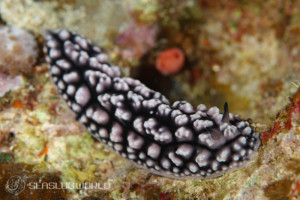
An oval-shaped phyllidiid of about 30 mm in body length. The dorsum is black and bears 4 to 14 pale pink rings. Each ring encloses several low tubercles with angular sides and rounded apices, but no large central tubercle. Minute isolated pink tubercles may scatter around the larger rings and near the mantle margin. There is no continuous pink rim along the mantle edge. Rhinophores are black, with 17 to 20 lamellae on the clavus in specimens larger than 23 mm. The ventral side is mostly grey with darker cross-hatching on the hyponotum; the foot sole is dark grey with a broad pale-grey median band and a pale margin.Similar species include Phyllidiella pustulosa, Phyllidiella zeylanica, and Phyllidia ocellata. P. annulata can be distinguished by its isolated low tubercles within pink rings, lacking the compound tubercles, tubercular ridges, or "eye spots" of those species. P. pustulosa grows to roughly twice the size of P. annulata (around 60 mm).
Distribution
Recorded from the Red Sea, the tropical Indian Ocean, and the central-western Pacific Ocean (Brunckhorst 1993). Site observations include Réunion, Thailand, Fiji, Papua New Guinea, Japan, and Guam.Etymology
The specific epithet annulata is Latin for "ringed".References
- Phyllidia annulata sp. nov., Gray J.E. (1853). Revision of the families of nudibranch mollusks, with a description of a new genus of Phyllidiadae. Annals and Magazine of Natural History, series 2. 11: 218-221.
- Phyllidiella annulata (Gray, 1853), Brunckhorst D.J. (1993). The systematics and phylogeny of phyllidiid nudibranchs (Doridoidea). Records of the Australian Museum, Supplement 16: 1-107.
- Phyllidiella annulata, Terrence Gosliner, Ángel Valdés and David Behrens. (2015). Nudibranch and Sea Slug Identification Indo-Pacific. New World Pubns Inc.
- ワモンイボウミウシ(新称), 中野理枝. (2018). 日本のウミウシ. 文一総合出版.
Featured in this book

Terrence Gosliner, Ángel Valdés and David Behrens. (2018). Nudibranch and Sea Slug Identification Indo-Pacific 2nd Edition. New World Pubns Inc.
New World Publications
This species, Phyllidiella annulata, is included in the book.
View on Amazon PR (Amazon Associates)Seasonality
Shooting Locations
Loading shooting locations...
Photos of Phyllidiella annulata
Tag:





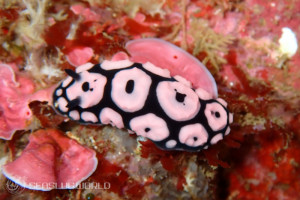
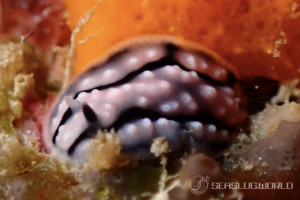
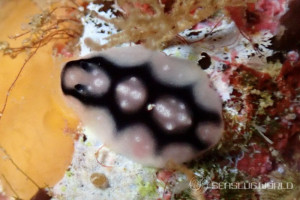
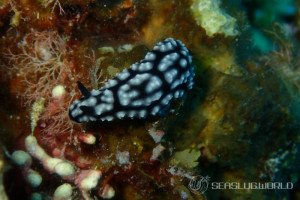










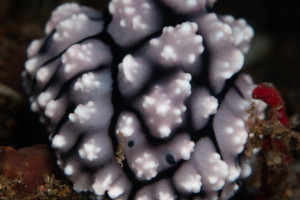
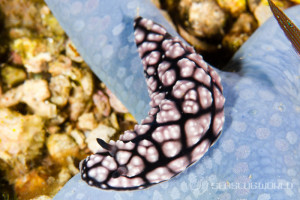
Same Genus Nudibranchs

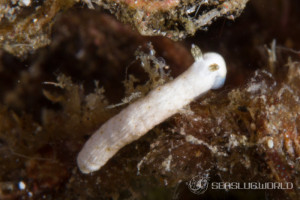
Similar Colors Nudibranchs


Academic Database
Sea slug observation data is available in international marine biodiversity databases.