Phyllidiopsis krempfi Pruvot-Fol, 1957
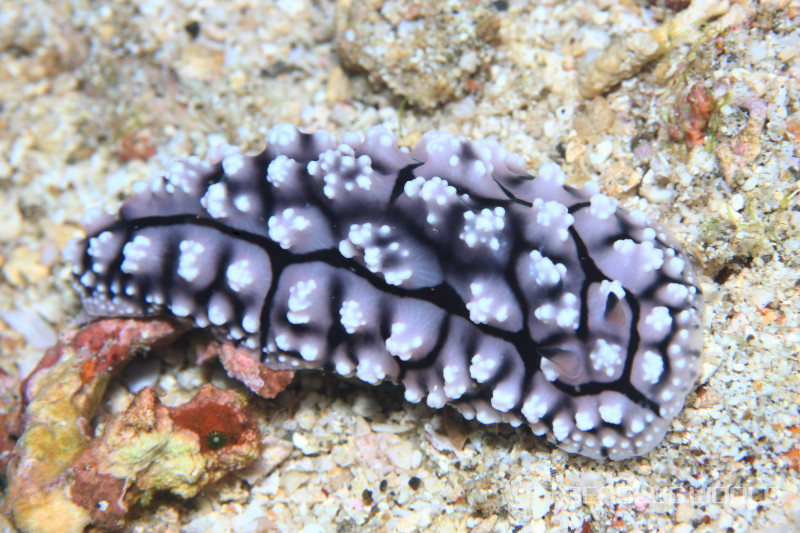
- Location
- Koala Reef, Anilao, Philippines
- Date
- 2013/03/17
- Length
- 45mm
- Depth
- 12.0m
- Water temperature
- 27.0℃
Description
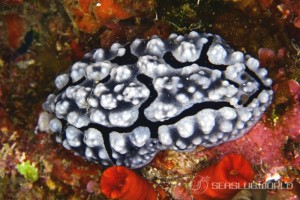
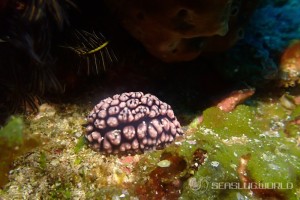
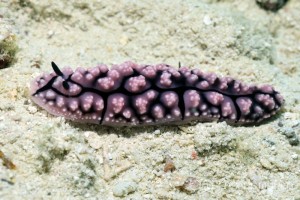
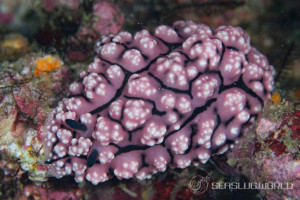
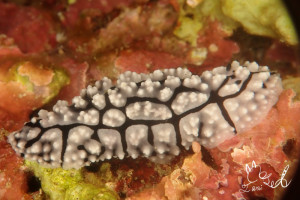
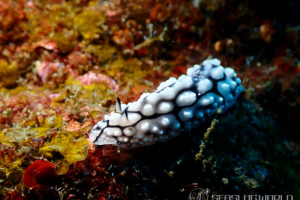
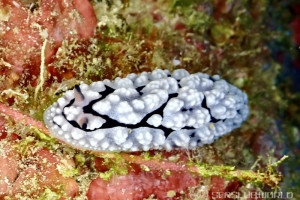
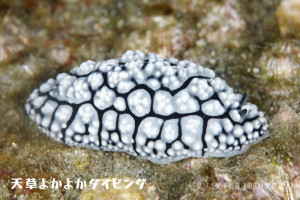
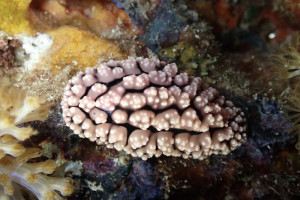
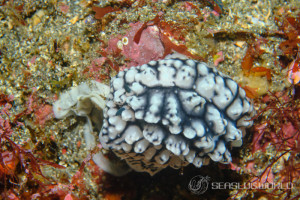
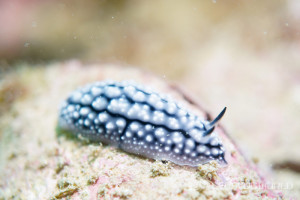
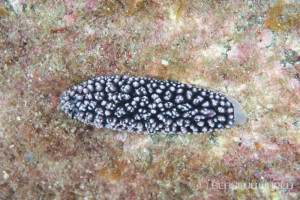
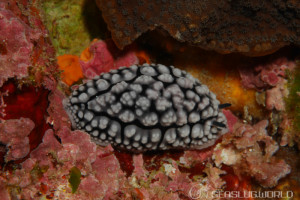
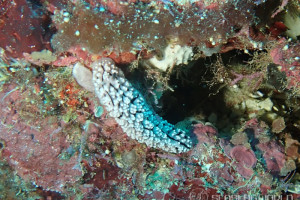
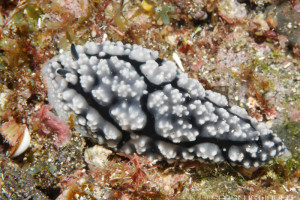
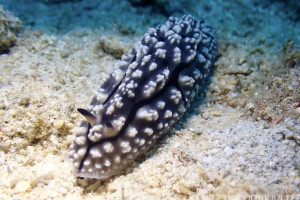
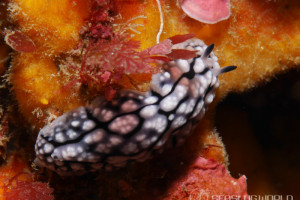
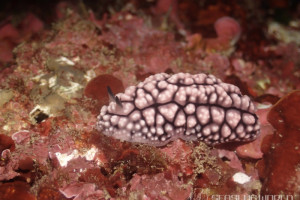
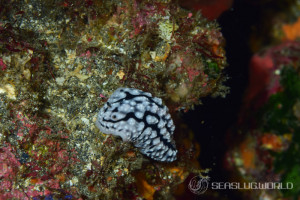
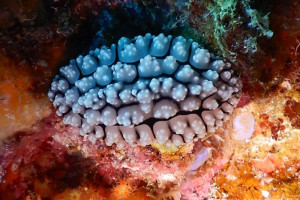
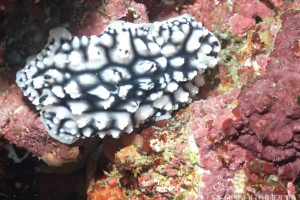
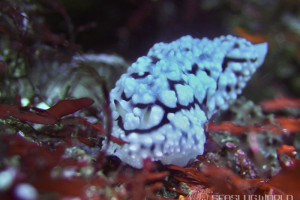
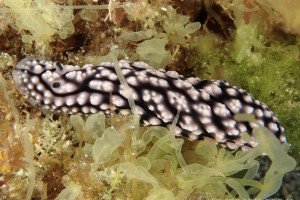
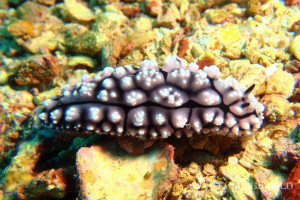
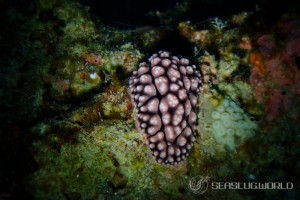
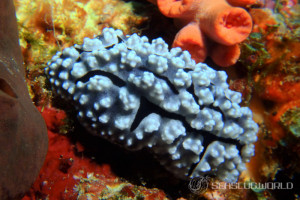
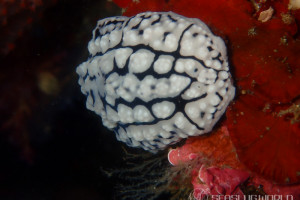
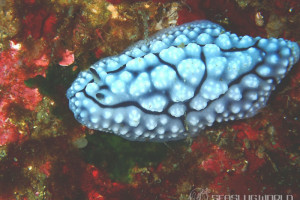
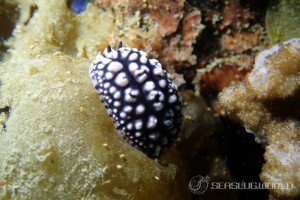
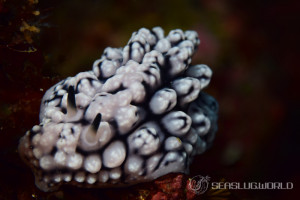
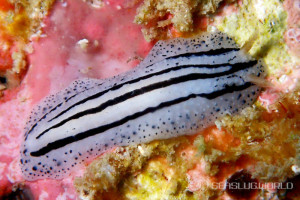
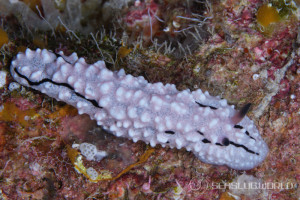
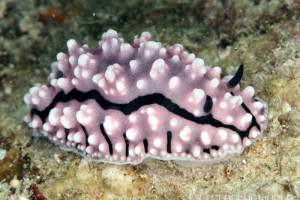
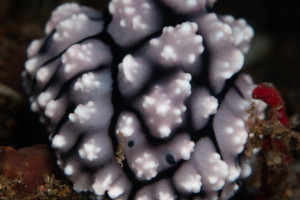
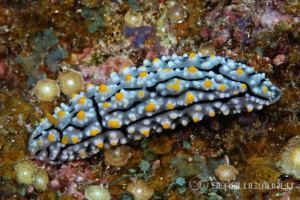
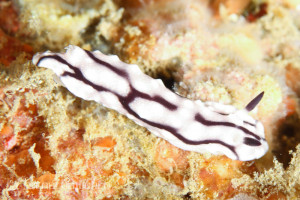
A large phyllidiid reaching 33-65 mm in body length, with an elongate-ovate body in life. The general dorsal colour is pink, with irregular black longitudinal lines meandering between the tubercles. Long spicules are visible through the translucent pink notum. The notal tubercles are large, with a broad tapering base of the same pink as the dorsal ground colour; the median multicompound tubercles have paler-pink apices. Two primary longitudinal black lines extend around the rhinophores and join in front of them; other shorter irregular black lines occur around and between some tubercles, and some specimens have short black rays extending to the mantle edge. The mantle edge is pink. The rhinophores are pink on their anterior face and around the base, and black on their pointed apices and posterior face. Ventrally the hyponotum and foot are uniformly pale pink; the gills are pale grey; the fused oral tentacles are pale pink with small pointed grey tips and long ventrolateral grooves.Distribution
Indo-West Pacific. Type locality: Nha Trang, central Vietnam. Also recorded from the Andaman Sea (southern Thailand) and Java (Indonesia).Etymology
The specific epithet krempfi is a Latinised genitive form honouring a person named Krempf.Remarks
Distinguished from other Phyllidiopsis species by its predominantly pink colouration, broad-based tapering large tubercles and paler-tipped multicompound median tubercles. The Japanese vernacular name "アミメイボウミウシ" ("net-pattern wart sea slug") refers to the irregular black lines forming a net-like pattern on the dorsum.References
- Phyllidiopsis krempfi n. sp., Pruvot-Fol A. (1957). Révision de la famille des Phyllidiadae (2). Journal de Conchyliologie, Paris. 97: 104-135.
- Phyllidiopsis krempfi Pruvot-Fol, 1957 (redescribed p.66), Brunckhorst D.J. (1993). The systematics and phylogeny of phyllidiid nudibranchs (Doridoidea). Records of the Australian Museum, Supplement 16: 1-107.
- アミメイボウミウシ, 小野篤司. (1999). ウミウシガイドブック. TBSブリタニカ.
- アミメイボウミウシ, 鈴木敬宇. (2000). ウミウシガイドブック〈2〉. TBSブリタニカ.
- フィリディオプシス・クレンフィ, 殿塚孝昌. (2003). ウミウシガイドブック〈3〉. TBSブリタニカ.
- アミメイボウミウシ, 小野篤司 & 加藤昌一. (2009). ウミウシ. 誠文堂新光社.
A Kindle field guide by the site author
Kimoto N. (2026). Sea Slugs of Japan & the Indo-Pacific, 2nd Edition.
Kindle Edition
View on Amazon PR (Amazon Associates)Seasonality
Shooting Locations
Loading shooting locations...
Photos of Phyllidiopsis krempfi



















Same Genus Nudibranchs


Similar Colors Nudibranchs

Academic Database
Sea slug observation data is available in international marine biodiversity databases.