Phyllidiopsis sphingis Brunckhorst, 1993
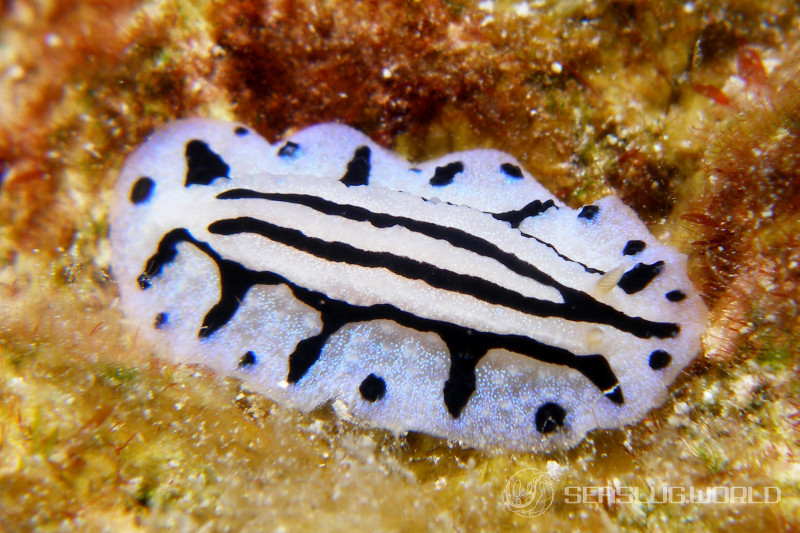
- Location
- Horse Shoes, Okinawa Island (Onna and Yomitan area), Okinawa, Japan
- Date
- 2009/09/28
- Length
- 12mm
- Depth
- 10.0m
- Water temperature
- 27.0℃
Description
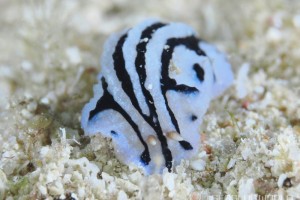
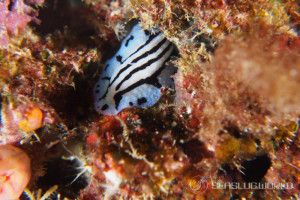
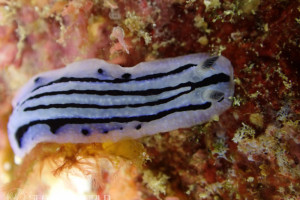
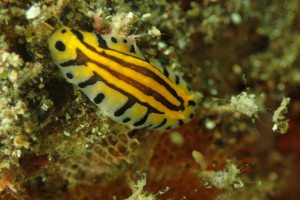
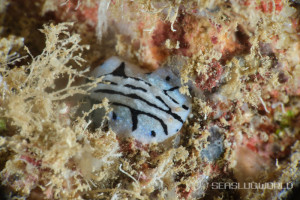
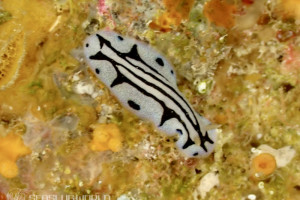
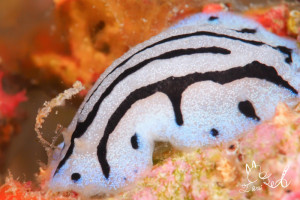
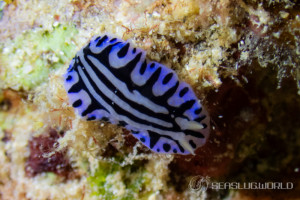
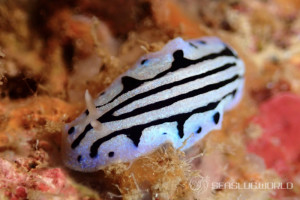
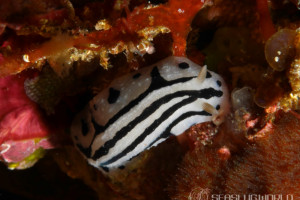
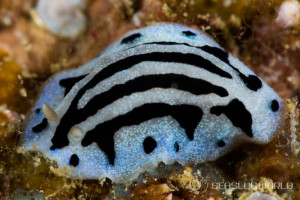
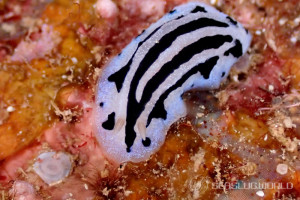
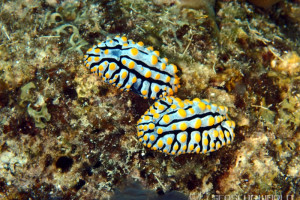
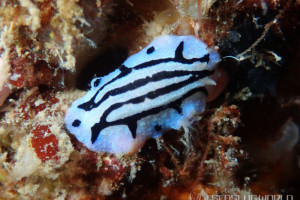
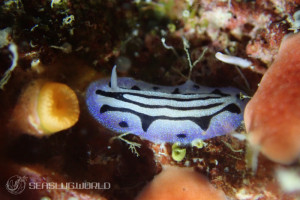
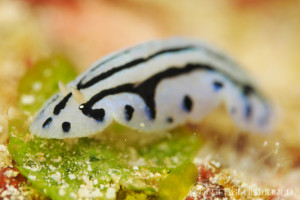
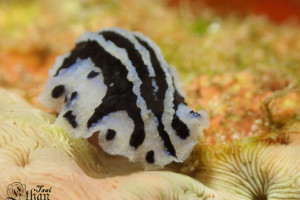
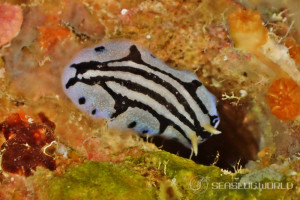
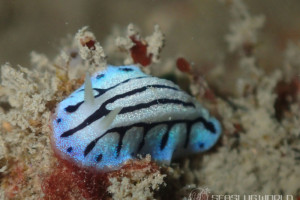
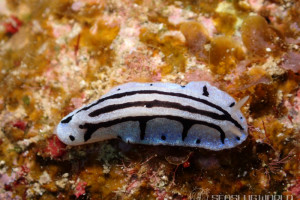
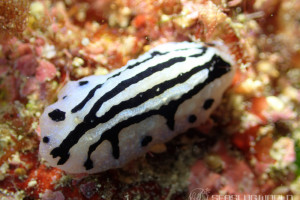
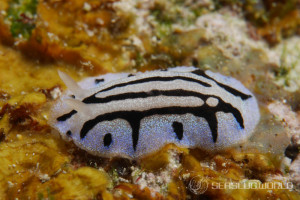
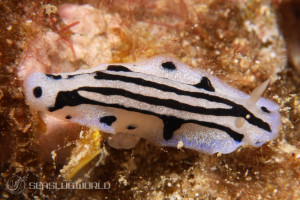
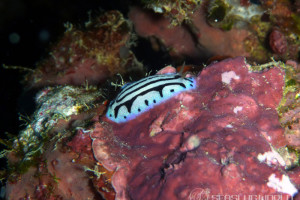
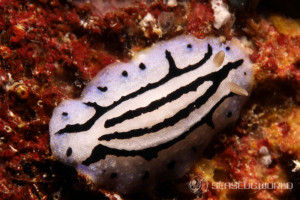
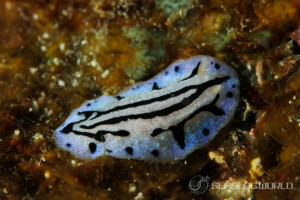
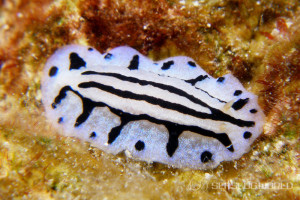
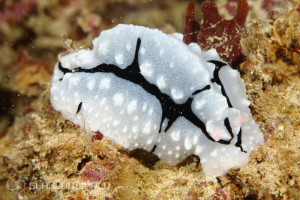
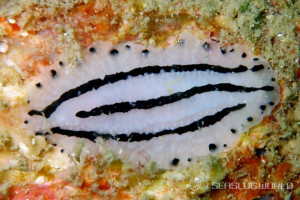
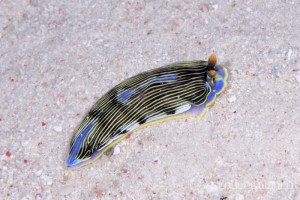
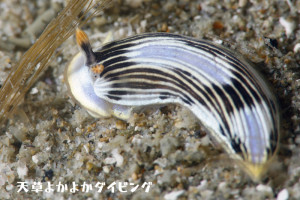
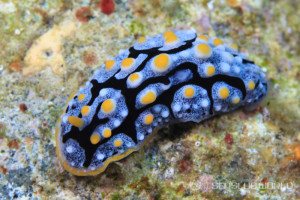
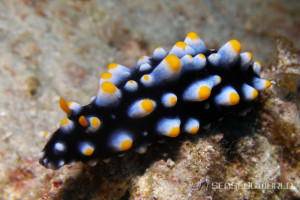
A phyllidiid 4-23 mm long, oval in shape, with blue, black and white markings on the dorsum. Three low white median longitudinal ridges run mid-dorsally; they do not usually meet at the anus, which opens on the central ridge. The two outer ridges pass over the rhinophoral pockets and extend to the mantle margin where they become black. Black stripes occur between the ridges, and a black band surrounds the median area in a "U" shape. Black rays extend from this band to the mantle edge; the broad mantle margin between rays is vivid, iridescent blue. Small, rounded notal tubercles occur on the mantle margin, and minute conical tubercles are present on the median ridges. The rhinophores are cream to pale yellow with 14-17 lamellae (specimens >13 mm). Ventrally, the hyponotum is pale grey to white with black markings along the edge, and the gills are dark grey. The foot is uniformly cream to white. The oral tentacles arise from a square base and bear short, deep ventrolateral grooves.Distribution
Northern Papua New Guinea (Madang), Guam and Hawaii. Type locality: Pupukea, Oahu, Hawaii (12 m).Etymology
Verbatim from the original description (Brunckhorst, 1993, p.72):The specific epithet is derived from the Sphinx (Sphingis, fern.), a mythical monster at Thebes who posed riddles for people passing by and consumed them if they could not answer.
Remarks
Described as a new species in the Brunckhorst 1993 revision of the Phyllidiidae Records of the Australian Museum, Supplement 16: 1-107. Phyllidiopsis annae also has blue pigmentation but bears granular blue ridges and black rhinophores, whereas this species has iridescent blue margins and pale yellow rhinophores. P. striata differs in having lemon yellow rhinophores and a white mantle margin (p.72).References
- Phyllidiopsis sphingis n.sp., Brunckhorst D.J. (1993). The systematics and phylogeny of phyllidiid nudibranchs (Doridoidea). Records of the Australian Museum, Supplement 16: 1-107.
- タテスジイボウミウシ, 小野篤司. (1999). ウミウシガイドブック. TBSブリタニカ.
- タテスジイボウミウシ, 小野篤司. (2004). 沖縄のウミウシ. ラトルズ.
- タテスジイボウミウシ, 中野理枝. (2004). 本州のウミウシ. ラトルズ.
- ヨツスジマダライボウミウシ, 奥谷喬司. (2015). 日本近海産貝類図鑑. 第二版. 東海大学出版部.
A Kindle field guide by the site author
Kimoto N. (2026). Sea Slugs of Japan & the Indo-Pacific, 2nd Edition.
Kindle Edition
View on Amazon PR (Amazon Associates)Seasonality
Shooting Locations
Loading shooting locations...
Photos of Phyllidiopsis sphingis
Tag:
























Same Genus Nudibranchs


Similar Colors Nudibranchs

Academic Database
Sea slug observation data is available in international marine biodiversity databases.