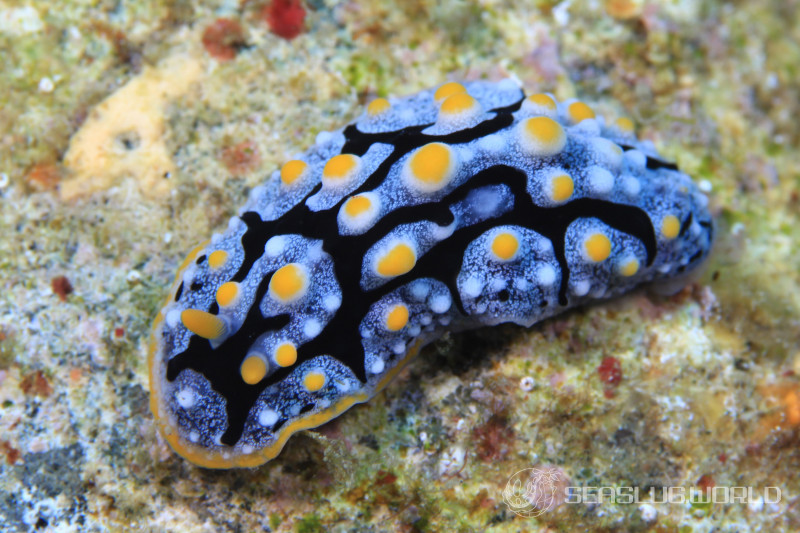
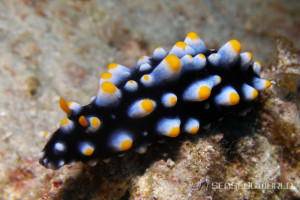
Phyllidia exquisita Brunckhorst, 1993
- Location
- DIVE7000, Anilao, Philippines
- Date
- 2013/03/18
- Length
- 40mm
- Depth
- 10.0m
- Water temperature
- 27.0℃
Description
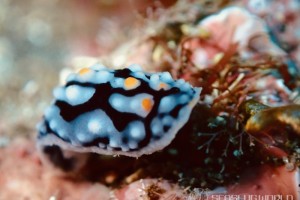
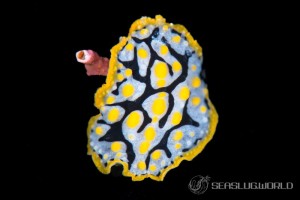
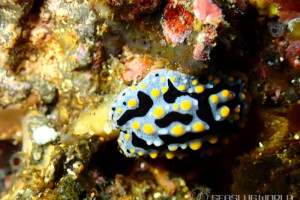
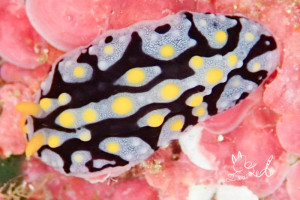
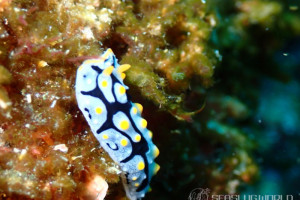
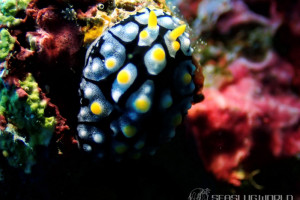
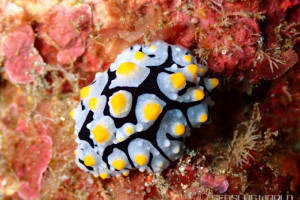
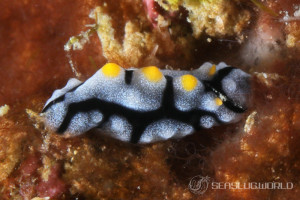
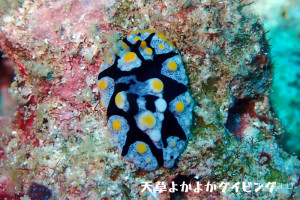
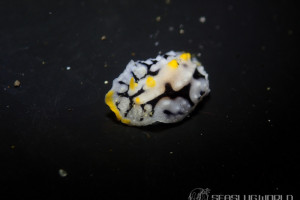
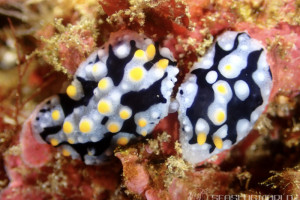
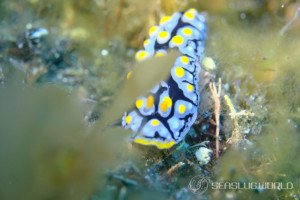
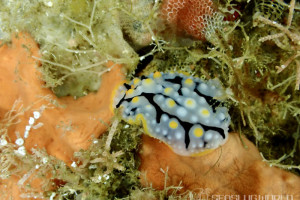
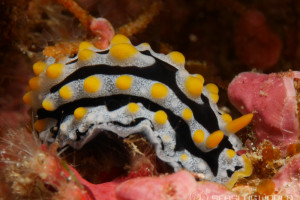
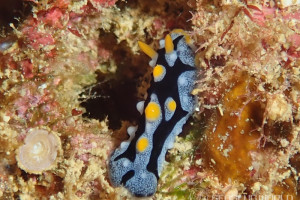
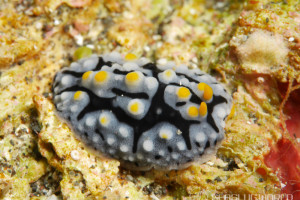
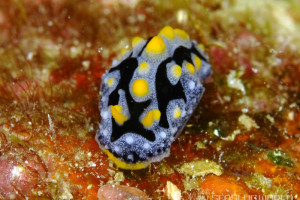
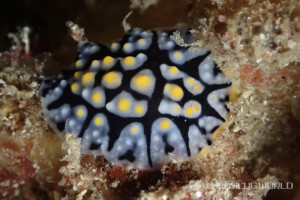
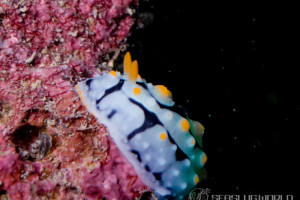
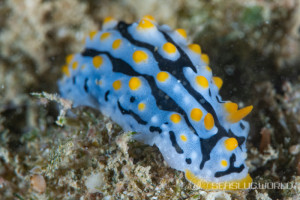
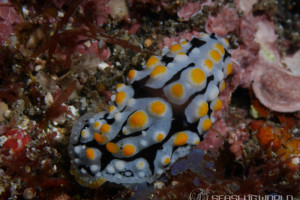
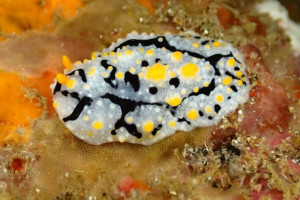
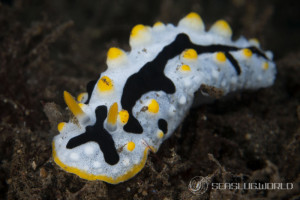
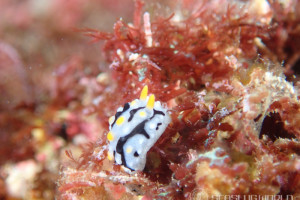
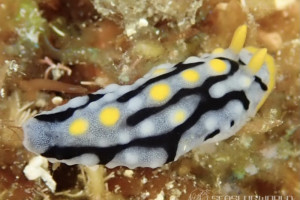
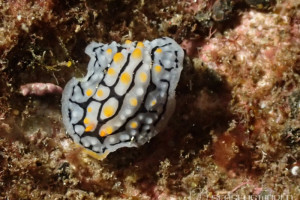
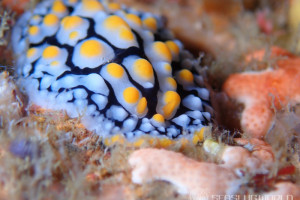
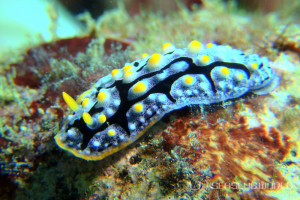
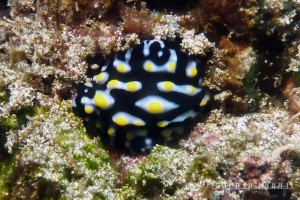
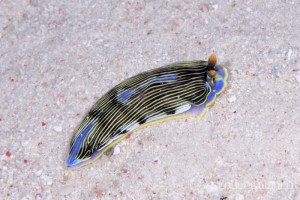
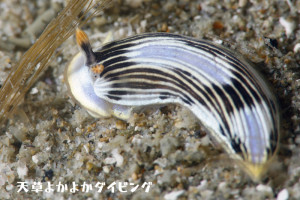
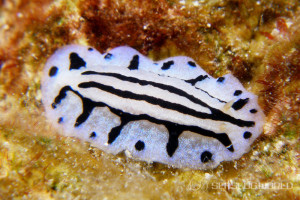
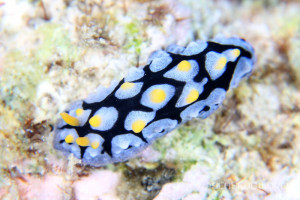
A small phyllidiid 10–23 mm long. The notum is white with black lines and yellow markings, forming a characteristic delicate pattern. Two median longitudinal white zones lie on either side of the dorsum, each containing simple, rounded tubercles. Tubercles within white zones are capped in yellow, whereas those on black areas remain black. The white zones may be interrupted by transverse black lines, and short black radial lines occur near the mantle margin. The mantle edge is bordered in yellow. The rhinophores are yellow with a short, central, longitudinal black line and bear 17–20 lamellae. The ventral surface is uniformly white and unmarked.Distribution
Central and western Pacific Ocean and north-eastern Indian Ocean. Type locality: Wistari Reef, Great Barrier Reef, Australia (24 m). Recorded from Thailand (Phi Phi Island), Fiji, Marshall Islands, Norfolk Island, Papua New Guinea and Guam.Etymology
Verbatim from the original description (Brunckhorst, 1993, p.38):The exquisite and fine patterns of this species are the basis for its name.
Remarks
Described as a new species in Brunckhorst, D.J. 1993 Records of the Australian Museum, Supplement 16: 1-107. The author noted that P. exquisita "is a relatively small species with white, black and yellow colouration. The notum possesses simple, rounded tubercles arranged in more or less longitudinal rows but neither joined by, nor forming ridges. The tubercles take on the colour of their immediate background ... Tubercles in a white area are capped in yellow. The dorsal pattern is characteristic and appears to show little intraspecific variation" (p.37-38). Similar pale-coloured species include Phyllidia willani (16-19 lamellae) and Phyllidia babai (21-24 lamellae); both are larger and differ in tubercle arrangement.References
- Phyllidia exquisita n.sp., Brunckhorst D.J. (1993). The systematics and phylogeny of phyllidiid nudibranchs (Doridoidea). Records of the Australian Museum, Supplement 16: 1-107.
- タテスジイボウミウシ(新称) Phyllidiopsis sphingis ?, 益田一ほか. (1996). 海岸動物 (フィールド図鑑). 補訂版第2版. 東海大学出版会.
- ボンジイボウミウシ(新称), 小野篤司. (2000). ウミウシガイドブック. 第2版. TBSブリタニカ.
A Kindle field guide by the site author
Kimoto N. (2026). Sea Slugs of Japan & the Indo-Pacific, 2nd Edition.
Kindle Edition
View on Amazon PR (Amazon Associates)Seasonality
Shooting Locations
Loading shooting locations...
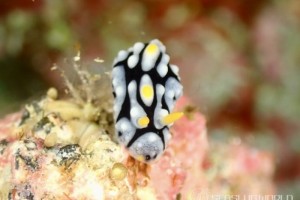
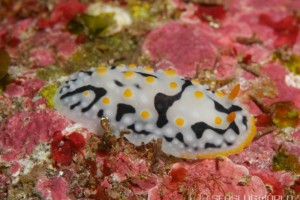
Photos of Phyllidia exquisita
Tag:





















Same Genus Nudibranchs
Similar Colors Nudibranchs

Academic Database
Sea slug observation data is available in international marine biodiversity databases.