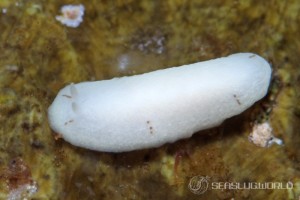
Phyllidia scottjohnsoni Brunckhorst, 1993
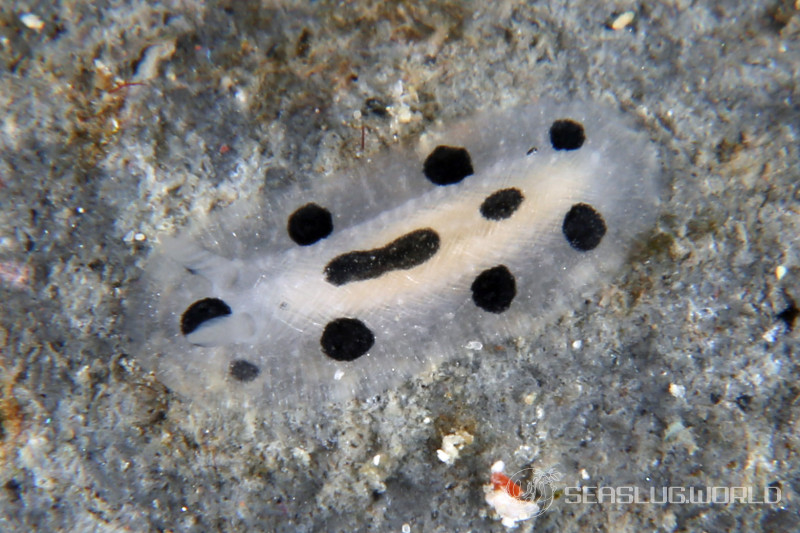
- Location
- Onna Point, Okinawa Island (Onna and Yomitan area), Okinawa, Japan
- Date
- 2015/08/21
- Length
- 5mm
- Depth
- 15.0m
- Water temperature
- 28.0℃
Description
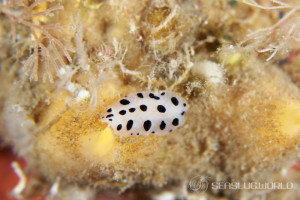
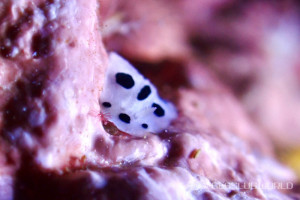
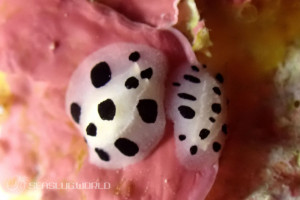
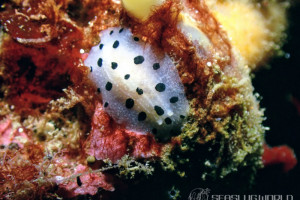
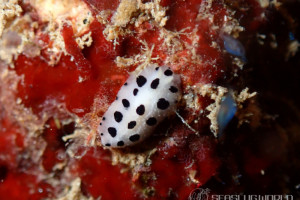
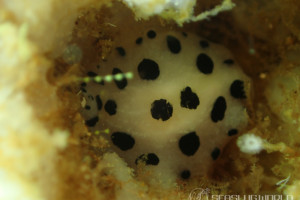
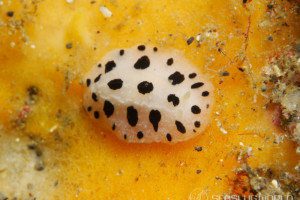
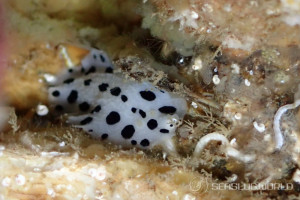
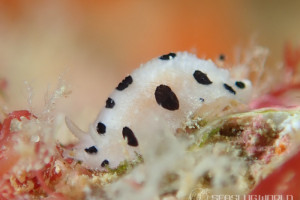
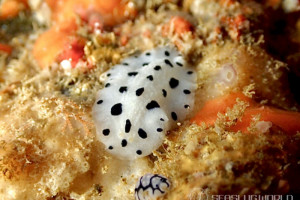
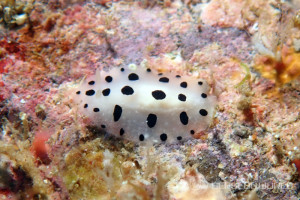
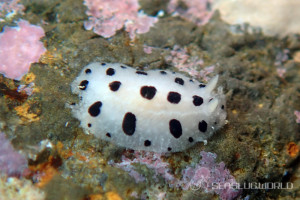
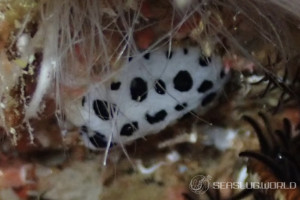
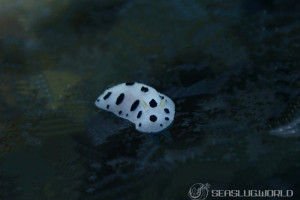
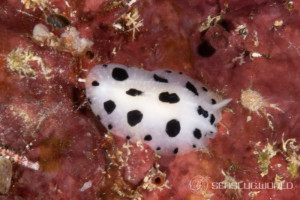
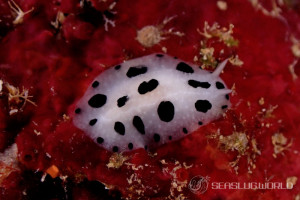
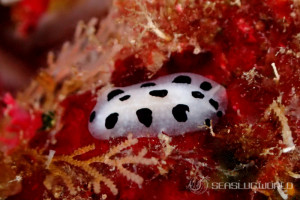
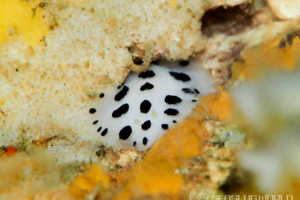
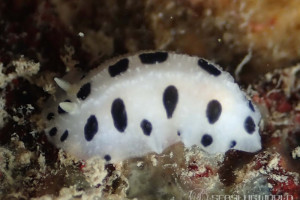
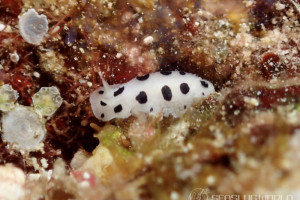
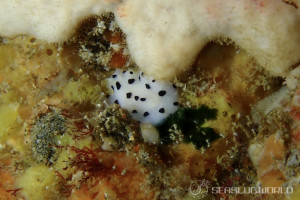
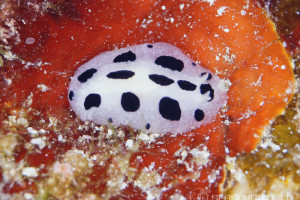
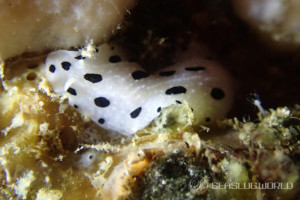
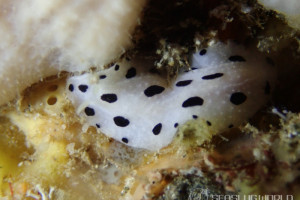
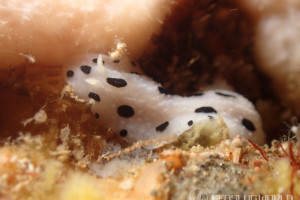
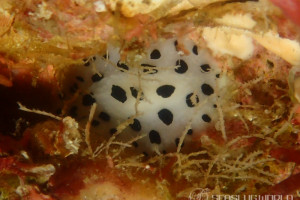
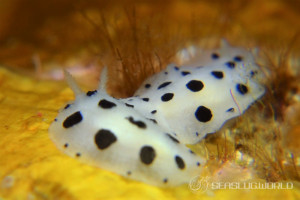
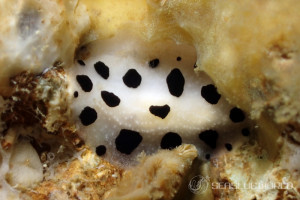
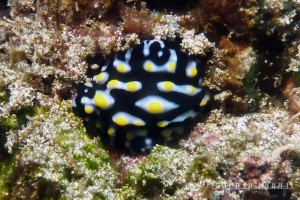
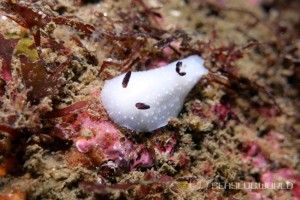
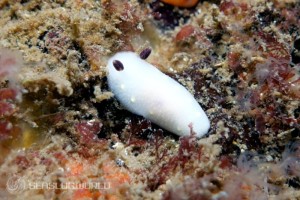
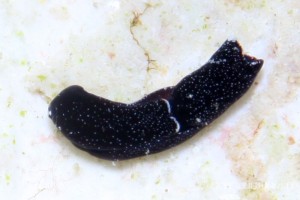
A small phyllidiid 6.5–25 mm long. The dorsum is white with six to ten large, black spots, and small black dots also appear near the mantle edge. The body is oval and dorsoventrally flattened to a greater extent than most Phyllidia. Many tiny, irregular tubercles are scattered over the dorsum. Medially the tubercles may form up to five low, indistinct, broken ridges. The rhinophores are short, cream-coloured (not club-shaped) and bear only 7–9 broad lamellae (specimens >15 mm). The hyponotum (except below the black spots), gills, foot and pointed oral tentacles are white to cream.Distribution
Central and western Pacific Ocean, extending east to Darwin (Timor Sea). Type locality: Pupukea, Oahu, Hawaii (15 m). Also recorded from Guam, Taiwan, Haleiwa (Hawaii), and the Northern Territory of Australia.Etymology
Verbatim from the original description (Brunckhorst, 1993, p.43):The species is named in honour of Scott Johnson who provided material of this and other species, from the central Pacific.
Remarks
Described as a new species in Brunckhorst, D.J. 1993 Records of the Australian Museum, Supplement 16: 1-107. The author noted:Phyllidia scottjohnsoni can be distinguished by its white background with black spots, small tubercles and cream to white rhinophores. Phyllidia ocellata generally has black rings around its tubercles but it has a gold background colour and gold rhinophores ... Phyllidiopsis loricata is superficially similar to Phyllidia scottjohnsoni, however the former species has a different alimentary system, is more elongate and it lacks black spots in the mid-dorsal region. Phyllidia scottjohnsoni has fewer (7-9) lamellae on the rhinophoral clavus than Phyllidiopsis loricata (16-19 fine lamellae). Phyllidia scottjohnsoni is flattened dorsoventrally to a greater extent than most other Phyllidia species(p.43).
References
A Kindle field guide by the site author
Kimoto N. (2026). Sea Slugs of Japan & the Indo-Pacific, 2nd Edition.
Kindle Edition
View on Amazon PR (Amazon Associates)Seasonality
Shooting Locations
Loading shooting locations...
Photos of Phyllidia scottjohnsoni
Tag:



























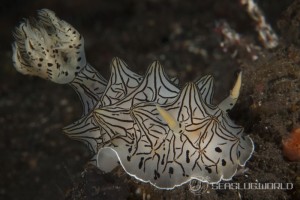
Same Genus Nudibranchs
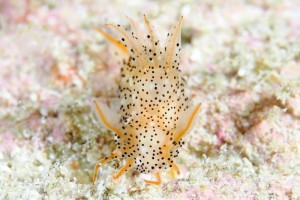
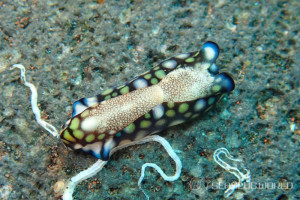
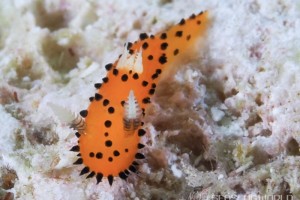
Similar Colors Nudibranchs

Academic Database
Sea slug observation data is available in international marine biodiversity databases.