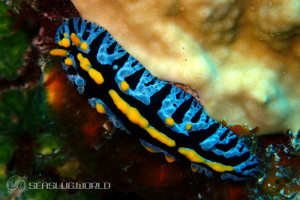
Phyllidia willani Brunckhorst, 1993
- Location
- Horse Shoes, Okinawa Island (Onna and Yomitan area), Okinawa, Japan
- Date
- 2014/03/18
- Length
- 30mm
- Depth
- 15.0m
- Water temperature
- 23.0℃
Description
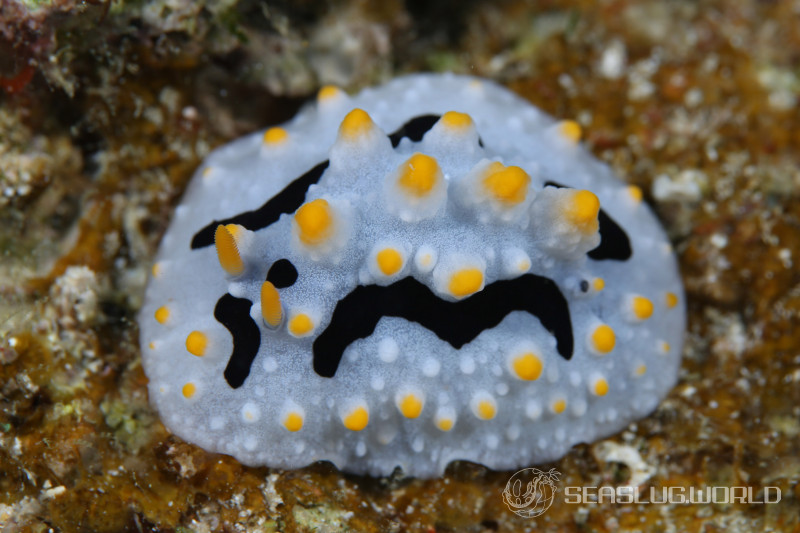
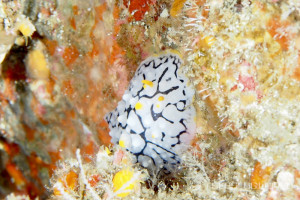
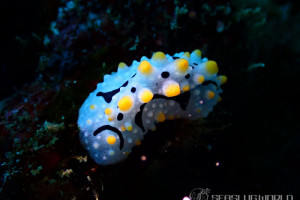
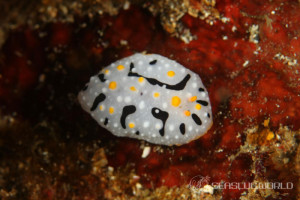
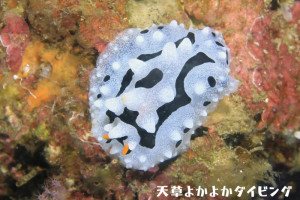
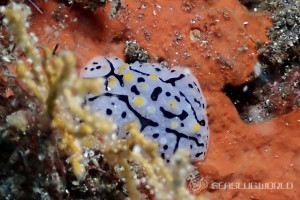
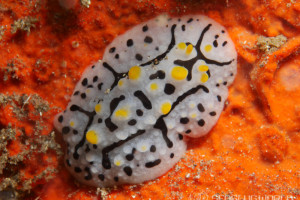
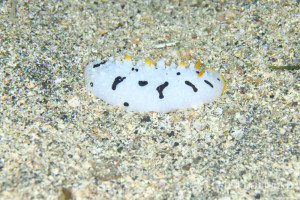
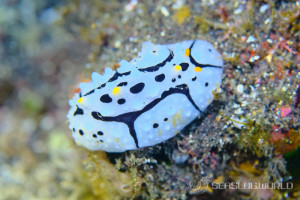
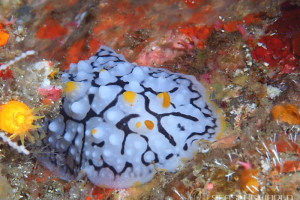
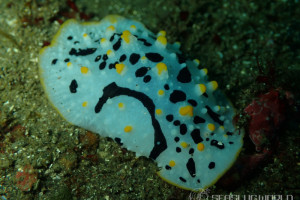
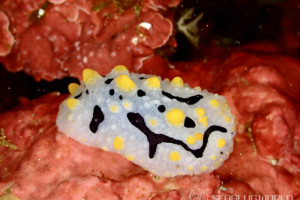
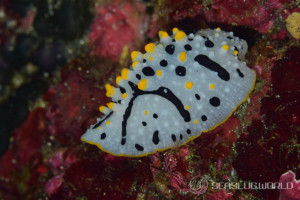
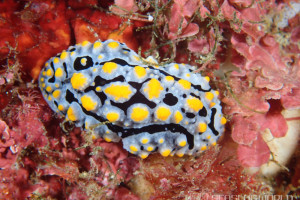
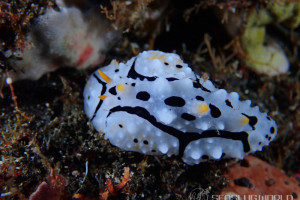
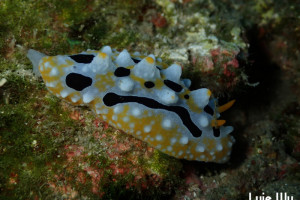
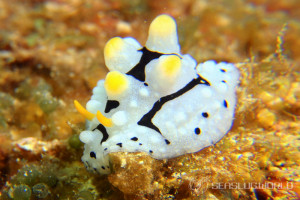
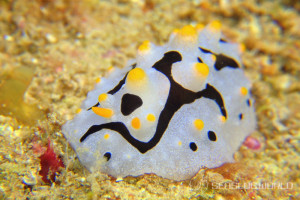
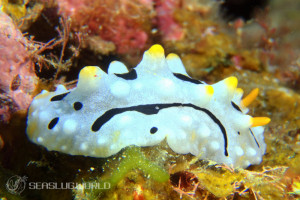
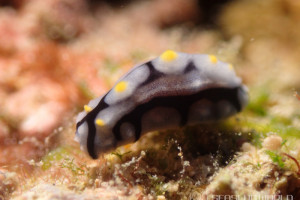
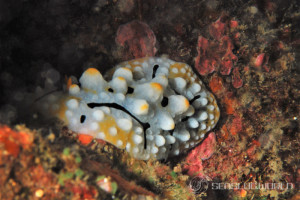
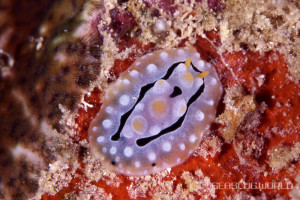
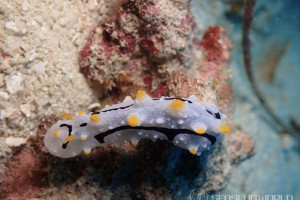
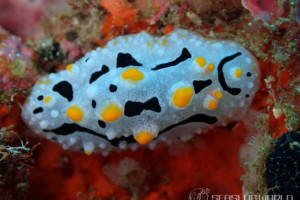
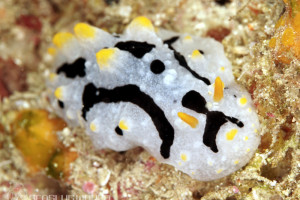
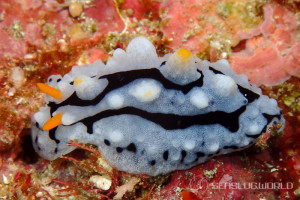
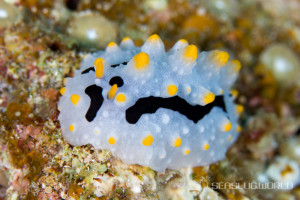
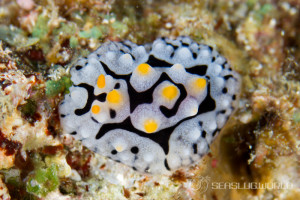
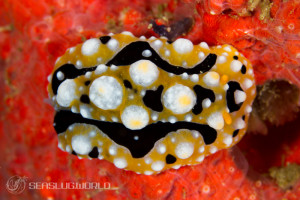
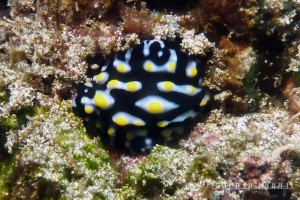
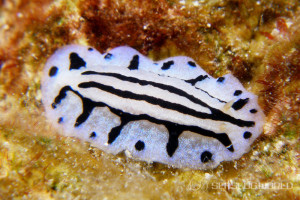
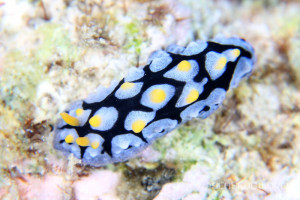
A phyllidiid 23–50 mm long, oval rather than elongate in shape. The dorsum bears a very pale lemon-yellow background with minute white pigment dots, giving an overall granular appearance. Four large tubercles are arranged as the corners of a diamond medially, each capped in pale yellow. Two longitudinal black swirls occur laterally on the dorsum, and small black patches may also be present. The rhinophores are gold with 16–18 lamellae. The hyponotum is pale and cross-hatched. The oral tentacles are long, cylindrical and pale cream-yellow.Distribution
South China Sea, the Philippines and Papua New Guinea. Type locality: Anemone Reef, Madang, Papua New Guinea (11 m).Etymology
Verbatim from the original description (Brunckhorst, 1993, p.41):This species is named in honour of Dr R.C. Willan.
Remarks
Described as a new species in Brunckhorst, D.J. 1993 Records of the Australian Museum, Supplement 16: 1-107. The author noted in the Remarks that "Distinguishing features of Phyllidia willani include the pale granular background colouration, the two laterally positioned longitudinal black swirls, the four median notal tubercles, the pale coloured foot and oral tentacles, orange digestive gland mass, pale yellow rectum, and small fine penial spines" (p.40-41). Most similar to P. ocellata and P. babai, but distinguished by the pale granular yellow dorsum, four median tubercles arranged in a diamond, and two lateral black swirls.References
A Kindle field guide by the site author
Kimoto N. (2026). Sea Slugs of Japan & the Indo-Pacific, 2nd Edition.
Kindle Edition
View on Amazon PR (Amazon Associates)Seasonality
Shooting Locations
Loading shooting locations...
Photos of Phyllidia willani




















Same Genus Nudibranchs
Similar Colors Nudibranchs

Academic Database
Sea slug observation data is available in international marine biodiversity databases.