Phyllidia babai Brunckhorst, 1993
- Location
- Horse Shoes, Okinawa Island (Onna and Yomitan area), Okinawa, Japan
- Date
- 2015/12/10
- Length
- 40mm
- Depth
- 25.0m
- Water temperature
- 24.7℃
Description
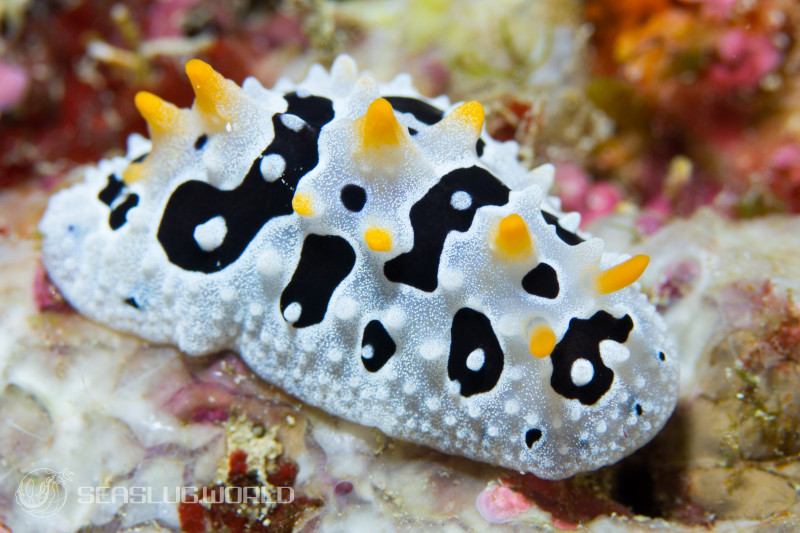
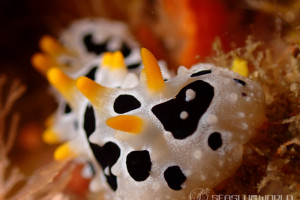
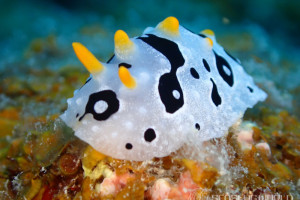
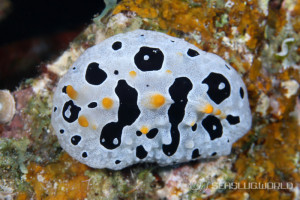
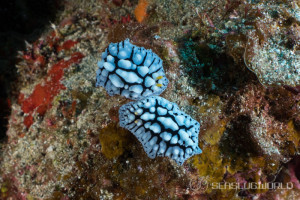
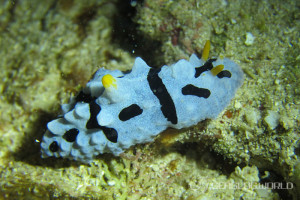
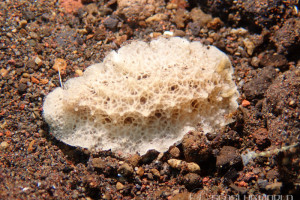
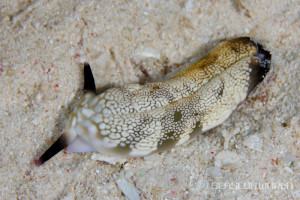
A phyllidiid 25–65 mm long (mean 34 mm). The dorsum is predominantly pale cream to white. Laterally, six to eight black rings encircle simple conical tubercles arranged in longitudinal rows. The cream to white tubercles bear white caps. The central row of tubercles may join into a broken ridge. A fine yellow edge borders the mantle margin, and the rim of the rhinophoral pocket is also bordered in white. The rhinophores are yellow with 21–24 lamellae (specimens >28 mm). The hyponotum is white to pale grey with a cross-hatched pattern. The foot is pale cream to white, and the white oral tentacles are pointed apically with yellow tips.Distribution
North-eastern Australia (Great Barrier Reef) and Papua New Guinea. Type locality: patch reef off Lion Island, PNG (18 m).Etymology
Verbatim from the original description (Brunckhorst, 1993, p.42):This species is named in honour of Dr K. Baba.
Remarks
Described as a new species in Brunckhorst, D.J. 1993 Records of the Australian Museum, Supplement 16: 1-107. The author noted that P. babai is "closest to P. ocellata, but the two are distinct species" and listed the characteristic features as: "the very pale yellow to cream dorsum; black rings with a central, white, conical tubercle; the fine yellow edge to the mantle; rhinophoral clavus possessing 21-24 lamellae; the rim of the rhinophoral pocket edged in white; pale cream-white ventral colouration; white pointed oral tentacles tipped in yellow with long lateral grooves; the grey rectum/anal papilla; and penial spines which are broad based and triangular in shape" (p.42). P. ocellata differs in having a bright gold dorsum and no contrasting yellow on the mantle margin.References
- Phyllidia babai n.sp., Brunckhorst D.J. (1993). The systematics and phylogeny of phyllidiid nudibranchs (Doridoidea). Records of the Australian Museum, Supplement 16: 1-107.
- ババイボウミウシ(仮称), 益田一. (1999). 海洋生物ガイドブック. 東海大学出版会.
- ババイボウミウシ, 小野篤司. (2000). ウミウシガイドブック. 第2版. TBSブリタニカ.
- ババイボウミウシ, 鈴木敬宇. (2000). ウミウシガイドブック〈2〉. TBSブリタニカ.
- ババイボウミウシ(新称), Hamatani, I., 2002. Malacological contributions of Dr, Kikutaro Baba (1905-2001). Venus, Jap. Jour. Malac., 61(1-2): 97-100.
- フィリディア・ババイ, 殿塚孝昌. (2003). ウミウシガイドブック〈3〉. TBSブリタニカ.
A Kindle field guide by the site author
Kimoto N. (2026). Sea Slugs of Japan & the Indo-Pacific, 2nd Edition.
Kindle Edition
View on Amazon PR (Amazon Associates)Seasonality
Shooting Locations
Loading shooting locations...
Photos of Phyllidia babai


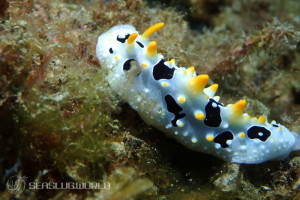

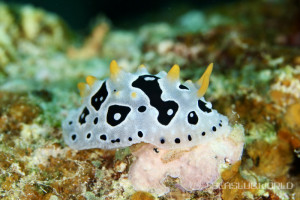

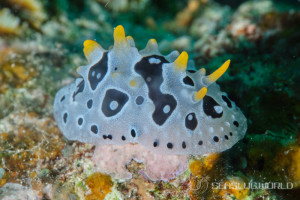

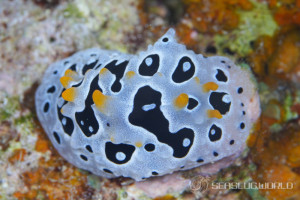

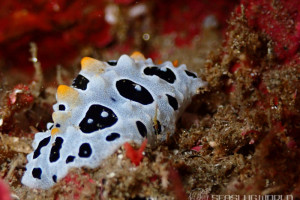

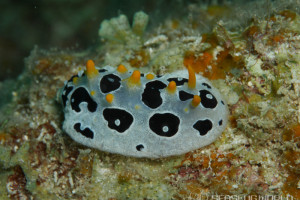

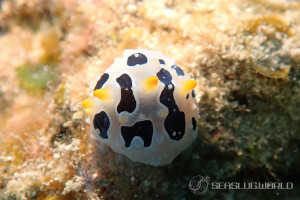

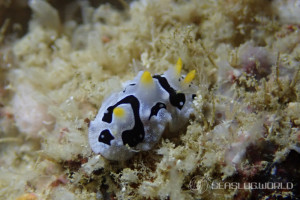

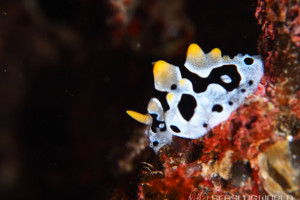

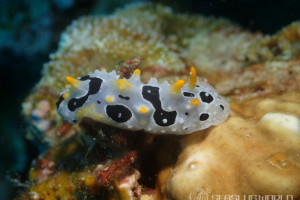

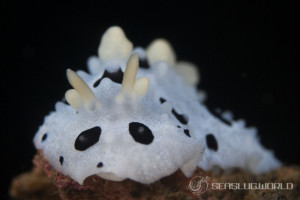

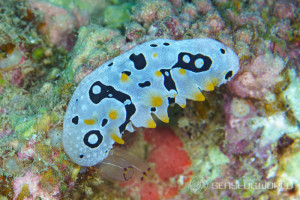

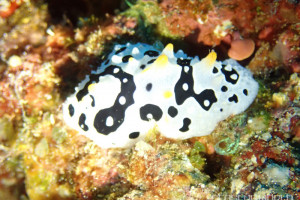

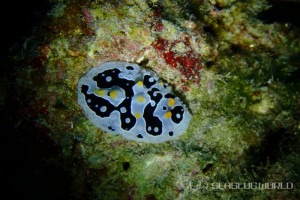
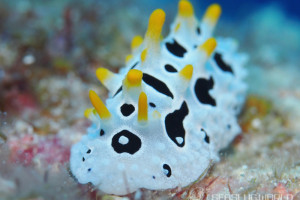

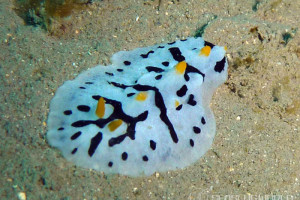

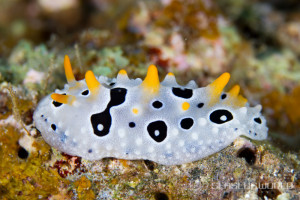
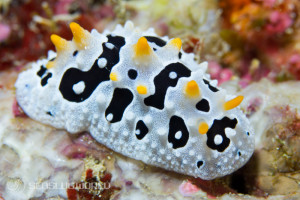
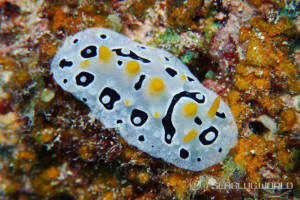

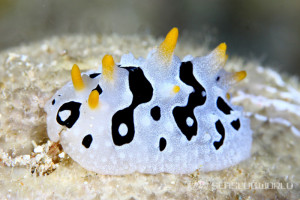
Same Genus Nudibranchs
Similar Colors Nudibranchs

Academic Database
Sea slug observation data is available in international marine biodiversity databases.