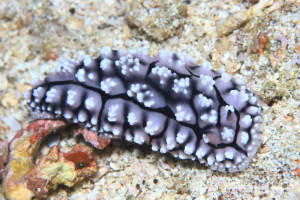
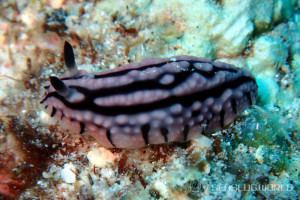
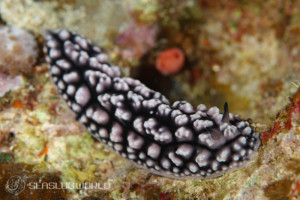
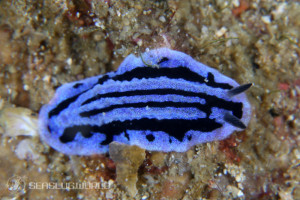
Phyllidiopsis cardinalis Bergh, 1876
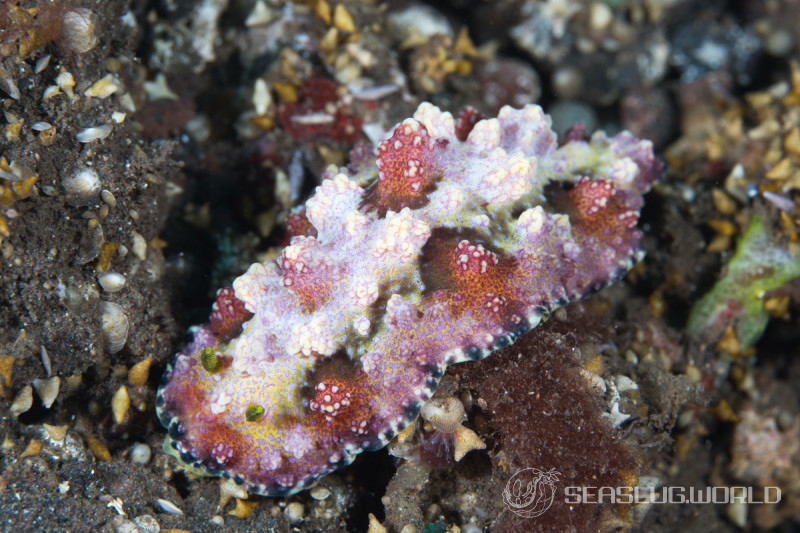
- Location
- Tulamben, Pulau Bali, Indonesia
- Date
- 2019/02/17
- Length
- 25mm
- Depth
- 16.0m
- Water temperature
- ??℃
Description
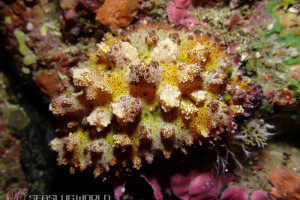
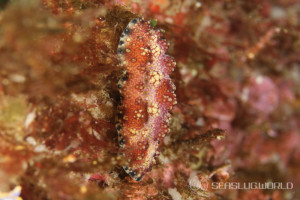
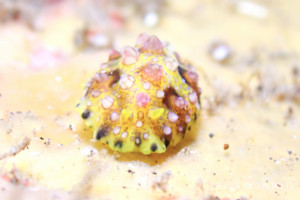
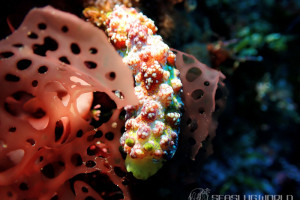
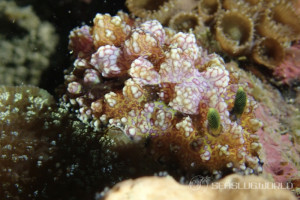
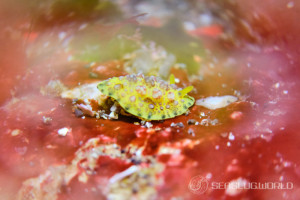
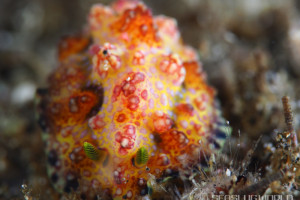
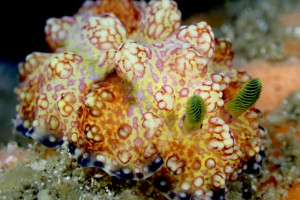
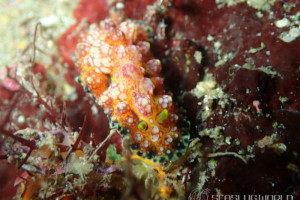
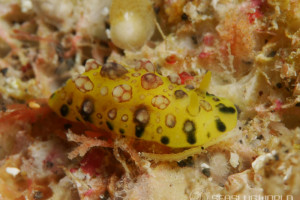
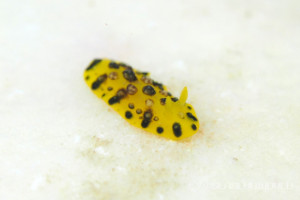
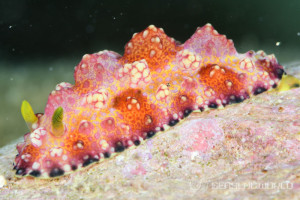
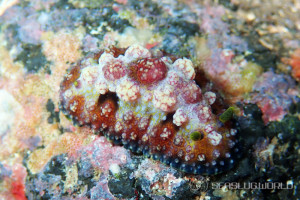
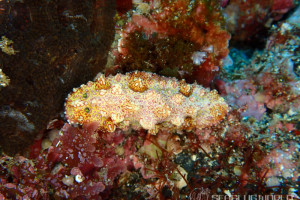
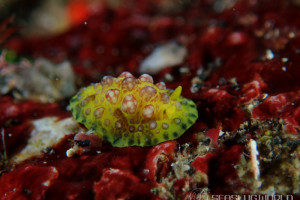
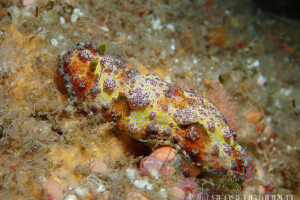
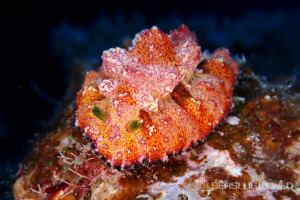
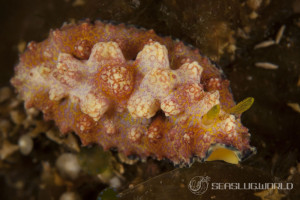
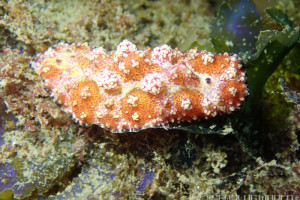
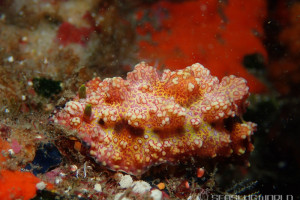
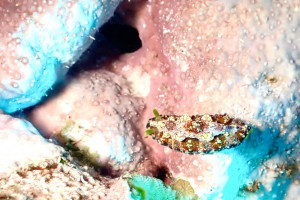
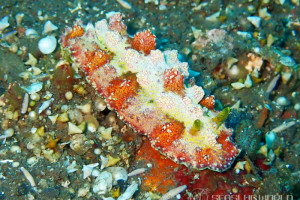
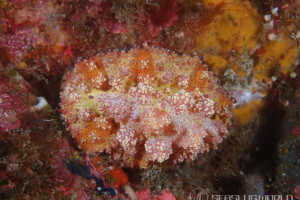
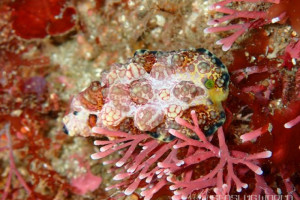
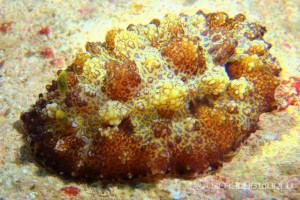
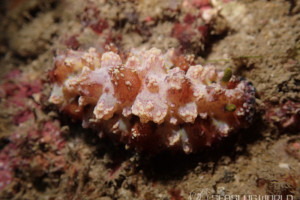
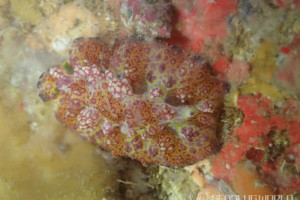
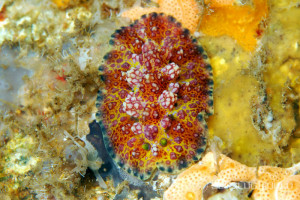
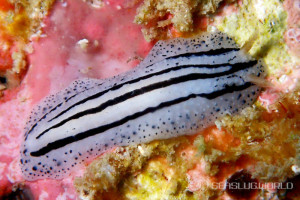
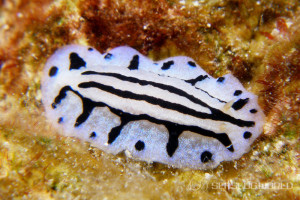
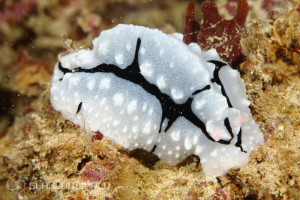
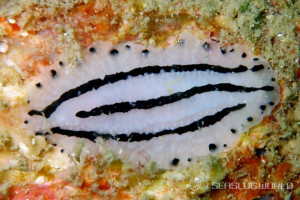
A medium-sized phyllidiid reaching about 65 mm in body length. The ground colour in life is highly variable — pale yellow, brown or purple — with scattered reddish-brown, olive or purple blotches. The dorsum bears several rows of large compound tubercles, each tubercle covered with smaller knobs that give the surface a strongly uneven texture. The rhinophores are usually green with yellow lamellae. Bergh's alcohol-preserved type specimen measured 5 cm long, 3 cm wide and 1.5 cm high (including the dorsal knobs), with a foot sole 1.3 cm wide, mantle margin (including gill) 0.95 cm wide, rhinophore club 2 mm high and anal papilla 3.5 mm high. The ground colour was a dirty purple with scattered dark reddish-blackish-brown blotches on the median dorsum; the broad mantle margin bore similar but larger, mostly triangular and darker blotches with their points directed toward the mid-line, and the underside of the mantle margin and the upper side of the foot bore similar but smaller and more numerous, almost blackish blotches. The oral tentacle grooves were edged with blackish; the rhinophore openings were black, the rhinophore stalk purple, and the club reddish and blackish; the anal papilla was purple-red, blackish at the tip. The dorsum is gently arched in all directions, and three rows of large tubercles run along the median field; the largest tubercles reached 4 mm in height and the marginal knobs about 1.5 mm. The pallial gill is well developed beneath the mantle margin, with about 200 leaves on the left side and slightly fewer on the right (about 30 leaves anterior to the genital papilla). The rhinophores are deeply perfoliate, with about 20 leaves.Distribution
Indo-West Pacific to the central Pacific. Type locality: Tonga (Pacific Ocean), based on a single specimen collected by Dr. Graeffe in 1872. The species has subsequently been recorded from South Africa, Mozambique, Tanzania, Aldabra Atoll, Réunion, Indonesia, Australia, Papua New Guinea, the Philippines, Guam, Fiji, New Caledonia, Japan and Hawaii.Etymology
The specific epithet cardinalis is Latin for "of a cardinal", here applied in the zoological sense of "cardinal-coloured" — the bright red-purple of a cardinal's vestments — in reference to the dirty purple to red-purple ground colour of the type specimen. Bergh's original description does not give an explicit etymology.Remarks
In the original description, Bergh erected the new genus Phyllidiopsis and described this species as its type at the same time. Bergh regarded Phyllidiopsis as a transitional form between the Phyllidia-like phyllidiids and the Doriopsis-like dorids: like Phyllidia, it has a dorsal anus and the general phyllidiid appearance, but as in Doriopsis the oral tentacles are not detached but adnate along their full length to the side of the head, and the spicule content of the body is less developed than in typical phyllidiids. The Japanese name "アデヤカイボウミウシ" ("gorgeous warty sea slug") refers to the rich colour pattern.References
A Kindle field guide by the site author
Kimoto N. (2026). Sea Slugs of Japan & the Indo-Pacific, 2nd Edition.
Kindle Edition
View on Amazon PR (Amazon Associates)Seasonality
Shooting Locations
Loading shooting locations...
Photos of Phyllidiopsis cardinalis


























Same Genus Nudibranchs


Academic Database
Sea slug observation data is available in international marine biodiversity databases.