Phyllidiopsis shireenae Brunckhorst, 1990
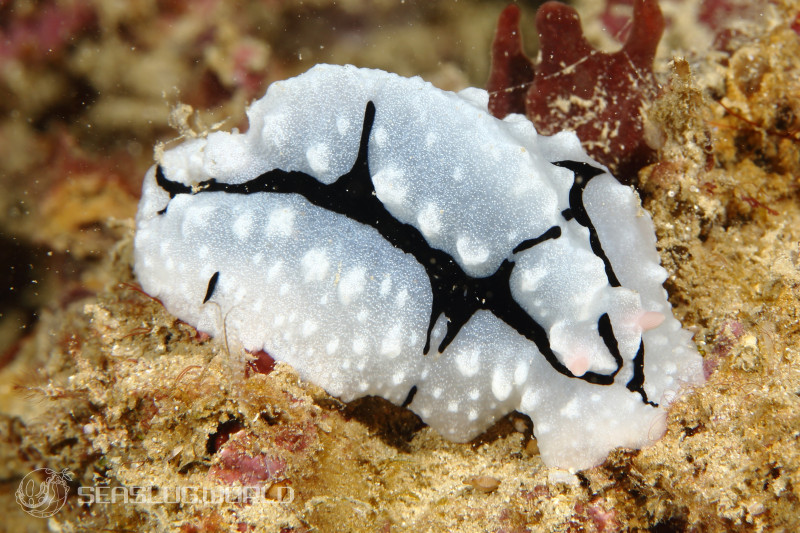
- Location
- Nasog Point, Boracay, Philippines
- Date
- 2016/02/29
- Length
- 30mm
- Depth
- 10.0m
- Water temperature
- 27.0℃
Description
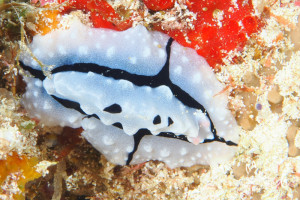
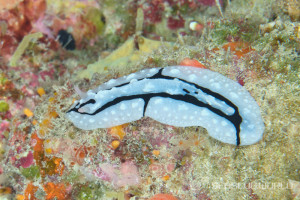
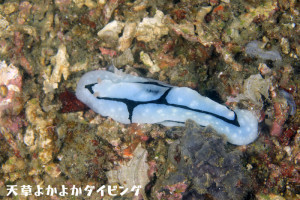
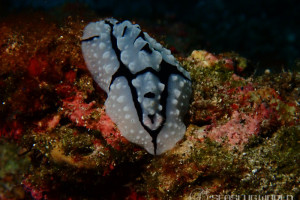
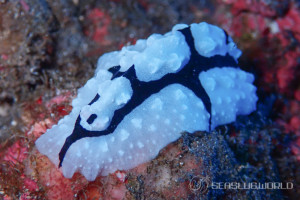
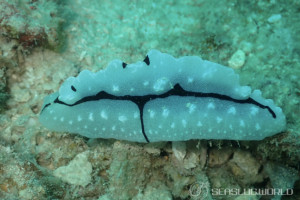
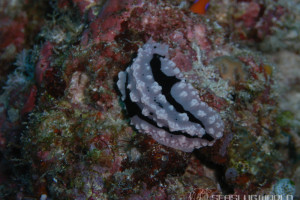
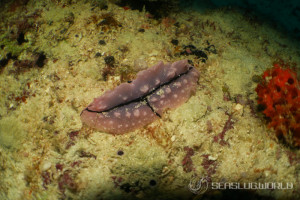
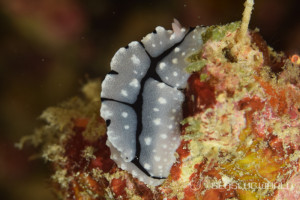
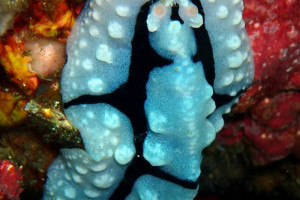
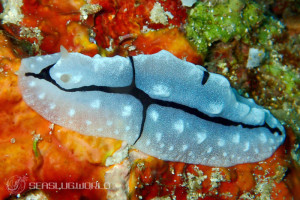
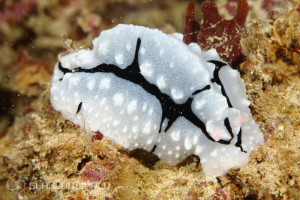
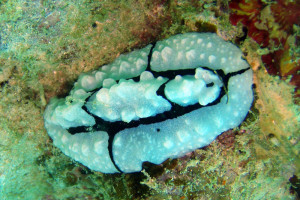
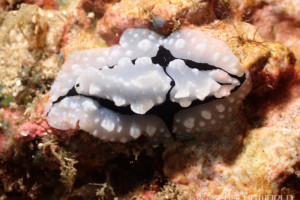
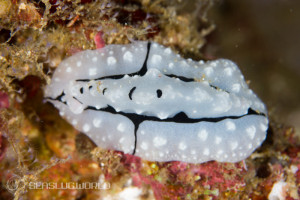
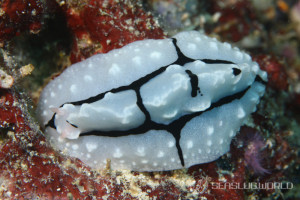
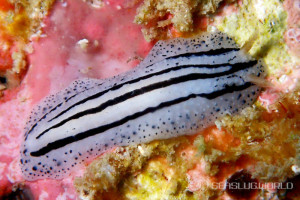
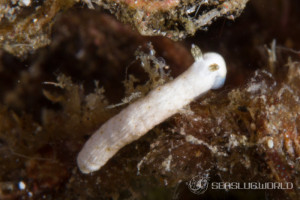
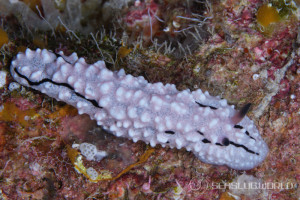
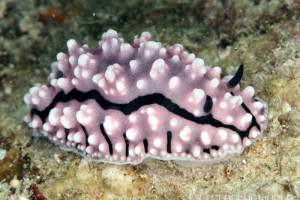
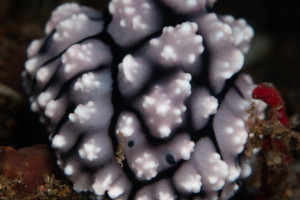
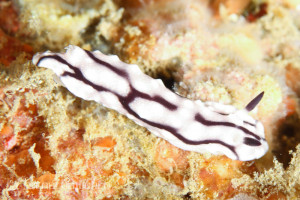
A medium-sized phyllidiid, live length 23-106 mm (mean 61 mm). Body elongate, soft but firm. The dorsum bears a tall, raised, longitudinal mid-dorsal crest, triangular in cross-section — a key diagnostic character produced by a spicule-thickened mid-dorsal body wall. Ground colour very pale pink (occasionally white). A black band encircles the visceral hump, with up to four black radial lines diverging to the mantle edge (anterior, posterior, and lateral pairs). Small rounded tubercles are scattered on the mantle skirt, with sparse, angular, larger tubercles on the crest. Rhinophores salmon pink with 17-20 lamellae in specimens > 40 mm. Hyponotum, foot, and oral tentacles white. Gills dark grey. A black band runs behind the gills where the notum meets the side of the foot.Distribution
Type locality: Pelorous Island, Great Barrier Reef, Australia (Holotype 90 mm live, AM C140057). The species is recorded across the western tropical Pacific Ocean (Great Barrier Reef, Papua New Guinea, Solomon Islands, and Taiwan/Kaohsiung).Etymology
The specific epithet shireenae honours Shireen, who supported the original describer through collection, photography, database management, and typing and proofreading of the text, as recorded in the monograph's Acknowledgements.Remarks
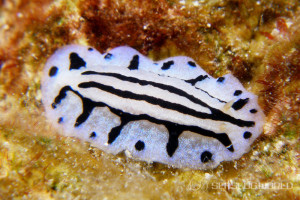
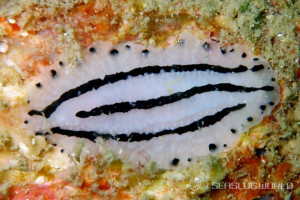
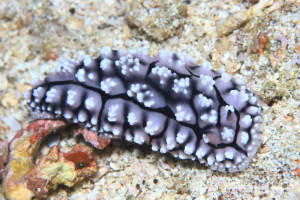
Distinguished from congeners by the combination of (1) the large dorsal crest and (2) salmon-pink rhinophores. Phyllidiopsis gemmata differs in its grey-pink colour and three tuberculate ridges; Phyllidiopsis krempfi differs in its pink-and-black rhinophores and 26-28 rhinophoral lamellae. Phyllidiopsis pipeki, Phyllidiopsis burni, and Phyllidiopsis fissurata have black-and-pink rhinophores with large compound tubercles, easily separable on those characters.References
- シレーナイボウミウシ, 益田一. (1999). 海洋生物ガイドブック. 第2刷. 東海大学出版会.
- フィリディオプシス・シレーナエ, 殿塚孝昌. (2003). ウミウシガイドブック〈3〉. TBSブリタニカ.
- トサカイボウミウシ(新称), 小野篤司. (2004). 沖縄のウミウシ. ラトルズ.
A Kindle field guide by the site author
Kimoto N. (2026). Sea Slugs of Japan & the Indo-Pacific, 2nd Edition.
Kindle Edition
View on Amazon PR (Amazon Associates)Seasonality
Shooting Locations
Loading shooting locations...
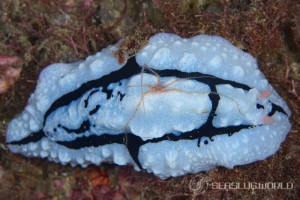
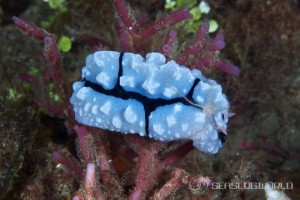
Photos of Phyllidiopsis shireenae
















Same Genus Nudibranchs


Similar Colors Nudibranchs

Academic Database
Sea slug observation data is available in international marine biodiversity databases.