Phyllidia elegans Bergh, 1869
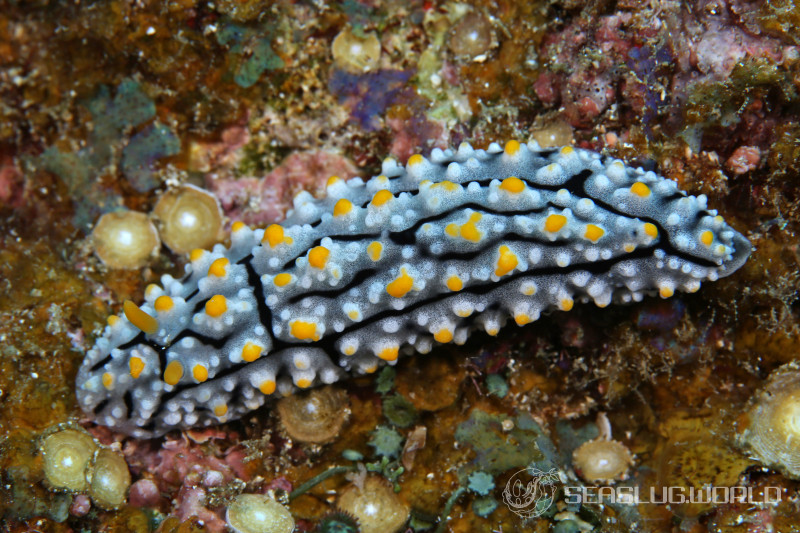
- Location
- Horse Shoes, Okinawa Island (Onna and Yomitan area), Okinawa, Japan
- Date
- 2014/01/28
- Length
- 40mm
- Depth
- 10.0m
- Water temperature
- 21.0℃
Description
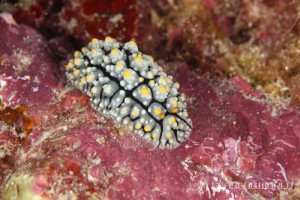
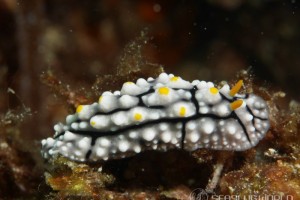
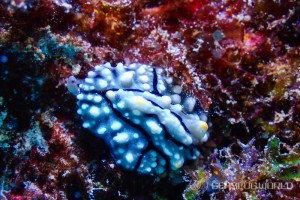
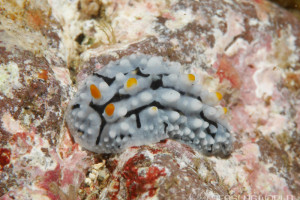
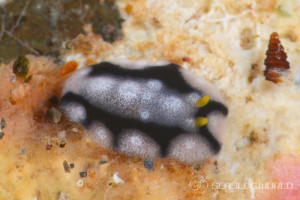
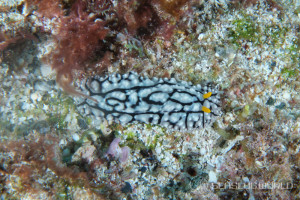
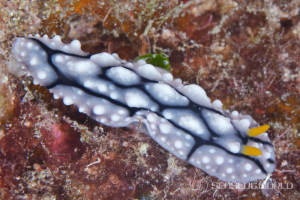
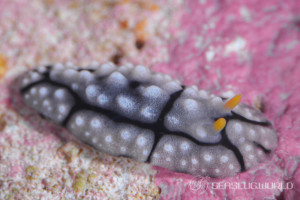
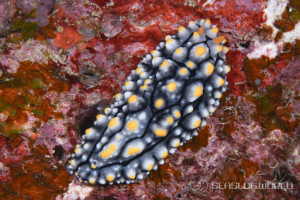
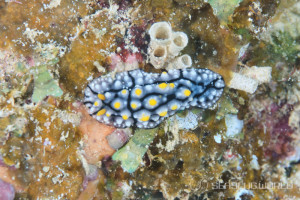
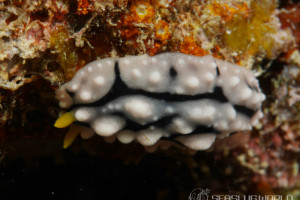
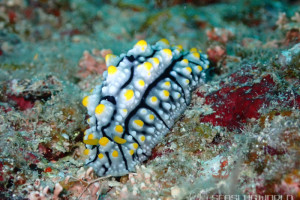
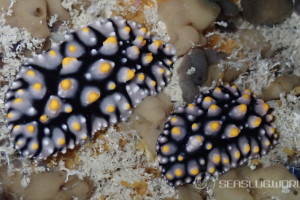
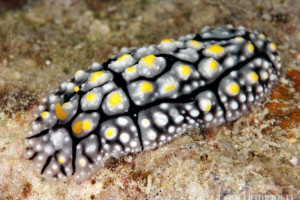
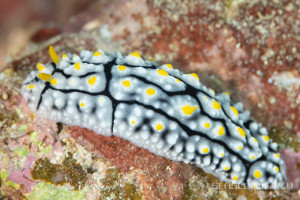
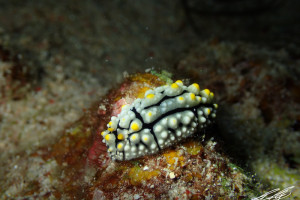
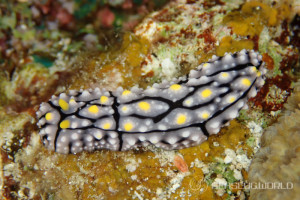
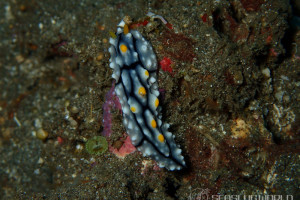
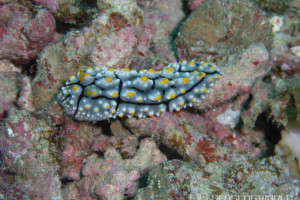
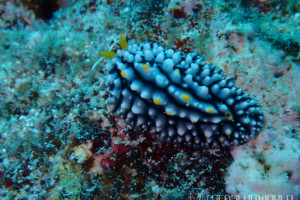
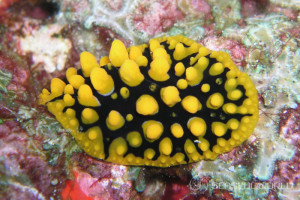
The colour throughout is brighter than in Phyllidia varicosa: the deep-black ground colour of the mantle is less encroaching, displaced by broad bluish-green and yellowish areas. The rhinophores are yellowish; the foot sole bears a more conspicuous black median band. The form is elegant and slightly elongate; the rhinophores are short and thick; the longitudinal and marginal dorsal areas are raised into uneven small hummocks; the gill lamellae are elongate-semilunar.Distribution
Type locality: Philippine seas (originally based on material from near Bohol, 30 fathoms). Now known from Réunion, the Red Sea, Christmas Island, Myanmar, Australia, Vanuatu, Fiji, the Solomon Islands, Papua New Guinea, Indonesia, Malaysia, Palau, Guam, the Philippines, the Marshall Islands and Japan.Etymology
The Latin adjective elegans means "elegant, refined". The Latin diagnosis itself contains "Forma elegantior" ("more elegant in form"), and the descriptive epithet evidently refers to the graceful, somewhat elongate shape and pattern.Remarks
Distinguished from Phyllidia varicosa by the lighter ground colour, the less prominent black ground of the mantle, the more uneven dorsal tubercles, and the more elongate, semilunar gill lamellae.References
- ツノキイボウミウシ, 小野篤司. (2000). ウミウシガイドブック. 第2版. TBSブリタニカ.
- フィリディア・エレガンス, 殿塚孝昌. (2003). ウミウシガイドブック〈3〉. TBSブリタニカ.
A Kindle field guide by the site author
Kimoto N. (2026). Sea Slugs of Japan & the Indo-Pacific, 2nd Edition.
Kindle Edition
View on Amazon PR (Amazon Associates)Seasonality
Shooting Locations
Loading shooting locations...
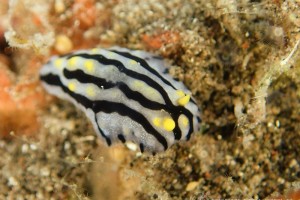
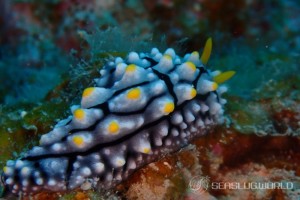
Photos of Phyllidia elegans
Tag:







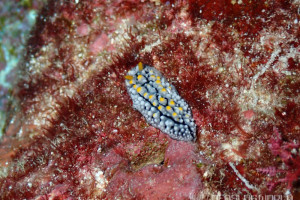

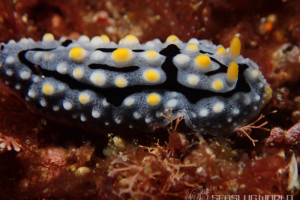

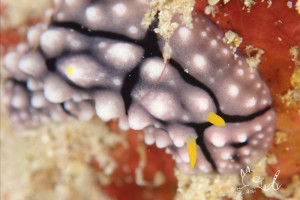

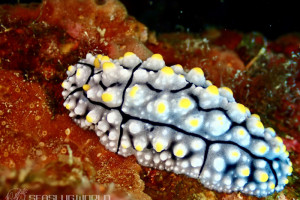

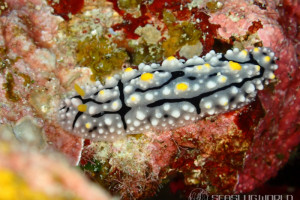

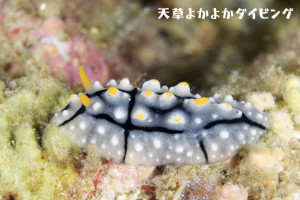

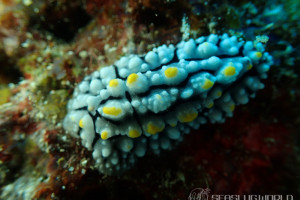

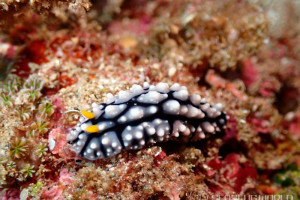









Same Genus Nudibranchs
Academic Database
Sea slug observation data is available in international marine biodiversity databases.