Sacoproteus nishae Krug, Wong, M. R. Medina, Gosliner & Á. Valdés, 2018
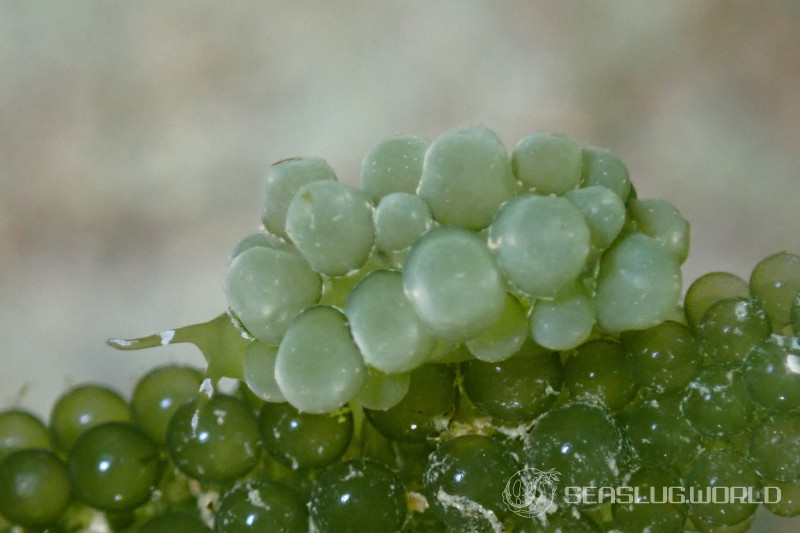
Description
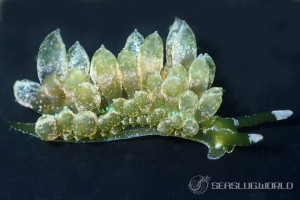
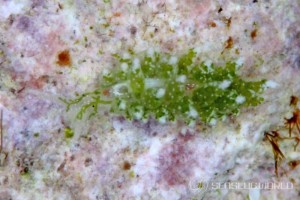
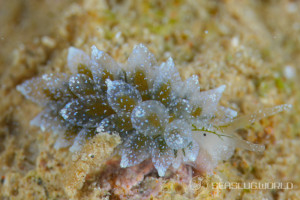
A small sacoglossan with mushroom-shaped cerata that closely mimic the pinnules of the host alga Caulerpa chemnitzia. Externally distinguished from congeners by rhinophores bearing white spots at the tip and at the midpoint, a transverse white line across the head anterior to the eyes, and the absence of curved white lines at the base of the rhinophores or in front of the eyes. Internally distinguished by arrowhead-shaped radular teeth with partial denticulation; a well-differentiated deferent duct joining the prostate to the penis; an elongated duct joining the ampulla to the other female reproductive organs; and a spherical bursa copulatrix with a long duct. Green chloroplast pigments retained from the food alga produce the cryptic body colour.Distribution
Indo-Pacific. Recorded from Malaysia (Strait of Malacca, near Port Dickson, the principal study locality) and the Marshall Islands; observed on Caulerpa lentillifera and C. chemnitzia, mimicking the latter most closely.Remarks
Described as one of four new species in the new genus Sacoproteus by Krug, Wong, Medina, Gosliner & Valdes 2018, erected for Caulerpa-mimetic lineages previously placed in Stiliger. The type species is S. smaragdinus (Baba, 1949). In Malaysia, S. nishae and S. smaragdinus both feed on C. lentillifera, yet S. nishae mimics C. chemnitzia more closely. On the published phylogeny, S. nishae is sister to the southern Australian S. yhiae.References
A Kindle field guide by the site author
Kimoto N. (2026). Sea Slugs of Japan & the Indo-Pacific, 2nd Edition.
Kindle Edition
View on Amazon PR (Amazon Associates)Seasonality
Shooting Locations
Loading shooting locations...
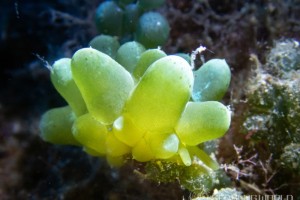
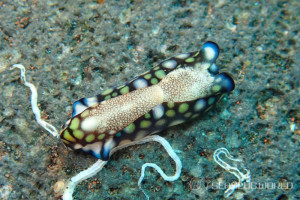
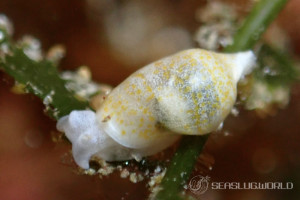
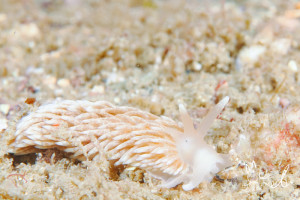
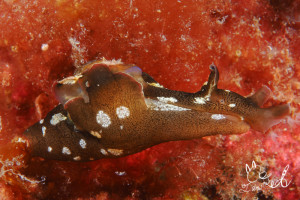
Photos of Sacoproteus nishae


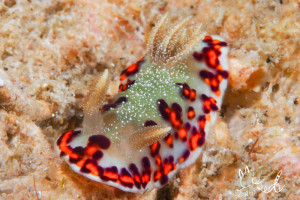
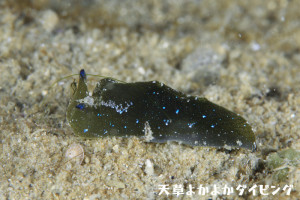
Same Genus Nudibranchs
Similar Colors Nudibranchs

Academic Database
Sea slug observation data is available in international marine biodiversity databases.