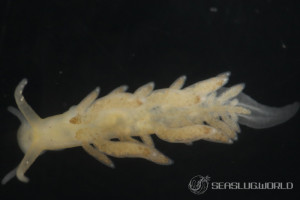
Subcuthona pallida Baba, 1949
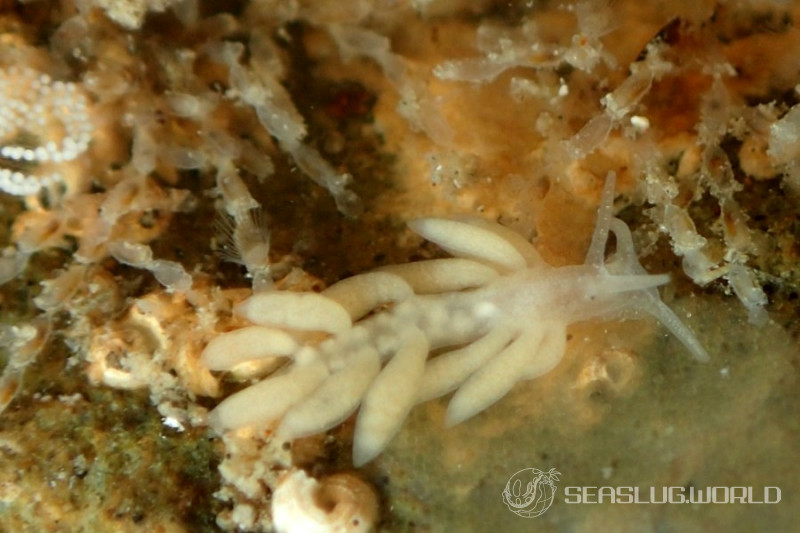
- Location
- Shibazaki Coast, Hayama, Kanagawa, Japan
- Date
- 2017/07/01
- Length
- 6mm
- Depth
- 0.2m
- Water temperature
- 26.0℃
Description
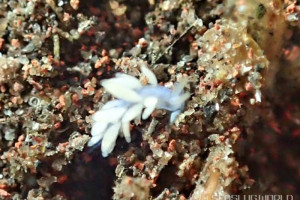
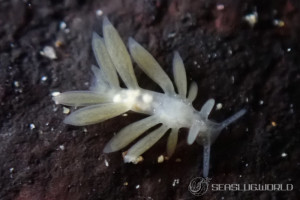
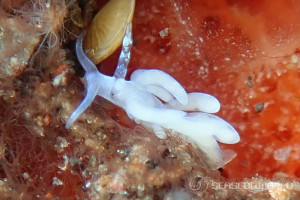
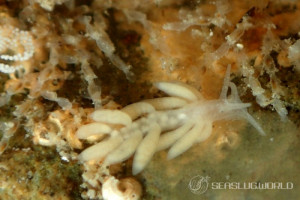
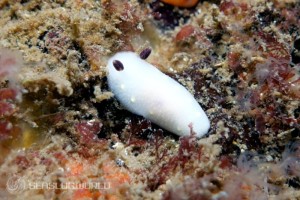
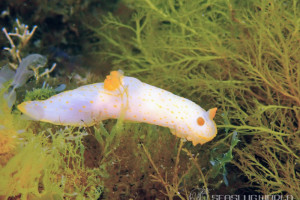
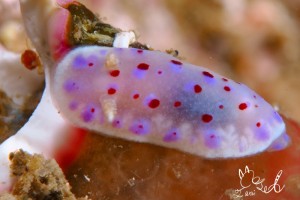
A tiny Aeolidacea, body length about 2 mm. Type species of the new genus Subcuthona Baba, 1949. Genus diagnosis: Both oral tentacles and rhinophores are present; the rhinophores are simple. Anterior foot corners rounded. Cerata are arranged in a single longitudinal row per side — the diagnostic character. Right (and left) liver branches into 3 ducts. The dorsal-anal-type anus opens on the right side, between the right liver and the posterior liver. The masticatory edge of the jaw plate bears a single row of denticles. Radula formula 0.1.0; the central tooth is horseshoe-shaped, with the median cusp roughly equal in size to the lateral denticles. Species characters: Cerata 6 per side, each in a single longitudinal row. The first 3 cerata on the right belong to the right liver, the first 3 on the left to the left liver, and the rest to the posterior liver. The genital orifice opens below the 2nd ceras on the right; the anus opens just in front of the 4th ceras on the same side. The body is uniformly bluish-white, with yellow liver branches showing through the skin. Masticatory edge of the jaw plate with a single row of 17 denticles. Radula formula 43×0.1.0.Distribution
Type locality is Hayama-Koiso, Sagami Bay (intertidal, August-September 1940, 19 specimens). The original description (Baba, 1949) records the species only from the type locality.Etymology
The specific epithet pallida is Latin for pale. The original description does not give an explicit etymology paragraph; the descriptive sense reflects the uniformly pale bluish-white body colour. The genus name Subcuthona suggests a genus close to Cuthona, although Baba does not state this explicitly. The Japanese name "Matsuyoi-mino-umiushi" likens the pale colour to the evening primrose (matsuyoi-gusa).Remarks
Originally described as a new genus and species, Subcuthona pallida Baba, 1949 (the only species of the genus). Diagnostic for the genus are the cerata arranged in a single longitudinal row per side and the uniformly bluish-white body.References
A Kindle field guide by the site author
Kimoto N. (2026). Sea Slugs of Japan & the Indo-Pacific, 2nd Edition.
Kindle Edition
View on Amazon PR (Amazon Associates)Seasonality
Shooting Locations
Loading shooting locations...
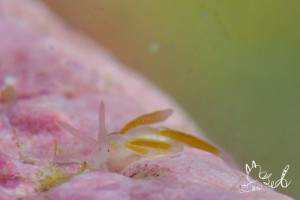
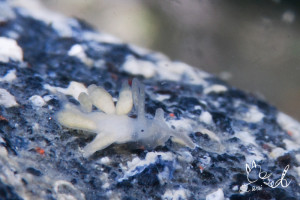
Photos of Subcuthona pallida





Same Genus Nudibranchs
Similar Colors Nudibranchs
Academic Database
Sea slug observation data is available in international marine biodiversity databases.