Thordisa bimaculata Lance, 1966
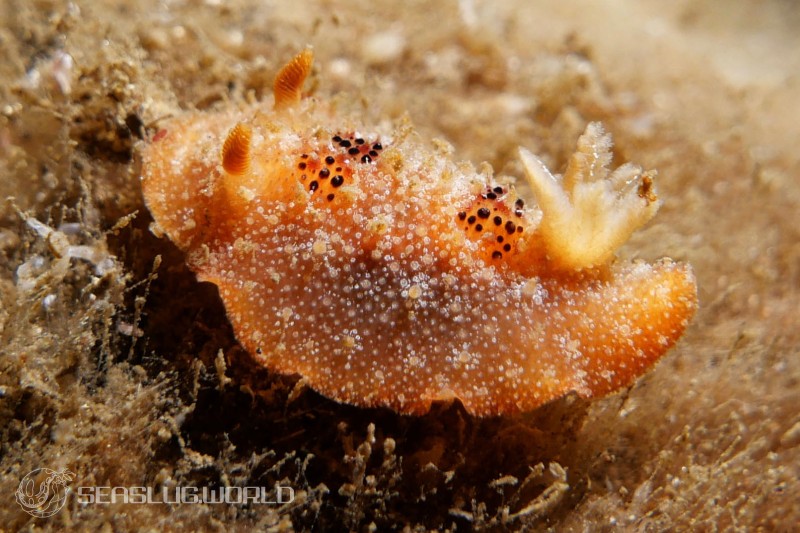
- Location
- Goal Post, San Diego, California, United States
- Date
- 2020/07/15
- Length
- ??mm
- Depth
- ??m
- Water temperature
- ??℃
What is the two-spotted dorid?
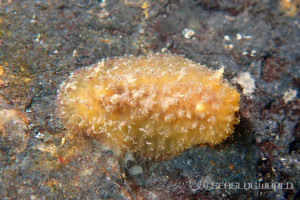
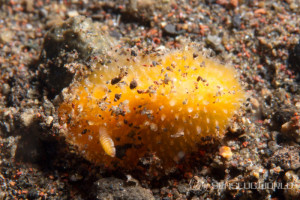
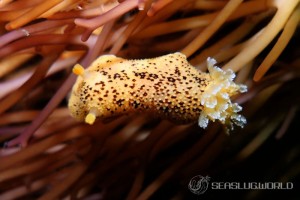
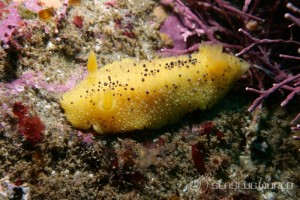
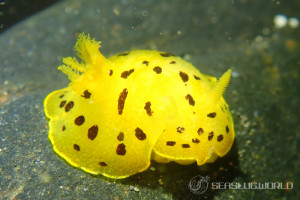
The two-spotted dorid (Thordisa bimaculata) is a small, velvety dorid nudibranch of the northeastern Pacific, easily recognised by two clusters of dark brown spots on its mantle — one behind the rhinophores and one in front of the gills.Description
A dorid nudibranch usually about 3 cm long, occasionally reaching around 5 cm. The body colour is variable, ranging from translucent white through pale yellow to orange. The mantle is densely covered with long, tapering papillae, giving it a velvety texture. Its most distinctive feature is a pair of concentrated patches of small dark brown spots — one just behind the rhinophores and the other just in front of the gill circle.Distribution
Recorded in the northeastern Pacific from California, USA, south to Baja California, Mexico, with most records from the southern California coast. It occurs from the rocky intertidal down to about 30 m.Etymology
The specific epithet bimaculata is Latin for "two-spotted" (bi-, "two" + macula, "spot"), referring to the two patches of dark spots on the mantle. The common name "two-spotted dorid" reflects the same feature.Remarks
Like other members of the genus Thordisa, it is thought to feed on sponges.References
- Thordisa bimaculata n.sp., Lance J.R. (1966). New distributional records of some northeastern Pacific Opisthobranchiata (Mollusca: Gastropoda) with descriptions of two new species. The Veliger. 9(1): 69-81.
- Thordisa bimaculata, Chan J.M. & Gosliner T.M. (2007). Preliminary phylogeny of Thordisa (Nudibranchia: Discodorididae), with descriptions of five new species. The Veliger. 48(4): 284-308.
- Thordisa bimaculata, Behrens D.W., Hermosillo A., Fletcher K. & Jensen G.C. (2022). Nudibranchs & Sea Slugs of the Eastern Pacific. Molamarine.
Featured in this book
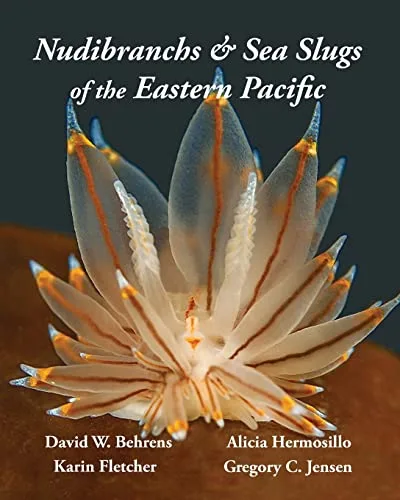
Behrens D.W., Hermosillo A., Fletcher K. & Jensen G.C. (2022). Nudibranchs & Sea Slugs of the Eastern Pacific. Molamarine.
Molamarine
This species, Thordisa bimaculata, is included in the book.
View on Amazon PR (Amazon Associates)Seasonality
Shooting Locations
Loading shooting locations...
Photos of Thordisa bimaculata

Same Genus Nudibranchs
Similar Colors Nudibranchs

Academic Database
Sea slug observation data is available in international marine biodiversity databases.