Thordisa sanguinea Baba, 1955
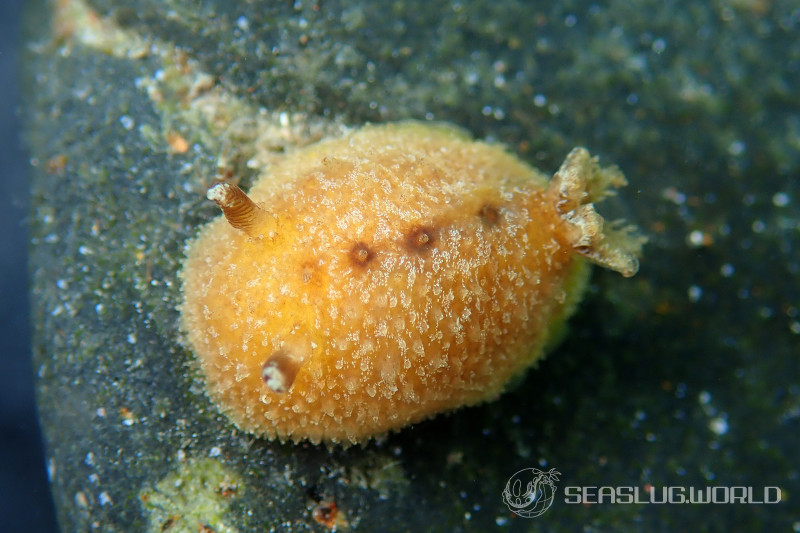
Description
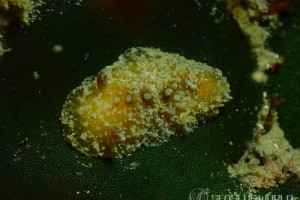
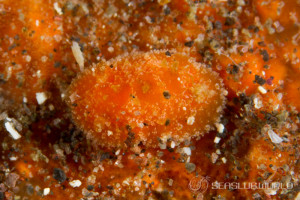
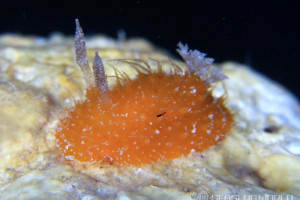
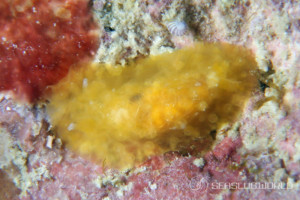
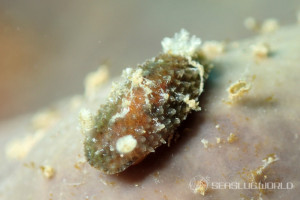
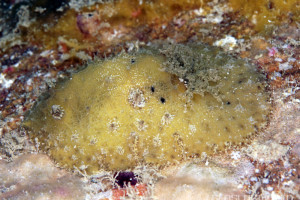
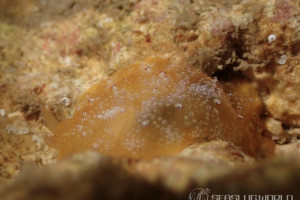
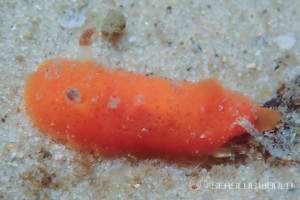
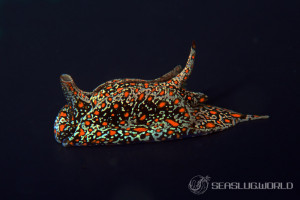
A small Dorididae, body length 13 mm. The dorsum is covered by sharp, long villi-like papillae, which are white against the orange-yellow ground. Three to four dark eye-spots are arranged anteroposteriorly on the dorsal midline. Rhinophores dark brown. Six gills, bi- to tri-pinnate, dark brown. Ventral surface a uniform paler orange than the dorsum. Oral tentacles finger-shaped. No labial plate. Radula formula 30×35.0.35. The 10-12 innermost lateral teeth are very small, gradually increasing in size outward. All laterals are smooth sickle-shaped, except for the outermost 5-6 laterals, whose tips are split comb-like — the diagnostic basis for placement in Thordisa.Distribution
Type locality is off Nishi-no-saki, Sagami Bay (10 m depth, April 1941, single specimen). An additional specimen was recorded from Kasashima, Sagami Bay (intertidal, April 1951). The original description (Baba, 1955) records the species only from Sagami Bay.Etymology
The specific epithet sanguinea is Latin for blood-coloured. The original description does not give an explicit etymology paragraph; the descriptive sense reflects the orange-yellow ground colour.Remarks
The coloration superficially resembles that of Rostanga-type "Iso-umiushi", but the latter has gills arranged in a complete circle around the anus and a markedly different radula. Placement in Thordisa is based on the comb-like split apices of the outermost lateral teeth.References
- ヒメチシオウミウシ(新稱), 生物學御研究所編. (1955). 相模湾産後鰓類図譜〈補遺〉. 岩波書店.
- 高岡生物研究会. (2002). 日本海のウミウシ. 第2版.
- Rostanga sp.3 ?, 中野理枝. (2004). 本州のウミウシ. ラトルズ.
A Kindle field guide by the site author
Kimoto N. (2026). Sea Slugs of Japan & the Indo-Pacific, 2nd Edition.
Kindle Edition
View on Amazon PR (Amazon Associates)Seasonality
Shooting Locations
Loading shooting locations...
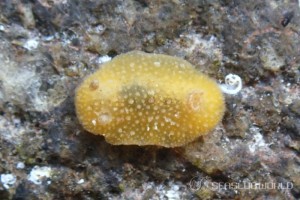
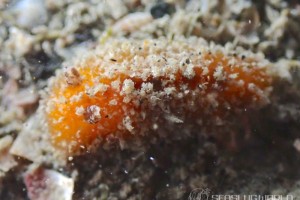
Photos of Thordisa sanguinea

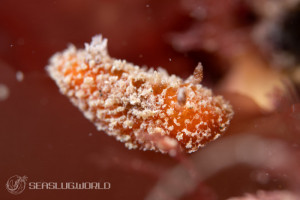

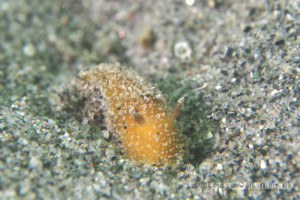

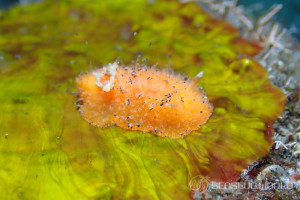
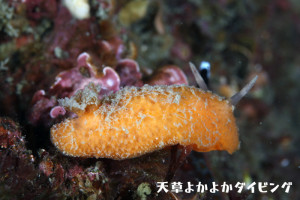

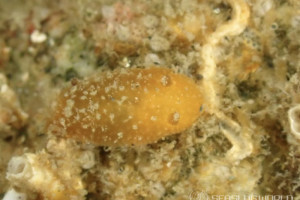

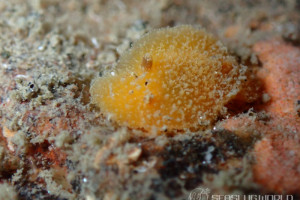

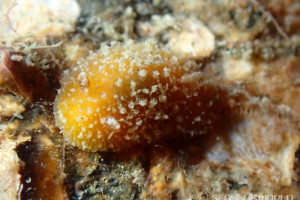
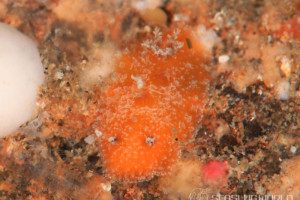

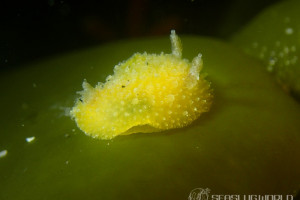

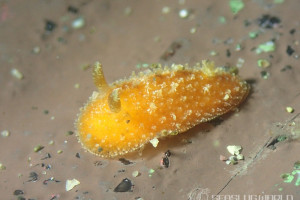
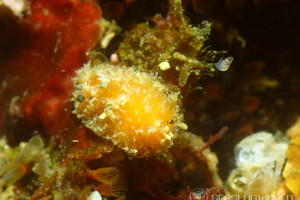
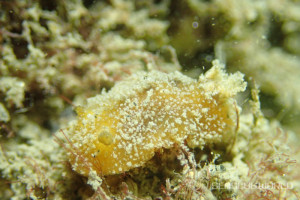

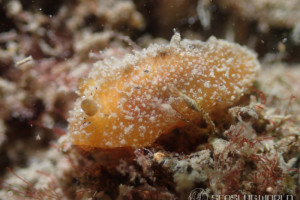

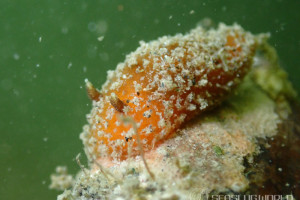

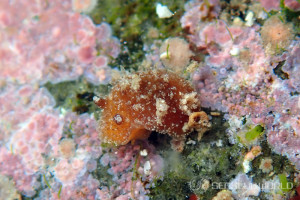

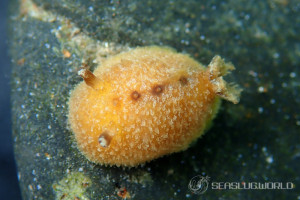
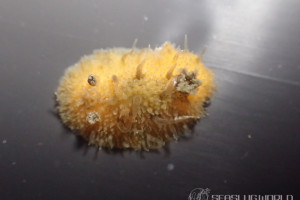

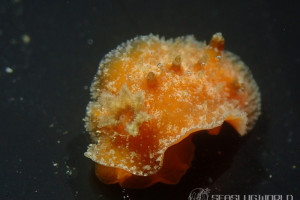
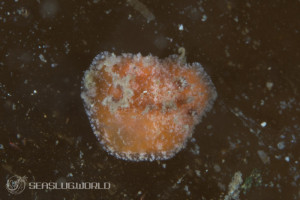

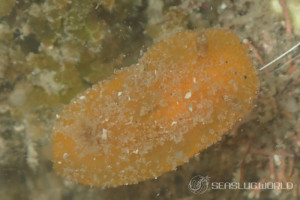

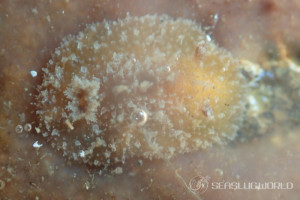
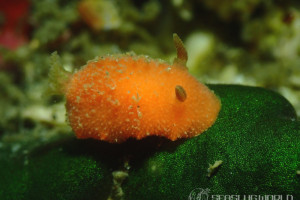
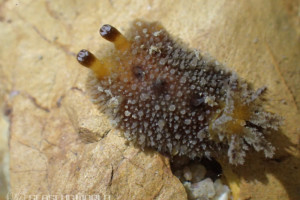

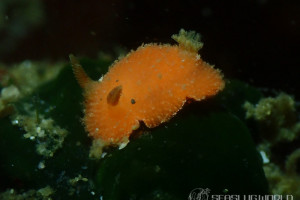
Specimen & DNA
| Observation | Database | COI | 16S | H3 |
|---|---|---|---|---|
| #15334 | BOLD Systems | SSWBP250-25#COI-5P | SSWBP250-25#16S |
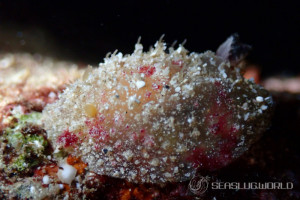
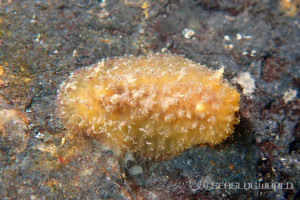
Same Genus Nudibranchs
Similar Colors Nudibranchs

Academic Database
Sea slug observation data is available in international marine biodiversity databases.