Tritoniopsis elegans (Audouin, 1826)
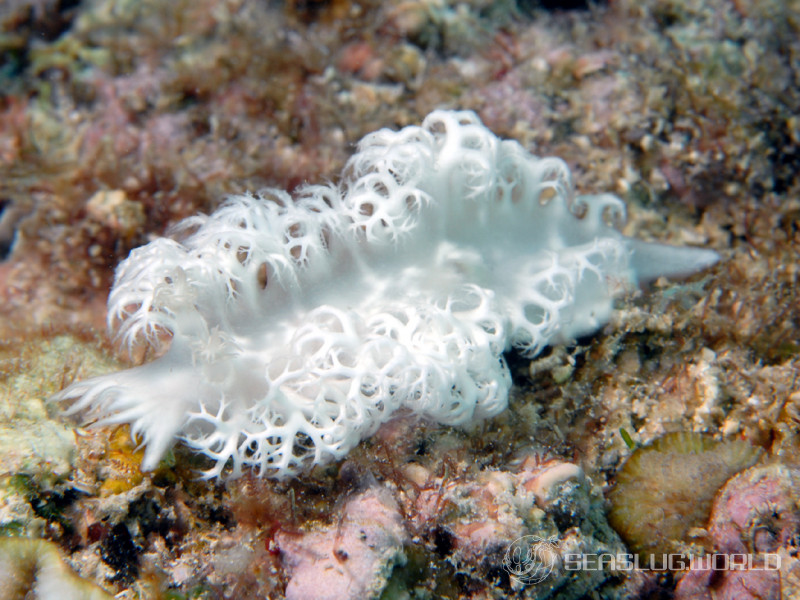
- Location
- Cape Maeda, Okinawa Island (Onna and Yomitan area), Okinawa, Japan
- Date
- 2006/05/26
- Length
- 30mm
- Depth
- 5.0m
- Water temperature
- 26.0℃
Description
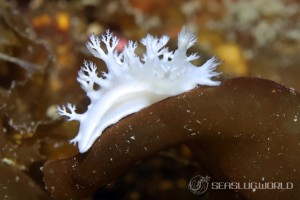
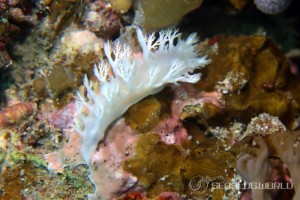
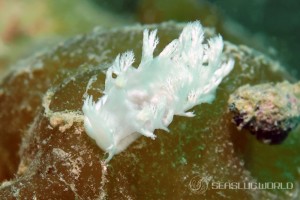
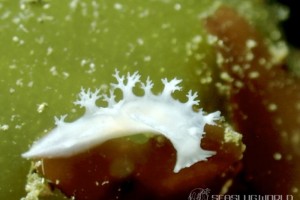
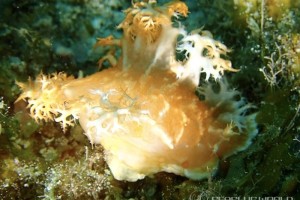
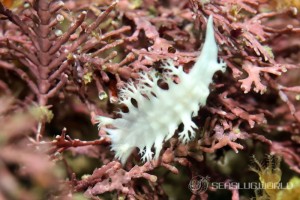
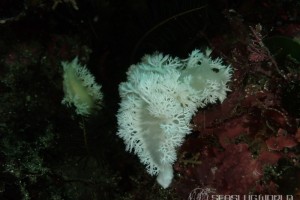
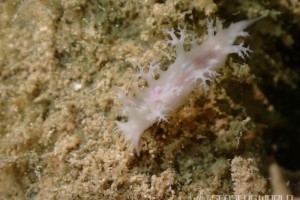
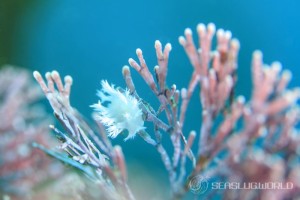
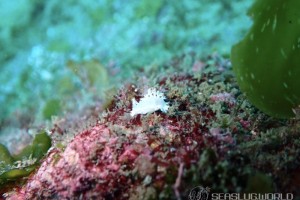
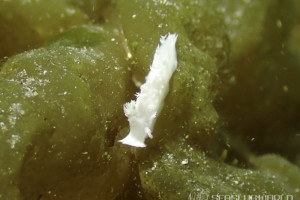
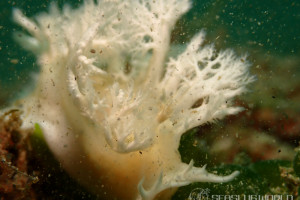
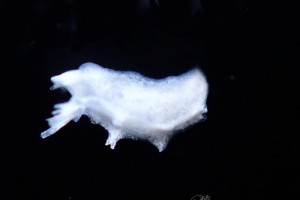
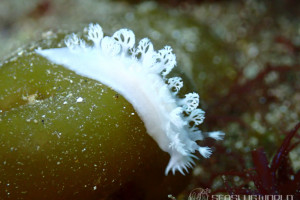
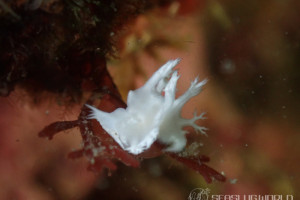
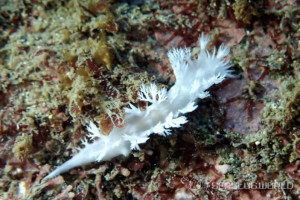
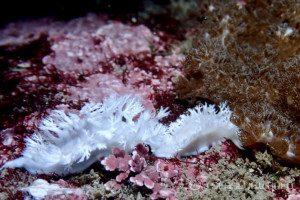
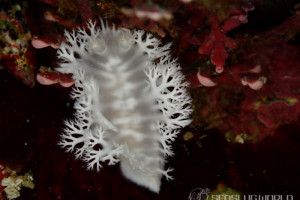
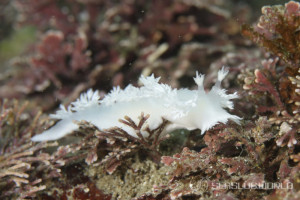
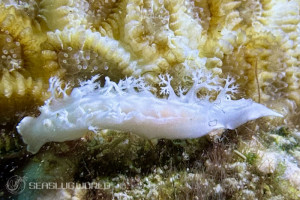
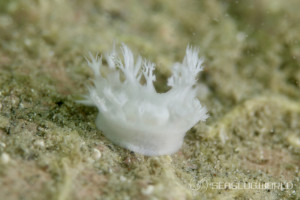
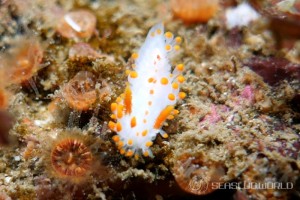
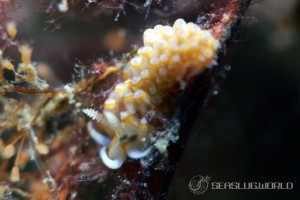
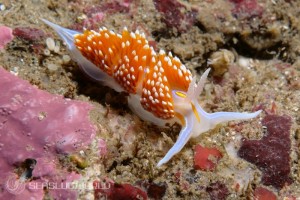
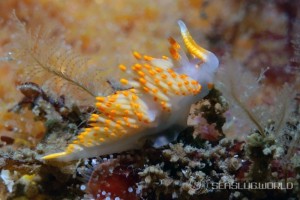
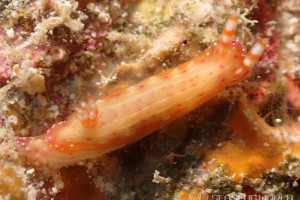
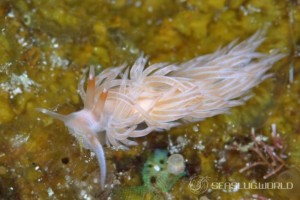
A tritoniid reaching about 50 mm in body length. Ground colour varies considerably from white through yellow to orange. The dorsum is smooth, scattered with small white spots.There are about 12 pairs of cerata, each repeatedly branched at the tip into a finely arborescent (frosted-tree-like) shape — the diagnostic feature of the species. The leading edge of the oral veil and the tips of the rhinophores bear numerous slender finger-like papillae.
Body colour reflects the host soft coral on which the slug feeds, as the slug acquires pigment and metabolites from its prey; this is the main reason for the colour variation observed.
Distribution
Widely distributed across the Indo-West Pacific, with records from South Africa, Kenya, Thailand, Papua New Guinea, the Philippines and southern Japan. The species lives on soft-coral colonies on shallow to moderately deep coral and rocky reefs.Etymology
The specific epithet elegans is Latin for "graceful, elegant", referring to the elegantly branched cerata.Remarks
The type species of Tritoniopsis Eliot, 1905. Originally described in 1826 from Red-Sea Egyptian material; the genus Tritoniopsis was later erected Tritoniopsis for it. The species feeds on octocorals, especially Sinularia and Sarcophyton. The Japanese vernacular name "Yubinōhanagasa-umiushi" was later proposed.References
- Tritoniopsis elegans (Audouin, 1826) — type species, Eliot C. (1905). The Nudibranchiata of the Scottish National Antarctic Expedition. Transactions of the Royal Society of Edinburgh. 41(3): 519-532.
- Yubino-hanagasa-umiushi, n. n., Baba K. (1969). TAXONOMIC STUDY ON TRITONIOPSIS ELEGANS (AUDOUIN, 1826) FROM SETO, JAPAN (NUDIBRANCHIA : DENDRONOTOIDEA). Publications of the Seto Marine Biological Laboratory. 16(6): 395-398. https://doi.org/10.5134/175562
- ユビノウハナガサウミウシ, 小野篤司. (1999). ウミウシガイドブック. TBSブリタニカ.
- ユビノウハナガサウミウシ, 鈴木敬宇. (2000). ウミウシガイドブック〈2〉. TBSブリタニカ.
- シロハナガサウミウシ, 小野篤司. (2004). 沖縄のウミウシ. ラトルズ.
- シロハナガサウミウシ, 中野理枝. (2004). 本州のウミウシ. ラトルズ.
- Tritoniopsis elegans, Terrence Gosliner, Ángel Valdés and David Behrens. (2015). Nudibranch and Sea Slug Identification Indo-Pacific. New World Pubns Inc.
- ユビノウハナガサウミウシ, 中野理枝. (2018). 日本のウミウシ. 文一総合出版.
Featured in this book

Terrence Gosliner, Ángel Valdés and David Behrens. (2018). Nudibranch and Sea Slug Identification Indo-Pacific 2nd Edition. New World Pubns Inc.
New World Publications
This species, Tritoniopsis elegans, is included in the book.
View on Amazon PR (Amazon Associates)Seasonality
Shooting Locations
Loading shooting locations...
Photos of Tritoniopsis elegans
Tag:


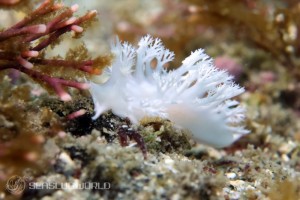
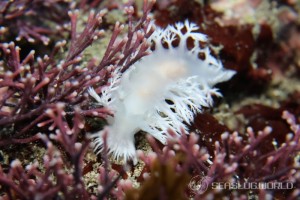
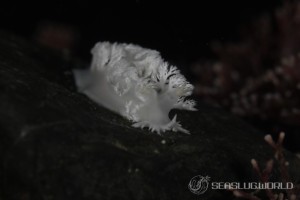


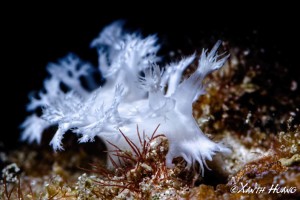










Same Genus Nudibranchs
Similar Colors Nudibranchs
Academic Database
Sea slug observation data is available in international marine biodiversity databases.