Aeolidiopsis harrietae Rudman, 1982
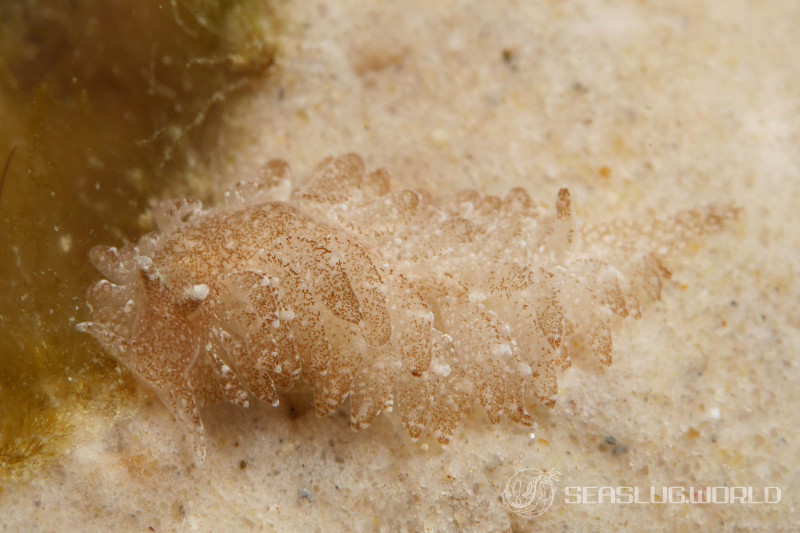
- Location
- Red Beach, Okinawa Island (East coast), Okinawa, Japan
- Date
- 2017/02/18
- Length
- 10mm
- Depth
- 5.0m
- Water temperature
- 21.0℃
Description
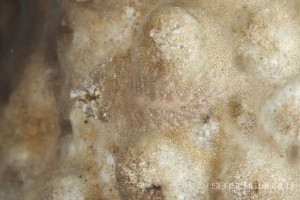
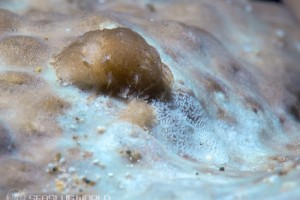
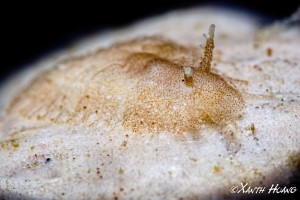
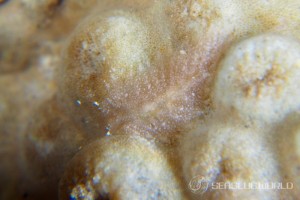
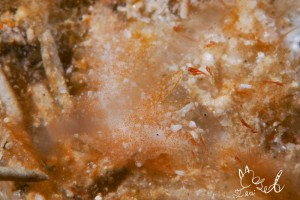
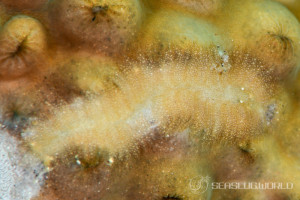
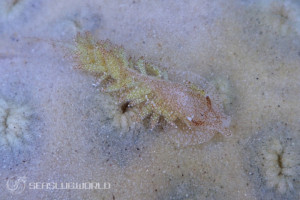
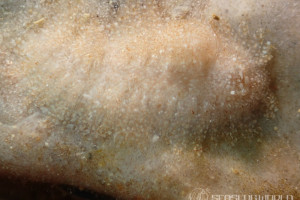
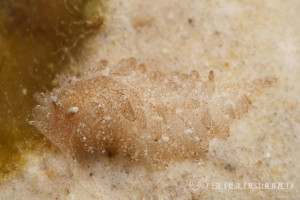
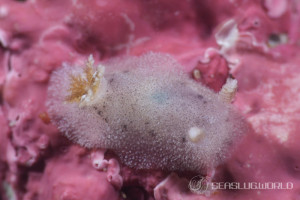
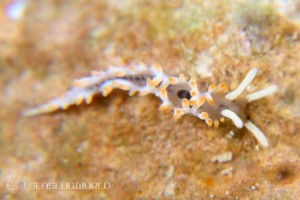
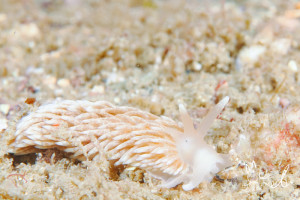
Body broad and elongate, with a rounded anterior foot. Oral tentacles small and bluntly rounded. Rhinophores short, rounded, bearing a few long papillae (a key character separating it from Aeolidiopsis ransoni, which has smooth rhinophores). Cerata are dorsoventrally flattened, broadly rounded along the anterior edge with a distinct angle midway along the posterior edge, and are held in nearly horizontal rows — a morphological adaptation for exposing the internal symbionts to light. The whole animal appears straw-coloured from the internal fluids, with a network of fine red-brown specks on the dorsum (forming a transverse pattern behind the rhinophores). Each ceras has a white tip and a white knob midway along its posterior edge; the foot beneath the cerata is straw-coloured with white specks. The brown specks on the dorsum are clusters of symbiotic zooxanthellae. Body length 12-14 mm alive.Distribution
Type locality is Second Beach, Lizard Island, Great Barrier Reef, Australia (May 1979, collected by Harriet Robertson). Originally known only from Lizard Island.Etymology
The specific epithet harrietae honours Mrs Harriet Robertson, who discovered the first specimen at Lizard Island (verbatim from the original description).Remarks
Feeds exclusively on the colonial zoanthid Palythoa and harbours symbiotic zooxanthellae (acquired from the Palythoa tissue) in cells of the digestive gland, concentrated near the dorsal body wall and in the upper third of each ceras. The flattened cerata held horizontally are a structural adaptation to expose the symbionts to light. Distinguished from the only congener, Aeolidiopsis ransoni, by the papillate rhinophores (smooth in Aeolidiopsis ransoni), the position of the anus below the cerata, the single pre-pericardial ceratal row, and details of the radular teeth.References
- Carmona L., Pola M., Gosliner T.M. & Cervera J.L. 2014. Review of Baeolidia, the largest genus of Aeolidiidae (Mollusca: Nudibranchia), with the description of five new species. Zootaxa, 3802 (4): 477–514.
- Baeolidia harrietae, Terrence Gosliner, Ángel Valdés and David Behrens. (2015). Nudibranch and Sea Slug Identification Indo-Pacific. New World Pubns Inc.
- ハリアットミノウミウシ(新称), 中野理枝. (2018). 日本のウミウシ. 文一総合出版.
- Aeolidiopsis harrietae, Ortea J. & Moro L. (2020). Integrando la Historia en la Naturaleza: nuevo aeolidáceo (Mollusca: Nudibranchia) para recordar la gesta de Magallanes y Elcano. Avicennia. 26: 15-26.
Featured in this book
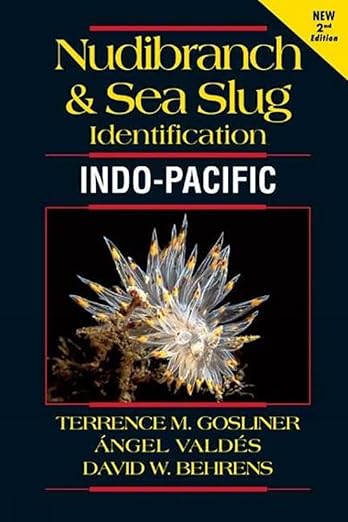
Terrence Gosliner, Ángel Valdés and David Behrens. (2018). Nudibranch and Sea Slug Identification Indo-Pacific 2nd Edition. New World Pubns Inc.
New World Publications
This species, Aeolidiopsis harrietae, is included in the book.
View on Amazon PR (Amazon Associates)Seasonality
Shooting Locations
Loading shooting locations...
Photos of Aeolidiopsis harrietae
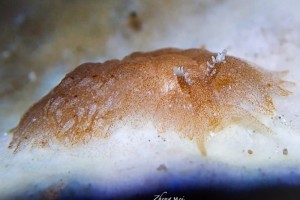










Same Genus Nudibranchs
Similar Colors Nudibranchs

Academic Database
Sea slug observation data is available in international marine biodiversity databases.