Aliculastrum debile (Pease, 1860)
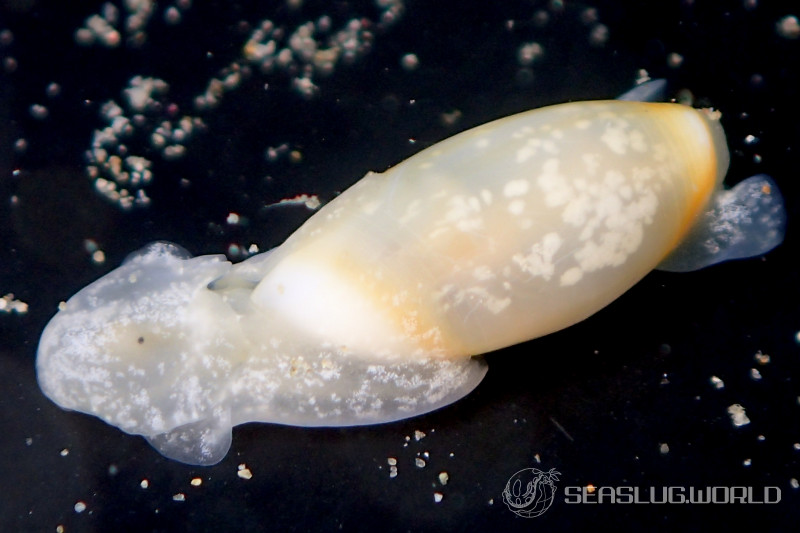
- Location
- Futami, Okinawa Island (Oura Bay), Okinawa, Japan
- Date
- 2017/03/02
- Length
- 8mm
- Depth
- 5.0m
- Water temperature
- 20.0℃
Description
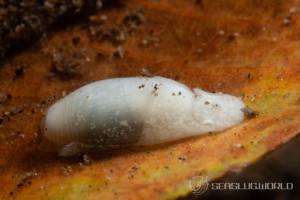
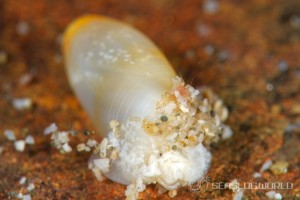
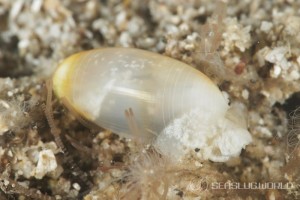
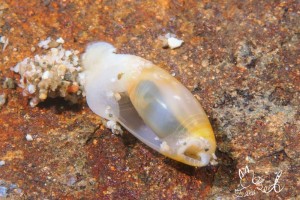
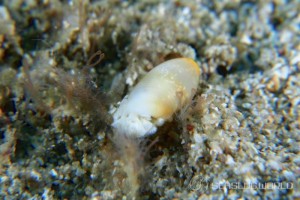
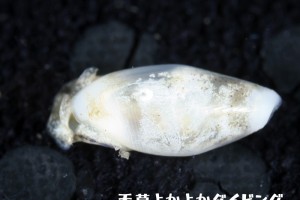
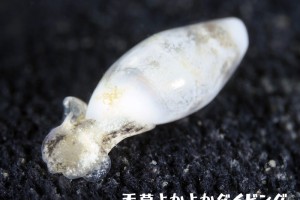
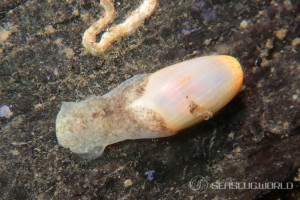
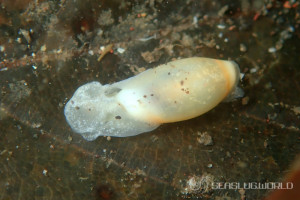
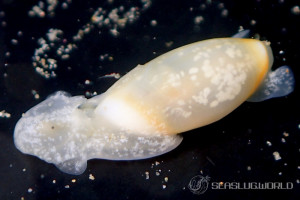
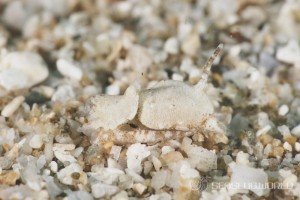
A small cephalaspidean reaching about 8 mm in shell length. The shell is cylindrically ovate, elongate, narrowed posteriorly, pellucid, fragile and white. The outer lip is produced and twisted posteriorly. The apex is umbilicate, and the umbilicus is striated or grooved radially. The whole surface is finely striated transversely, with additional transverse raised lines at both ends. The columella bears a fold at the base. Pease's type-material is from Cuming's collection of Sandwich Islands shells.Distribution
Indo-Pacific. Type locality: Sandwich Islands (Hawaiian Islands), based on specimens in the Cuming collection described by Pease. Subsequently recorded from the Hawaiian Islands, southern Japan, the Philippines, Taiwan, Guam, New Caledonia and elsewhere.Etymology
The specific epithet debilis is the Latin adjective meaning "weak, fragile, feeble", in reference to the thin, fragile shell. Pease did not state an etymology, but the meaning is consistent with his "fragile" in the original description.Remarks
Originally placed by Pease in Atys as Atys debilis. Subsequently transferred to Aliculastrum, with the specific epithet adjusted from masculine debilis to neuter debile to agree with the gender of the new genus. The parentheses in the author citation reflect this generic transfer. The Japanese name "ヨワタマゴガイ" ("weak egg-shell") refers to the fragile shell, in keeping with the meaning of the specific epithet.References
- Atys debilis Pease n. sp., Pease W.H. (1860). Descriptions of new species of Mollusca from the Sandwich Islands. Part I. Proceedings of the Zoological Society of London. 28: 18-36.
- ヨワタマゴガイ(新称), 中野理枝, 今川郁 & 今本淳. (2013). 南西諸島の後鰓類1. 頭楯亜目. ちりぼたん. 43(1-4): 1-22.
- Oskars T.R., Too C.C., Rees D., Mikkelsen P.M., Willassen E. & Malaquias M.A.E. (2019). A molecular phylogeny of the gastropod family Haminoeidae sensu lato (Heterobranchia: Cephalaspidea): a generic revision. Invertebrate Systematics 33(3): 426-472.
A Kindle field guide by the site author
Kimoto N. (2026). Sea Slugs of Japan & the Indo-Pacific, 2nd Edition.
Kindle Edition
View on Amazon PR (Amazon Associates)Seasonality
Shooting Locations
Loading shooting locations...
Photos of Aliculastrum debile








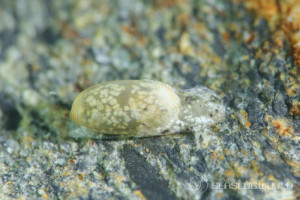

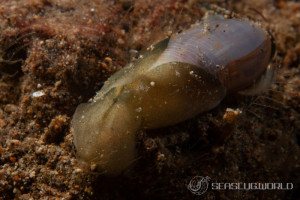
Same Genus Nudibranchs
Similar Colors Nudibranchs

Academic Database
Sea slug observation data is available in international marine biodiversity databases.