Aplysiopsis minor (Baba, 1959)
Description
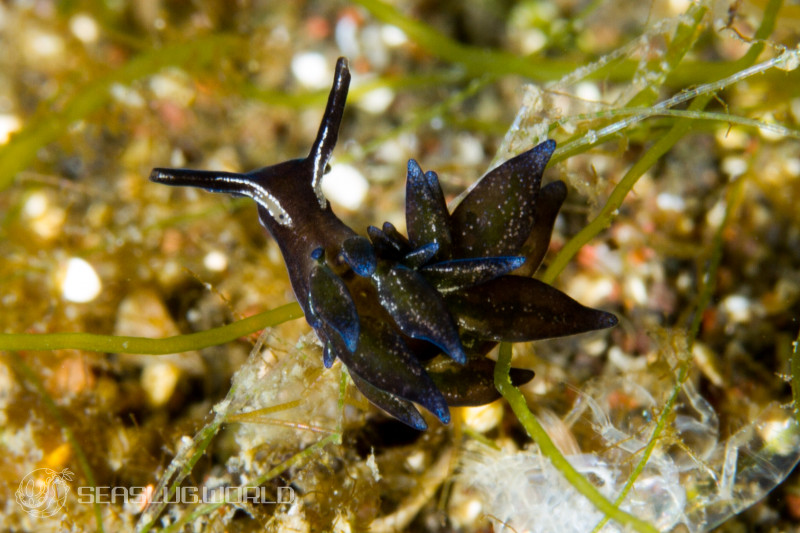
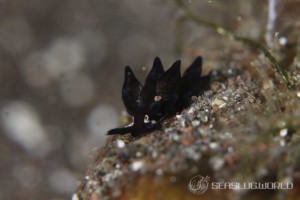
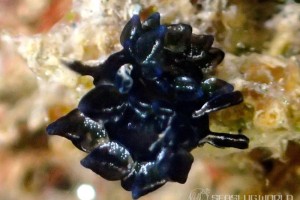
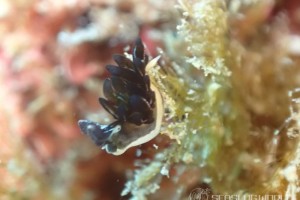
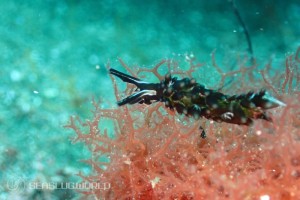
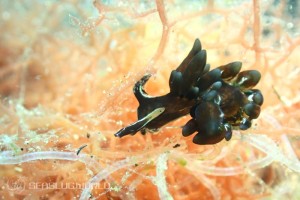
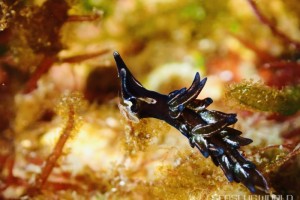
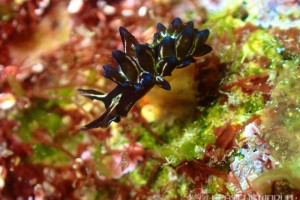
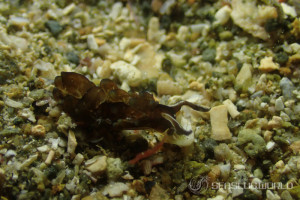
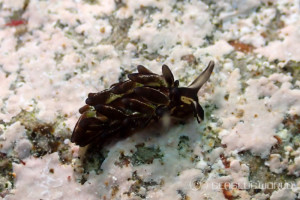
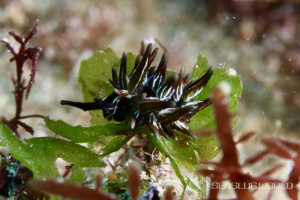
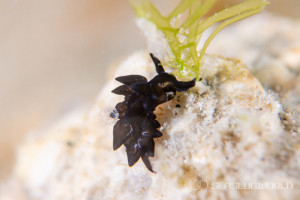
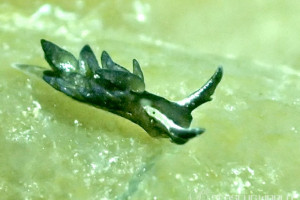
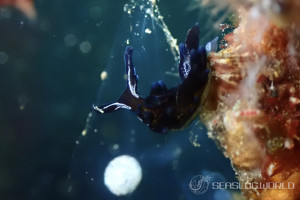
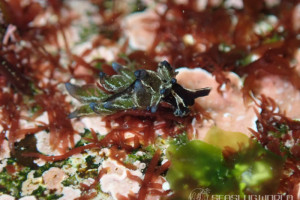
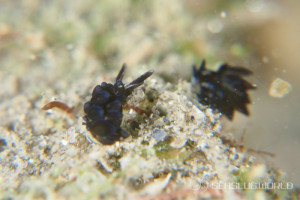
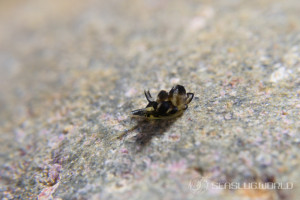
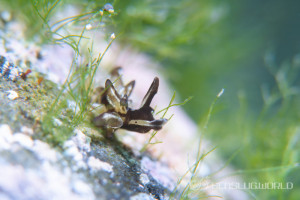
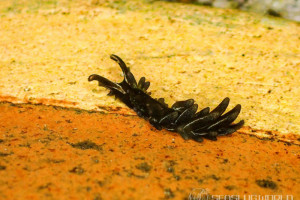
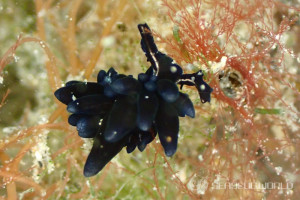
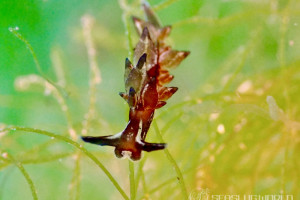
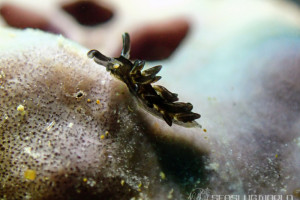
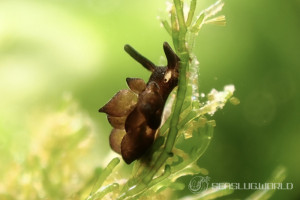
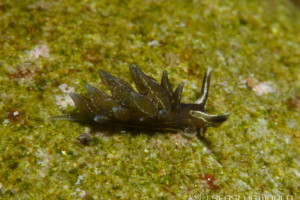
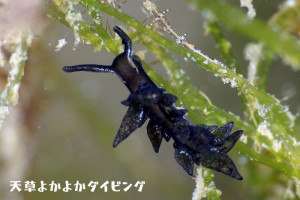
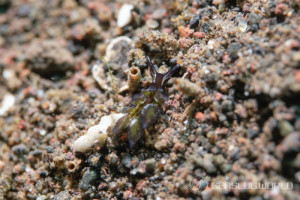
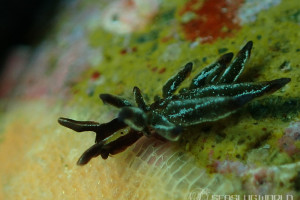
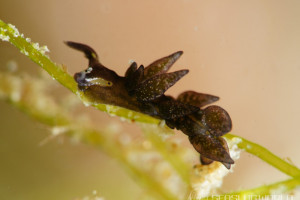
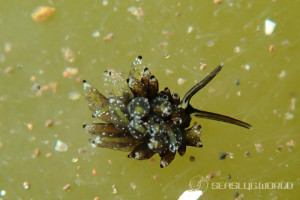
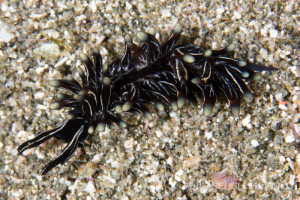
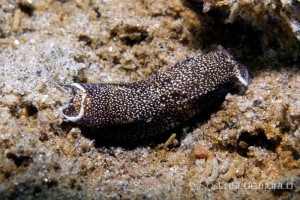
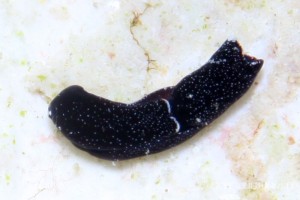
A small sacoglossan 7-10 mm in length. Black-coloured throughout. Rhinophores auriculate; oral tentacles lobiform. Cerata rounded in section, smooth on the surface, lacking the dendritic veins seen in the closely allied Aplysiopsis nigra. The cerata are arranged in about seven oblique rows on each side, with about two cerata per row. The pericardial prominence is ovate; the nephroproct opens within it. The foot corners are rounded. The body is black above; the cerata are also black to the tip; the sole is yellowish-white with two longitudinal black bands. A white patch around each eye extends up to the tip of the rhinophore.Separable from A. nigra by (1) smaller body (7-10 mm vs. ca. 30 mm), (2) far fewer ceratal rows (ca. 7 vs. ca. 25), (3) smooth cerata (vs. weakly branching veins), and (4) the sole pattern (two longitudinal black bands vs. uniformly dark).
Distribution
Type locality: Amaharashi, Toyama Bay, Japan.Etymology
The specific epithet minor ("smaller" in Latin) refers to the smaller body size relative to the closely allied black-bodied A. nigra.Remarks
Originally described as Hermaeina (Hermaeina) minor. Hermaeina is a junior synonym of Aplysiopsis, establishing the present combination.References
- Hermaeina (Hermaeina) minor BABA, n. sp. Hime-kuro-moumiushi (n. n.)., Baba K. (1959). THE FAMILY STILIGERIDAE FROM JAPAN (OPISTHOBRANCHIA-SACOGLOSSA). Publications of the Seto Marine Biological Laboratory. 7(3): 327-334. https://doi.org/10.5134/174635
- ヒメクロモウミウシ, 高岡高等学校生物研究会(編). (1964). 富山湾産後鰓類図譜.
- 高岡生物研究会. (2002). 日本海のウミウシ. 第2版.
- Trowbridge C.D., Hirano Y.M., Hirano Y.J., Nishida K. & Sudo K. (2011). North-west Pacific sacoglossan guild associated with filamentous green algae (Family Cladophoraceae and Family Boodleaceae). Marine Biodiversity Records. 4: e67. https://doi.org/10.1017/S1755267211000170
A Kindle field guide by the site author
Kimoto N. (2026). Sea Slugs of Japan & the Indo-Pacific, 2nd Edition.
Kindle Edition
View on Amazon PR (Amazon Associates)Seasonality
Shooting Locations
Loading shooting locations...
Photos of Aplysiopsis minor
Tag:





















Same Genus Nudibranchs
Similar Colors Nudibranchs

Academic Database
Sea slug observation data is available in international marine biodiversity databases.