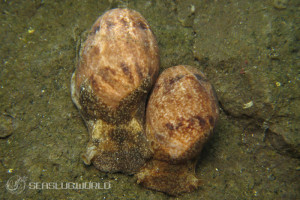
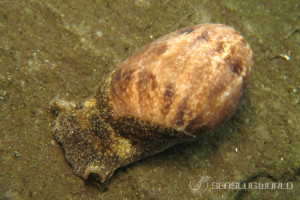
Bulla ampulla Linnaeus, 1758
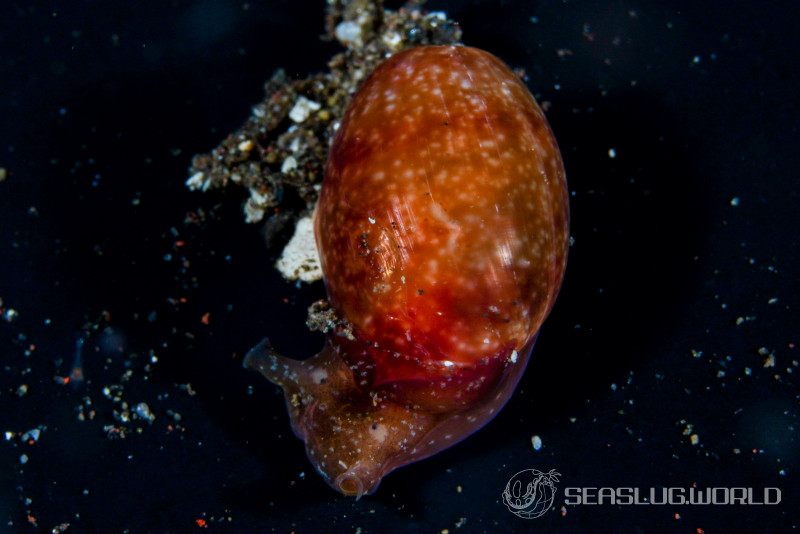
- Location
- Seraya, Tulamben, Pulau Bali, Indonesia
- Date
- 2020/02/19
- Length
- 20mm
- Depth
- 8.0m
- Water temperature
- 28.0℃
Description
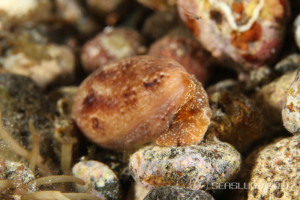
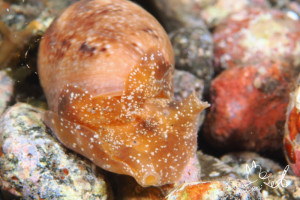
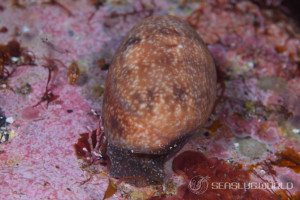
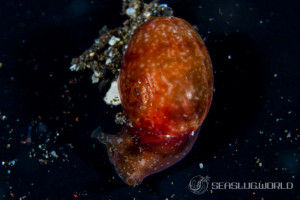
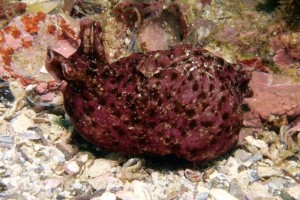
A cephalaspidean with a near-spherical, slightly glossy shell reaching about 60 mm in length. The shell ground is cream and is overlaid with irregular dark purple-brown blotches; the aperture spans nearly the full length of the shell, and the posterior end of the outer lip projects beyond the apex. Columellar lip is reverse-S shaped and bears a thin, smooth callus. The fleshy soft parts are mottled brown and orange with scattered white dots, and the cephalic shield bears tubular tentacles. The radula is comparatively soft, and the gizzard houses three large crushing plates flanked by spinose accessory pieces.Distribution
Tropical Indian Ocean and western Pacific. Records range from the Red Sea and East African coast to northern Australia, southern Japan (including the Izu Islands), the Philippines and Indonesia. Lessepsian incursions have also been reported in the eastern Mediterranean.Etymology
The specific epithet ampulla is the Latin for a small, round-bodied flask used in Roman antiquity for oils and wine, in reference to the rounded, swollen shell.Remarks
Originally described in Systema Naturae, 10th edition (Holmiae, 1758) and reprised in the 12th edition (1767: 1184 §378) as "B. testa rotundata opaca, vertice umbilicato", with type localities given as the islands of Mauritius, Jamaica, Barbados and the African coast. Nocturnal: shelters in sand or under coral fragments by day and grazes algae and seagrasses at night, from the intertidal to about 70 m. Egg ribbons are bright yellow to orange jelly. Junior synonyms include Bullaria ampulla and Bulla columellaris.References
A Kindle field guide by the site author
Kimoto N. (2026). Sea Slugs of Japan & the Indo-Pacific, 2nd Edition.
Kindle Edition
View on Amazon PR (Amazon Associates)Seasonality
Shooting Locations
Loading shooting locations...
Photos of Bulla ampulla
Tag:






Same Genus Nudibranchs

Similar Colors Nudibranchs

Color:
Brown
Academic Database
Sea slug observation data is available in international marine biodiversity databases.