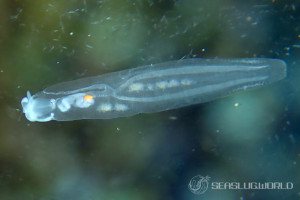
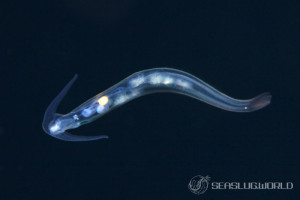
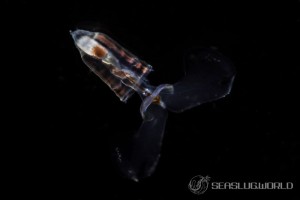
Cephalopyge trematoides (Chun, 1889)
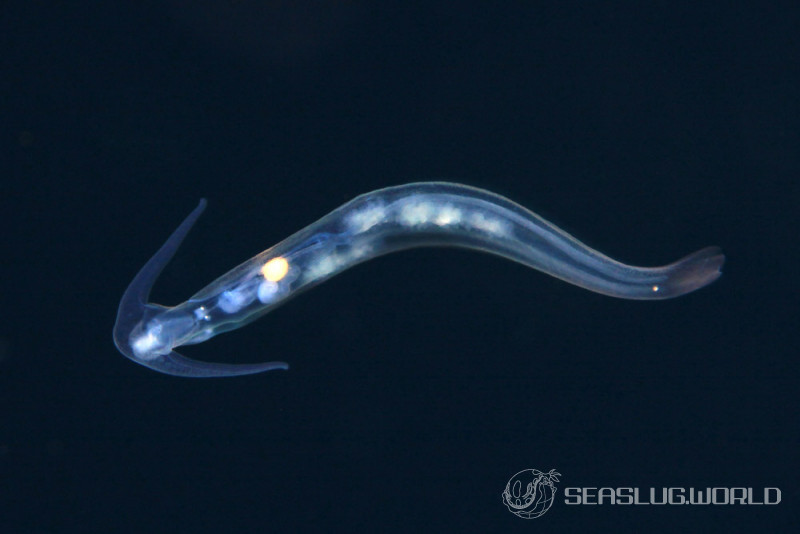
- Location
- Horse Shoes, Okinawa Island (Onna and Yomitan area), Okinawa, Japan
- Date
- 2013/01/31
- Length
- 12mm
- Depth
- 10.0m
- Water temperature
- 21.0℃
Description
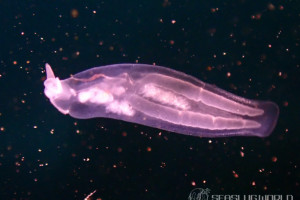
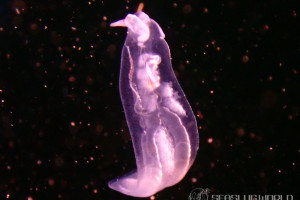
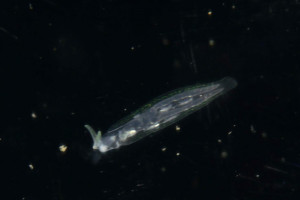
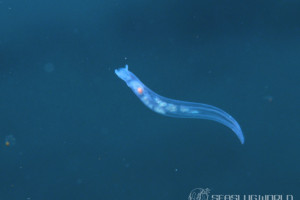
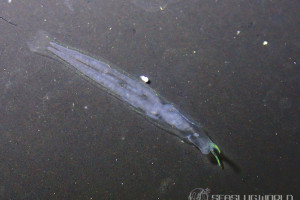
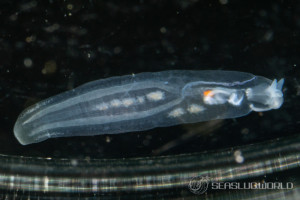
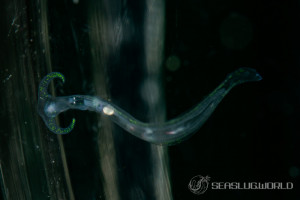
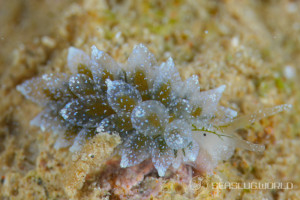
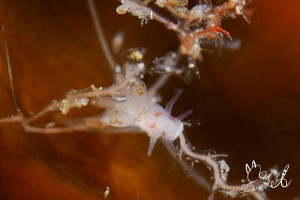
A small pelagic nudibranch reaching about 20 mm in body length. The body is transparent — with the visceral mass visible through it — elongate and leaf-shaped, with a laterally expanded tail resembling a fish's caudal fin. The foot is reduced and the animal swims freely in the open ocean. The rhinophores are slender and retractable into sheaths. The species preys on jellyfish (cnidarians).Distribution
The original description (Chun, 1889) was based on specimens collected during a German expedition to the Canary Islands in 1887–88, studying the pelagic deep-water and surface fauna of the eastern Atlantic. Distributed broadly in the open oceans of the world, with records from the Western Pacific including Japan.Etymology
The specific epithet trematoides is derived from Greek trēma ("hole") + -oides ("resembling"). The genus name Cephalopyge combines Greek kephalē ("head") and pȳgē ("rump"), referring to the elongate head-to-tail body shape.References
A Kindle field guide by the site author
Kimoto N. (2026). Sea Slugs of Japan & the Indo-Pacific, 2nd Edition.
Kindle Edition
View on Amazon PR (Amazon Associates)Seasonality
Shooting Locations
Loading shooting locations...
Photos of Cephalopyge trematoides
Tag:









Similar Colors Nudibranchs
Color:
Transparent
Academic Database
Sea slug observation data is available in international marine biodiversity databases.