Elysia atroviridis Baba, 1955
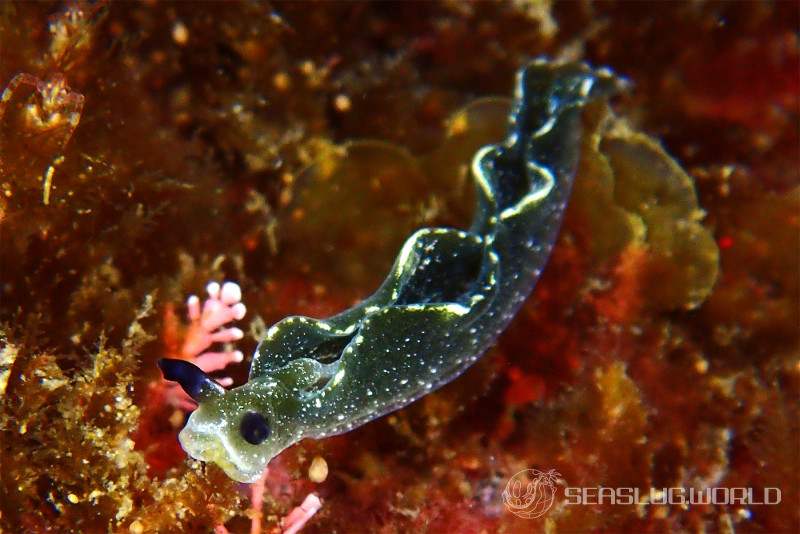
Description
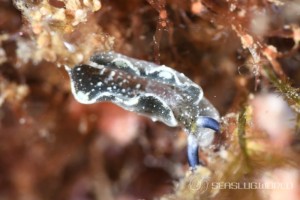
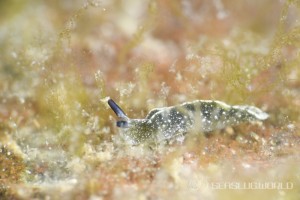
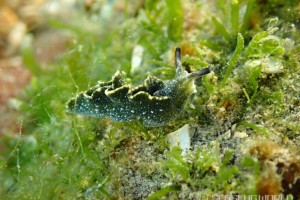
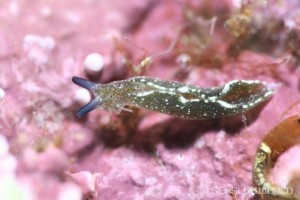
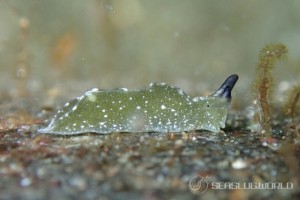
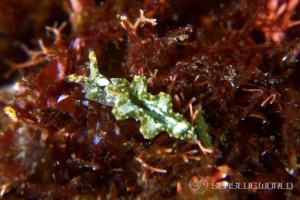
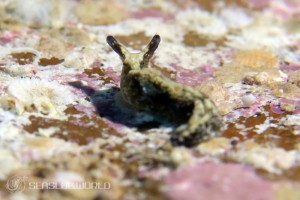
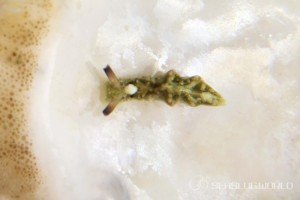
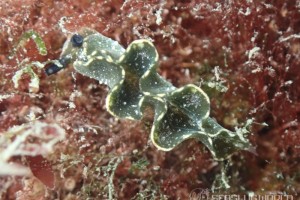
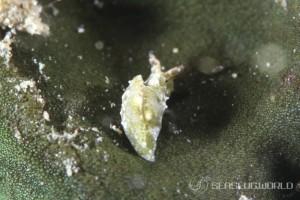
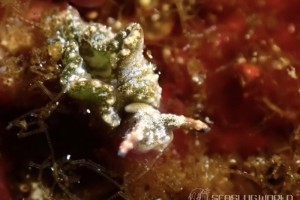
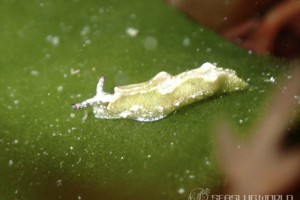
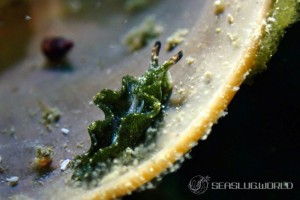
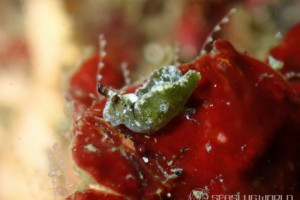
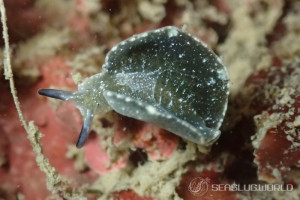
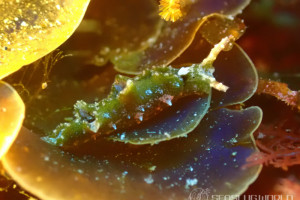
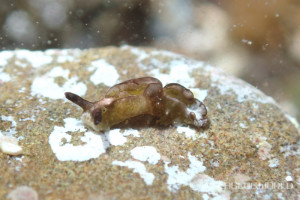
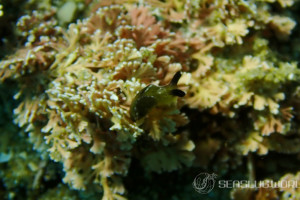
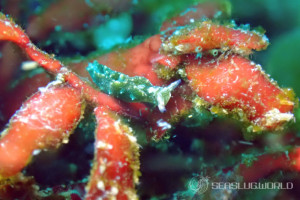
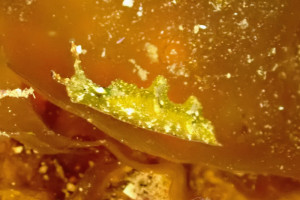
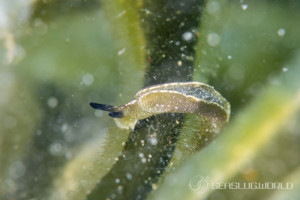
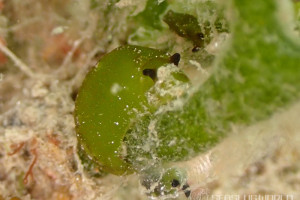
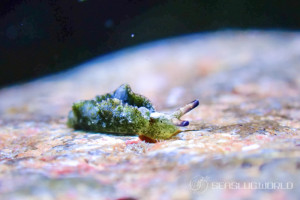
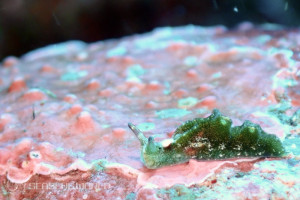
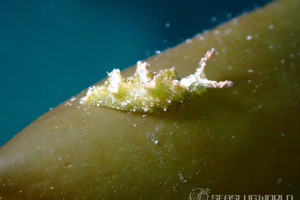
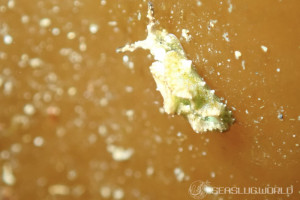
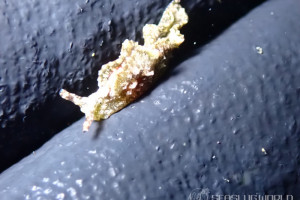
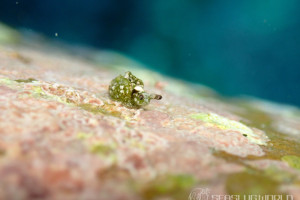
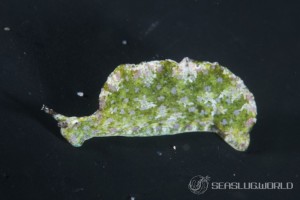
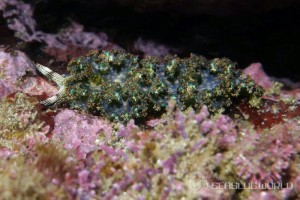
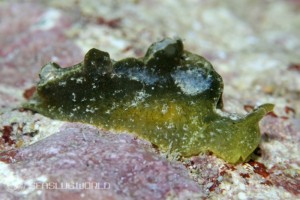
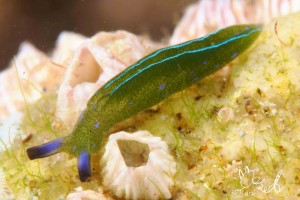
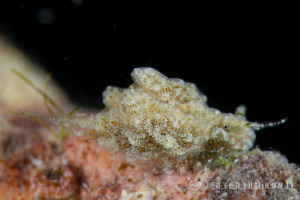
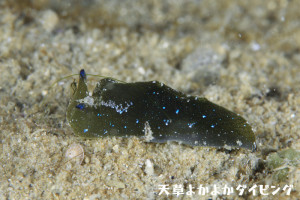
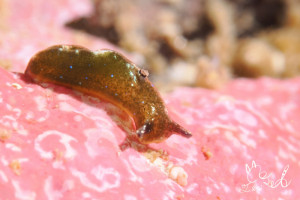
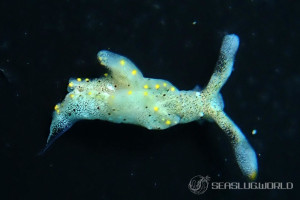
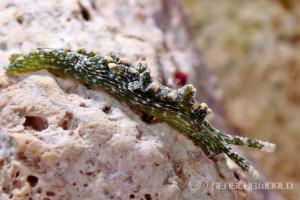
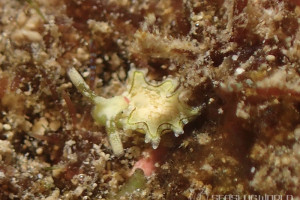
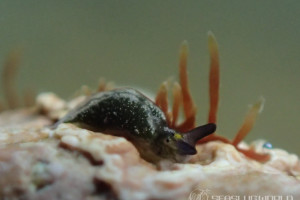
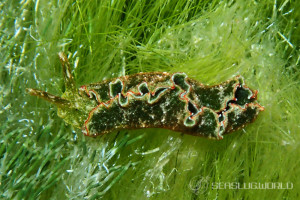
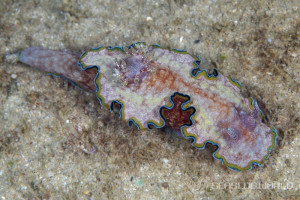
A small sacoglossan reaching about 20 mm in body length. Ground colour deep green, sprinkled with fine white dots over the body surface. The parapodial margins are gently undulate and outlined by a thin white-to-yellow line. The rhinophores are dark, sometimes with a white ring at the base. Takano et al. 2013 examined 46 specimens from nine prefectures across Japan and showed that the external characters previously used to separate this species from Elysia setoensis Hamatani, 1968 — a white warty protuberance on the neck, reddish-brown circlets on the parapodia, and papillae on the rhinophores — vary independently within the species and often co-occur in mixed combinations on a single individual. The radular teeth are blade-shaped with fine denticles on the ventral edge; 6 to 13 teeth are present in the ascending series. Tooth shape and size vary with diet: specimens feeding on Caulerpa have a relatively larger basal length and tooth width than those feeding on other algae.Distribution
Type locality: Sagami Bay, Japan. Recorded from many localities in Japan; the material studied by Takano et al. 2013 came from Kamae (Oita), Tsunoshima (Yamaguchi), Mukaishima (Hiroshima), Tamano (Okayama), Shima (Mie), Miura (Kanagawa), Tateyama (Chiba), Choshi (Chiba) and Tassha on Sado Island (Niigata), spanning the Pacific coast and the Seto Inland Sea.Etymology
The specific epithet atroviridis is a Latin compound adjective formed from ater / atro- ("black") and viridis ("green"), meaning "blackish-green".Remarks
Elysia setoensis Hamatani, 1968 is treated as a junior synonym of Elysia atroviridis following Takano et al. 2013, whose phylogenetic analyses of COI and 16S rRNA together with morphological re-examination of 46 specimens recovered all individuals as a single well-supported clade with no genetic differentiation among morphological types, geographic populations or host algae. Its diet includes green algae of several genera — Codium, Bryopsis, Cladophora, Caulerpa, Halimeda and Derbesia. The species retains functional chloroplasts (kleptoplasty) from its algal food, and Mitoh & Yusa 2021 reported the extreme phenomenon of self-decapitation followed by whole-body regeneration in this species.References
- クロミドリガイ(新稱), 生物學御研究所編. (1955). 相模湾産後鰓類図譜〈補遺〉. 岩波書店.
- Elysia (Elysia) atroviridis BABA, 1955 Kuro-midorigai, Baba K. (1957). THE SPECIES OF THE GENUS ELYSIA FROM JAPAN. Publications of the Seto Marine Biological Laboratory. 6(1): 69-74. https://doi.org/10.5134/174573
- クロミドリガイ, 高岡高等学校生物研究会(編). (1964). 富山湾産後鰓類図譜.
- クロミドリガイ, 鈴木敬宇. (2000). ウミウシガイドブック〈2〉. TBSブリタニカ.
- 高岡生物研究会. (2002). 日本海のウミウシ. 第2版.
- クロミドリガイ,セトミドリガイ, 中野理枝. (2004). 本州のウミウシ. ラトルズ.
- セトミドリガイ, 小野篤司 & 加藤昌一. (2009). ウミウシ. 誠文堂新光社.
- Takano T., Hirano Y.M., Trowbridge C.D., Hirano Y.J. & Watano Y. (2013). Taxonomic Clarification in the Genus Elysia (Gastropoda: Sacoglossa): E. atroviridis and E. setoensis. American Malacological Bulletin. 31(1): 25-37. https://doi.org/10.4003/006.031.0114
- Elysia atroviridis, Mitoh S. & Yusa Y. (2021). Extreme autotomy and whole-body regeneration in photosynthetic sea slugs. Current Biology. 31(5): R233-R234. https://doi.org/10.1016/j.cub.2021.01.014
A Kindle field guide by the site author
Kimoto N. (2026). Sea Slugs of Japan & the Indo-Pacific, 2nd Edition.
Kindle Edition
View on Amazon PR (Amazon Associates)Seasonality
Shooting Locations
Loading shooting locations...
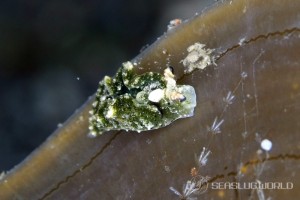
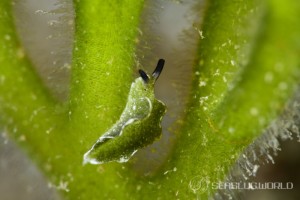
Photos of Elysia atroviridis
Tag:



















Same Genus Nudibranchs
Similar Colors Nudibranchs

Academic Database
Sea slug observation data is available in international marine biodiversity databases.