Glaucus atlanticus Forster, 1777
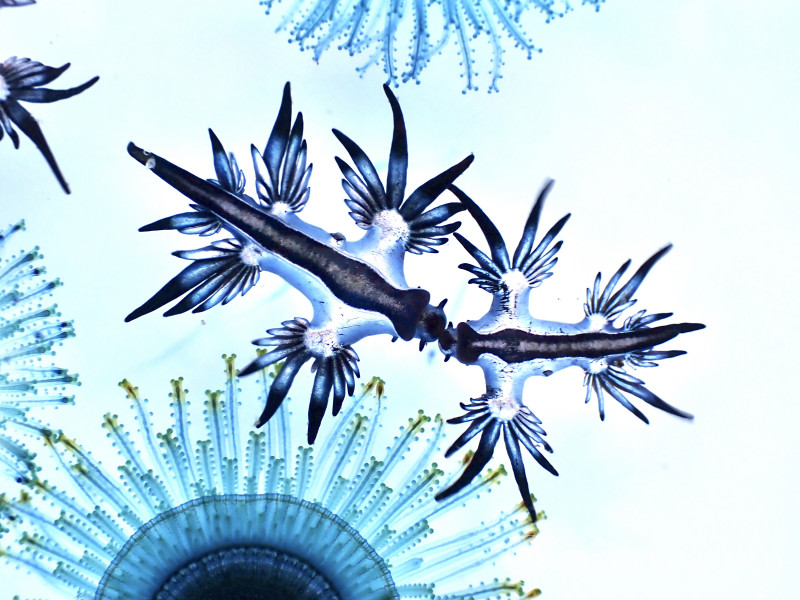
What is the blue dragon (Glaucus atlanticus)?
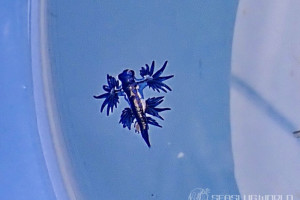
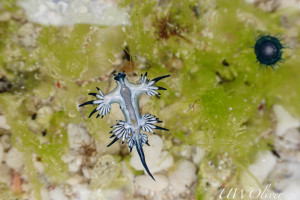
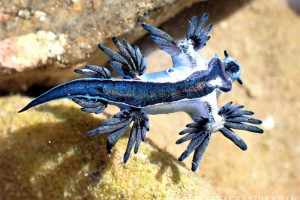
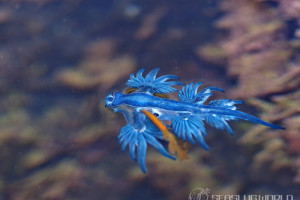
The blue dragon (Glaucus atlanticus) is a small pelagic sea slug (a nudibranch) that floats at the ocean surface, famous for its vivid deep-blue, silver-sheened body and finger-like clusters of cerata.Description
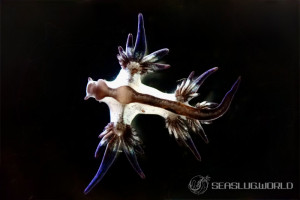
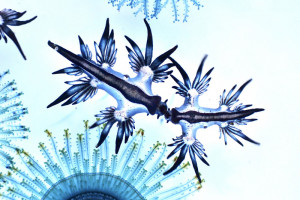
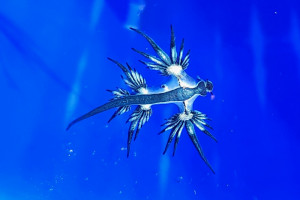
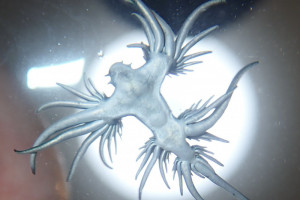
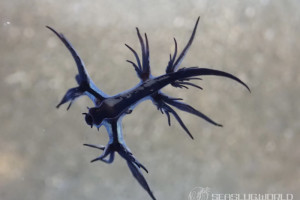
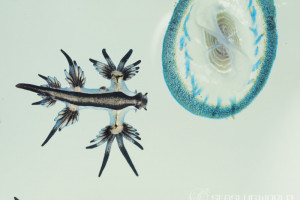
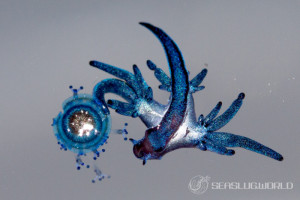
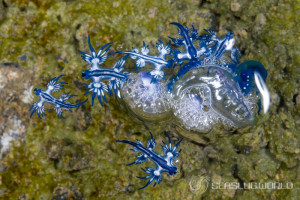
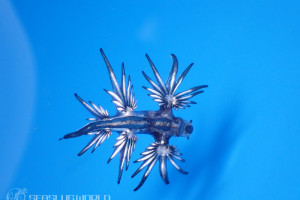
A pelagic aeolid reaching about 50 mm in length. Ground colour is a vivid deep blue; floating at the sea surface and reflecting light, the body takes on a distinctive silver-blue sheen. The cerata are arranged in three pairs of clusters, each radiating slender finger-like extensions. The rhinophores are short and smooth.The species spends its entire life floating, ventral side up, at the surface of the open ocean. It maintains buoyancy with a swallowed air bubble in the stomach and rarely swims actively, drifting instead with wind and current as part of the neuston.
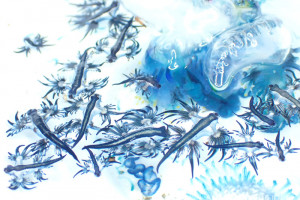
It feeds on surface-dwelling cnidarians such as Physalia physalis (Portuguese man-of-war) and Velella velella, sequestering their nematocysts intact in its ceratal cnidosacs and using them for defence. The defence is potent enough to inflict a nematocyst sting on humans.
Blue Dragon Sea Slug
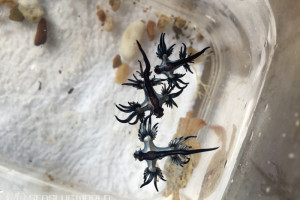
"Blue dragon" is the popular English name for Glaucus atlanticus, reflecting the cobalt-blue body and the dragon-like cerata that radiate outward from each side. The species drifts across tropical and subtropical surface waters worldwide, and is best known to beach-goers from sporadic mass strandings (Texas, southern California, Lanzarote, Phuket and elsewhere). The Pacific look-alike Glaucus marginatus (タイヘイヨウアオミノウミウシ) also drifts in the same surface neuston layer.Do not handle stranded specimens. Even washed-up individuals retain the sequestered nematocysts of Physalia physalis (Portuguese man-of-war) in their cerata and can deliver a painful sting through bare skin for hours after stranding.
Distribution
Worldwide in the surface waters of the tropical and subtropical Atlantic, Indian and Pacific Oceans. Beach strandings, dependent on wind and current, are reported sporadically from many regions, including the southern Pacific coast of Japan.Etymology
The specific epithet atlanticus is Latin for "of the Atlantic", in reference to the Atlantic origin of Forster's 1777 type material.Remarks
Churchill, Valdés & Ó Foighil 2014 re-examined the traditional Glaucus atlanticus using molecular phylogenetics combined with morphology, and recognised three additional cryptic species: Glaucus mcfarlanei, Glaucus thompsoni and Glaucus bennettae. Glaucus atlanticus sensu stricto retains the original lineage of the species.References
- あをみのうみうし(新稱), 内田清之助ほか. (1927). 日本動物圖鑑. 北隆館.
- アオミノウミウシ, Baba K. (1949). Opisthobranchia of Sagami Bay collected by His Majesty the Emperor of Japan (相模湾産後鰓類図譜). Iwanami Shoten, Tokyo. 4+2+194+7 pp., pls. 1-50.
- アオミノウミウシ, 中野理枝. (2004). 本州のウミウシ. ラトルズ.
- Glaucus atlanticus, Valdés A. & Campillo O.A. (2004) Systematics of pelagic aeolid nudibranchs of the family Glaucidae (Mollusca, Gastropoda). Bulletin of Marine Science 75(3): 381–389.
- アオミノウミウシ, 小野篤司 & 加藤昌一. (2009). ウミウシ. 誠文堂新光社.
- Churchill C.K.C., Alejandrino A., Valdés Á. & Ó Foighil D. (2013). Parallel changes in genital morphology delineate cryptic diversification of planktonic nudibranchs. Proceedings of the Royal Society B: Biological Sciences. 280(1765): 20131224. https://doi.org/10.1098/rspb.2013.1224
- Glaucus atlanticus, Churchill C.K.C., Valdés Á. & Ó Foighil D. (2014). Molecular and morphological systematics of neustonic nudibranchs (Mollusca: Gastropoda: Glaucidae: Glaucus), with descriptions of three new cryptic species. Invertebrate Systematics. 28(2): 174-195.
- Glaucus atlanticus, Terrence Gosliner, Ángel Valdés and David Behrens. (2015). Nudibranch and Sea Slug Identification Indo-Pacific. New World Pubns Inc.
- アオミノウミウシ, 中野理枝. (2018). 日本のウミウシ. 文一総合出版.
Featured in this book
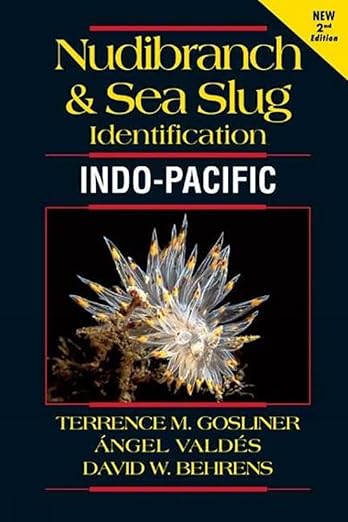
Terrence Gosliner, Ángel Valdés and David Behrens. (2018). Nudibranch and Sea Slug Identification Indo-Pacific 2nd Edition. New World Pubns Inc.
New World Publications
This species, Glaucus atlanticus, is included in the book.
View on Amazon PR (Amazon Associates)Seasonality
Shooting Locations
Loading shooting locations...
Photos of Glaucus atlanticus
Tag:
















Same Genus Nudibranchs
Similar Colors Nudibranchs
Academic Database
Sea slug observation data is available in international marine biodiversity databases.