Phidiana anulifera (Baba, 1949)
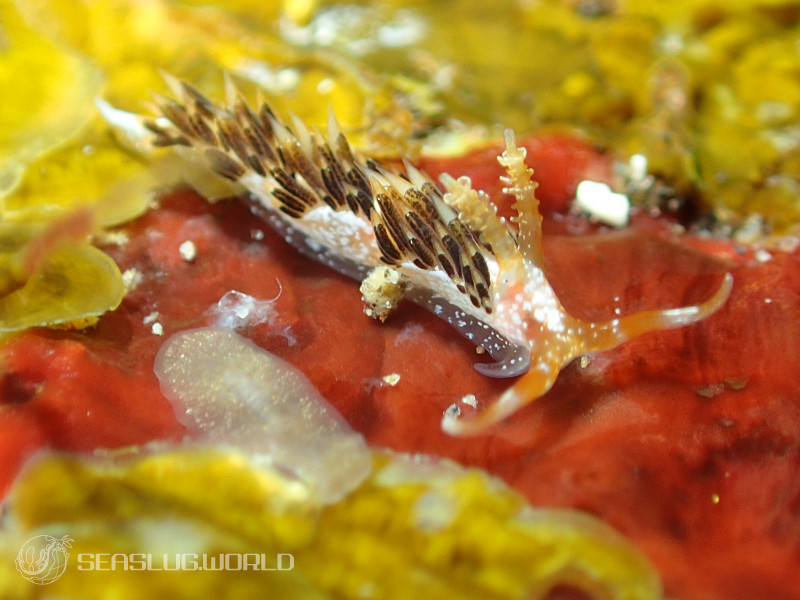
- Location
- Otchogahama, Hachijo Island, Tokyo, Japan
- Date
- 2016/07/06
- Length
- 12mm
- Depth
- 15.0m
- Water temperature
- 17.0℃
Description
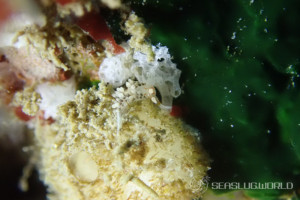
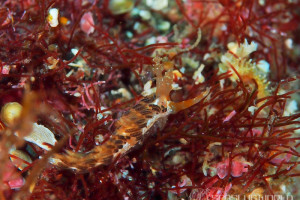
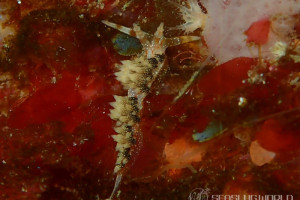
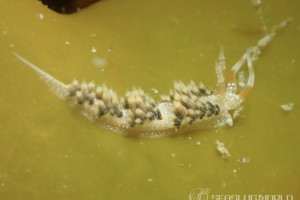
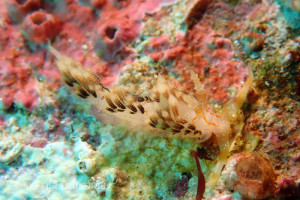
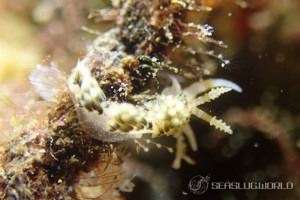
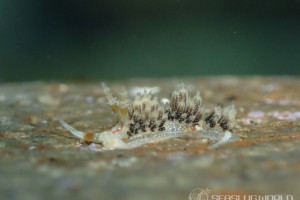
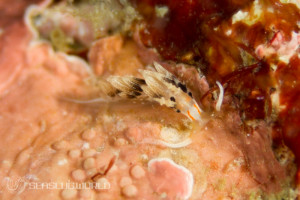
A small Aeolidacea, body length about 8 mm. Originally placed in the new genus Facelinella Baba, 1949 (type species Hervia quadrilineata Baba, 1930). The rhinophores bear 4-5 distinctive consecutive rings along their entire length. Cerata are arranged in 8-12 oblique rows per side, with the largest row having 6 cerata. The right (and left) liver bears 5-6 oblique branched rows. The genital orifice lies just behind and below the last oblique row of the right liver; the anus and nephroproct are as in the genus. Anterior foot corners tentaculiform. Ground colour white, with one vermilion longitudinal band running along each side of the body and another pair along the dorsum (one per side). The central vein of the cerata is dark green; the tips are yellow. The masticatory edge of the jaw plate bears a single row of 23-25 denticles. Radula formula 16×0.1.0. The central tooth bears only 3 denticles on each side of the median cusp.Distribution
Type locality is Hayama, Sagami Bay (intertidal, March 1938, July-August 1939, August 1940; 6 specimens). The original description includes additional specimens from off Mosaki at Sajima Island (9 m, August 1939, 1 specimen) and Hayama-Najima (intertidal, August-September 1940, 2 specimens), for a total of 9 specimens.Etymology
The specific epithet anulifera is a Latin compound of anulus (ring) and ferre (to bear), meaning "ring-bearing". The original description does not give an explicit etymology paragraph; the descriptive sense reflects the 4-5 consecutive rings on the rhinophores. The Japanese name "Shakujō-mino-umiushi" (shakujō aeolid) likens the rhinophore rings to the rings of a Buddhist staff (shakujō).Remarks
Originally described as Facelinella anulifera, the type species of the new genus Facelinella Baba, 1949, having Hervia quadrilineata Baba, 1930 as the genus type species. Later transferred to Phidiana.References
A Kindle field guide by the site author

Kimoto N. (2026). Sea Slugs of Japan & the Indo-Pacific, 2nd Edition.
Kindle Edition
View on Amazon PR (Amazon Associates)Seasonality
Shooting Locations
Loading shooting locations...
Photos of Phidiana anulifera
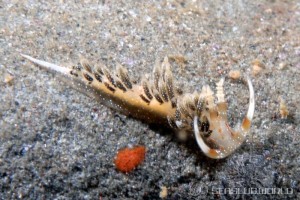



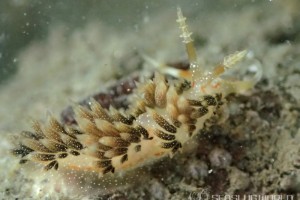

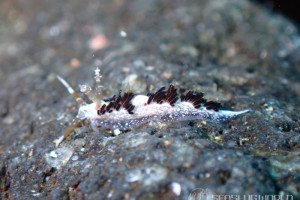
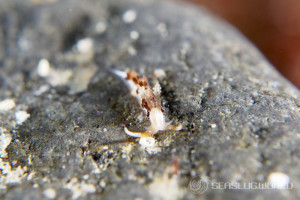

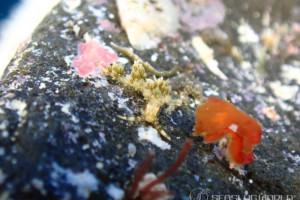

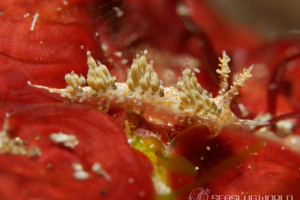

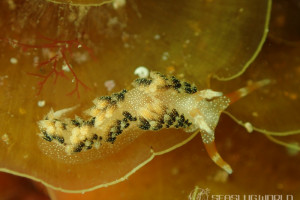

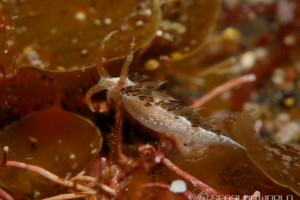
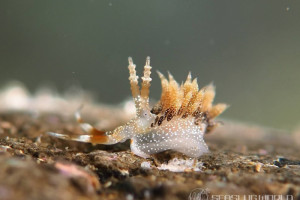

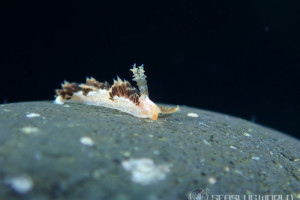

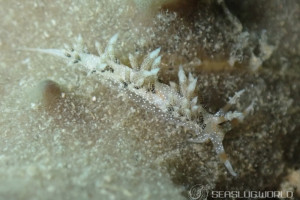

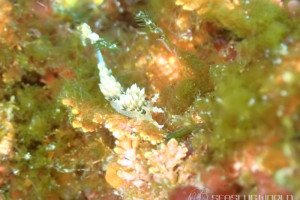

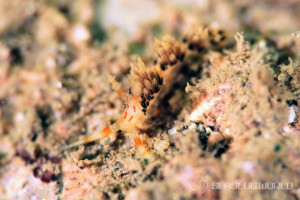
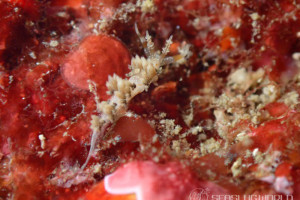

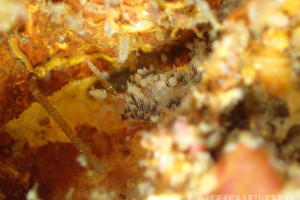
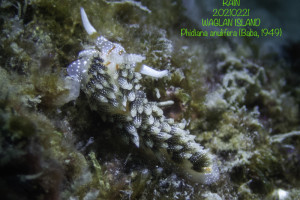

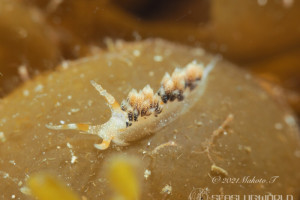

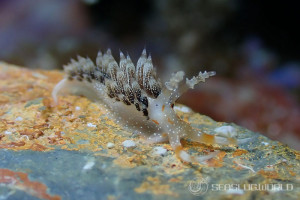

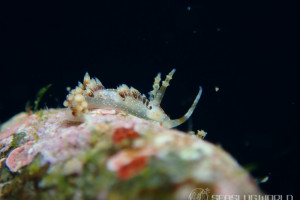
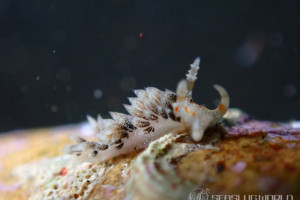

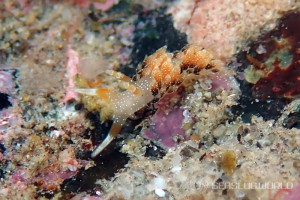






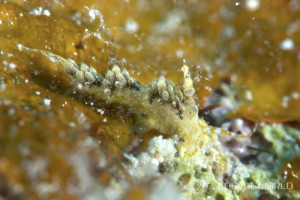
Same Genus Nudibranchs
Similar Colors Nudibranchs

Academic Database
Sea slug observation data is available in international marine biodiversity databases.