Phylliroe bucephala Lamarck, 1816
Description
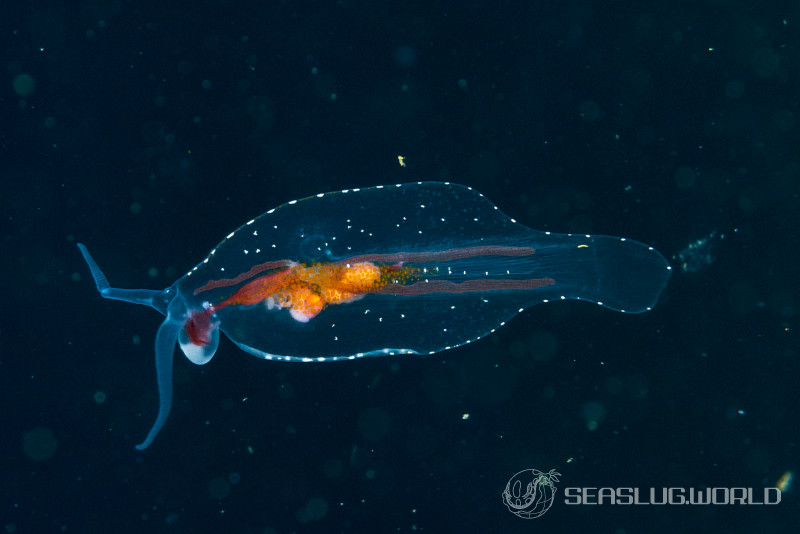
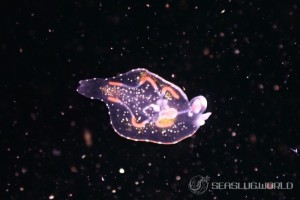
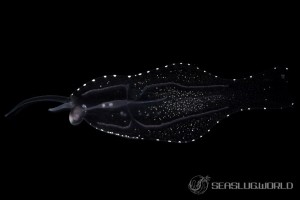
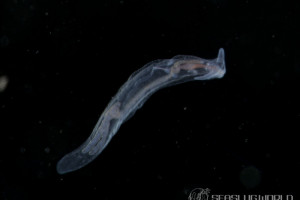
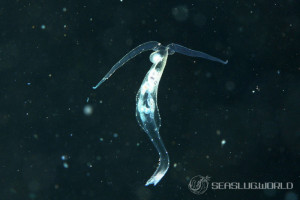
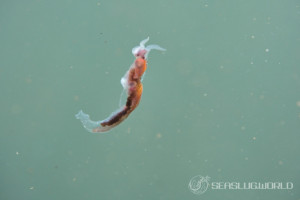
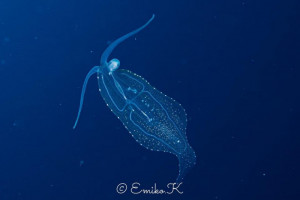
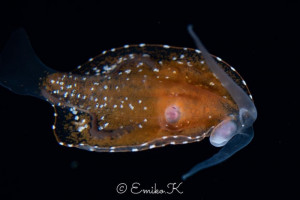
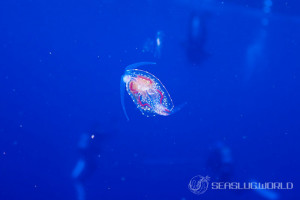
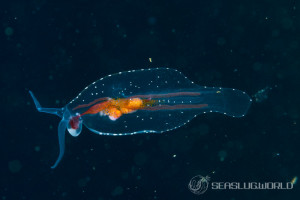
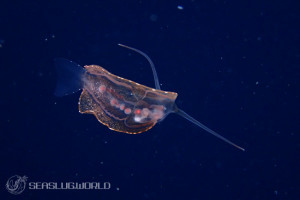
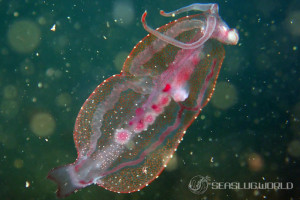
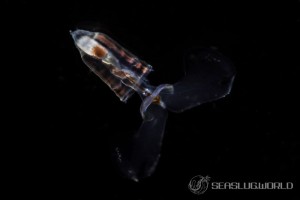
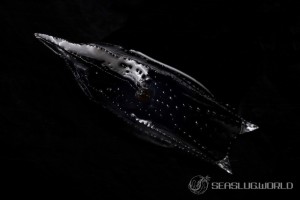
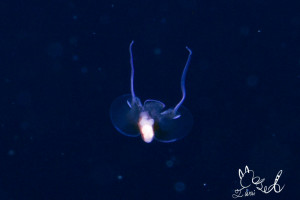
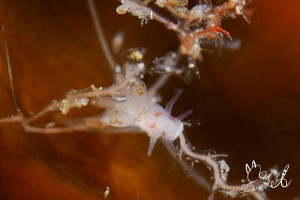
A pelagic nudibranch with an elongate, streamlined, laterally compressed body that is largely translucent white. The head bears two long, smooth rhinophores. The animal lacks cerata and propels itself by sinuous undulations of the lateral wings. Similar to Cephalopyge trematoides but distinguished by its broader body and longer rhinophores.Distribution
Originally described from the Mediterranean region. Subsequently recorded across temperate and tropical open-ocean waters worldwide.Etymology
The specific epithet bucephala combines the Greek bous ("ox") and kephale ("head"), meaning "ox-headed", in reference to the shape of the anterior end.Remarks
A fully pelagic species that preys on medusae. Juveniles are parasitic on Zanclea hydromedusae, living within the bell. The species is one of the very few nudibranchs known to exhibit bioluminescence.References
- Phylliroe bucephale n. sp., Péron F. & Lesueur C.A. (1810). Notice sur quelques nouveaux genres de mollusques céphalés acéphales et gastéropodes recueillis pendant le voyage des corvettes le Géographe et le Naturaliste, sous le commandement du capitaine Baudin. Annales du Muséum d'Histoire Naturelle, Paris. 15: 57-69.
- Phylliroe bucephalum Lamarck, 1816, Terrence Gosliner, Ángel Valdés and David Behrens. (2015). Nudibranch and Sea Slug Identification Indo-Pacific. New World Pubns Inc.
Featured in this book

Terrence Gosliner, Ángel Valdés and David Behrens. (2018). Nudibranch and Sea Slug Identification Indo-Pacific 2nd Edition. New World Pubns Inc.
New World Publications
This species, Phylliroe bucephala, is included in the book.
View on Amazon PR (Amazon Associates)Seasonality
Shooting Locations
Loading shooting locations...
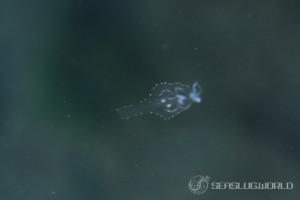
Photos of Phylliroe bucephala









Similar Colors Nudibranchs
Color:
Transparent
Academic Database
Sea slug observation data is available in international marine biodiversity databases.